
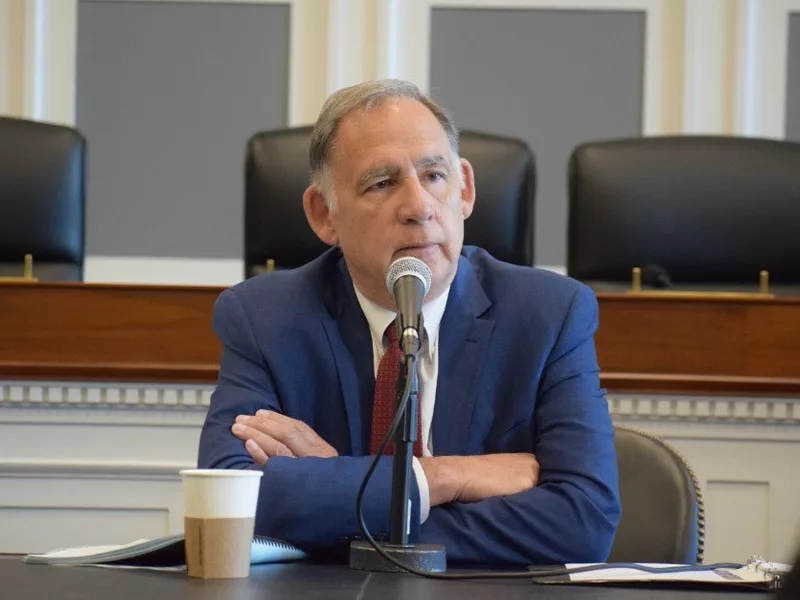
Senate Agriculture Committee Chairman John Boozman, R-Ark., says the administration will have to determine the dollar amount of any additional aid.
“The administration is working on that,” he said. Officials will first have to see how far the $11 billion for row crops and $1 billion for specialty crops announced last week goes, Boozman said.
“We ought to have a better picture in the next few weeks,” he said, adding that he suspects the administration will determine more aid will be needed and Congress will have to act.
Sen. John Hoeven, R-N.D., also told Agri-Pulse he isn’t ready to talk about a firm number.
Take note: House Ag Committee Chairman Glenn Thompson, R-Pa., told Agri-Pulse Tuesday he wants at least $10 billion in additional aid.
Lawmakers have been eyeing adjusting USDA’s Section 32 authorities, which allows the department to divert tariff receipts to farmers. But Thompson says that’s proving to be “a very challenging regulation to deal with.”
“It would make total sense to be able to take access resources from those tariff dollars,” he told Agri-Pulse. “Whether we can make it work or not, we don’t know yet.”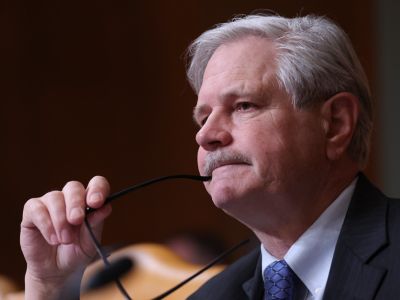
EPA says it expects to finalize biofuel blending rule by March 31
The guessing game on when EPA releases a highly anticipated biofuel-blending rule continues after the agency offered up guidance on timing. Final regulations are expected by March 31, 2026, the Environmental Protection Agency said in a court filing. The timeline is in response to a court order seeking an update as part of pending lawsuits.
Sen. John Hoeven, R-N.D. (AP photo)
The industry that makes fuels like corn-based ethanol and soy-heavy biodiesel initially pushed for final rules covering 2026-27 by the end of this year. But after the recent government shutdown and a flurry of lobbying over contentious issues, such as limits on foreign biofuel feedstocks, many stakeholders have shifted their hopes to getting a final rule next month.
EPA says it's going over thousands of public comments and is working with other agencies and dealing with technical issues. If the rule isn’t finished before Jan. 31, the 2025 compliance deadline won’t be March 31, but June 1, EPA says. Nevertheless, the agency says it anticipates finalizing the rule in the first quarter of 2026.
Texas AG sues energy company over panhandle wildfires
Texas Attorney General Ken Paxton is suing Xcel Energy over damage caused by a series of wildfires that raged across the Texas panhandle last year.
More than 15,000 head of cattle perished in the fire, while 138 homes and businesses and "thousands of miles" of fencing were destroyed, the lawsuit says. It was filed in a Texas district court in Hemphill County.
Interested in more news on farm programs, trade and rural issues? Sign up for a four-week free trial to Agri-Pulse. You’ll receive our content - absolutely free - during the trial period.
In the lawsuit, Paxton, who is running for the U.S. Senate, claims Xcel failed to replace deteriorating utility poles that ignited the fire after being notified of the “urgent need to replace” them. He also alleges the company “misrepresented to consumers that its equipment and services were safe and reliable when they were not.”
From the other side: A statement provided by an Xcel spokesperson says the company is “deeply disappointed” that Paxton decided to pursue litigation and disputes the AG’s claims that it acted negligently. The spokesperson also pointed to $361 million in settlements Xcel has made with fire victims in affected counties, representing 212 of 254 total claims.
Upper Colorado River negotiators make pitch for post-2026 framework
Negotiators from states in the Upper Colorado River Basin say their states already take “significant mandatory and uncompensated reductions” to water allocations and that post-2026 guidelines must address “structural overuse” in the lower basin.
In a press release, members of the Upper Colorado River Commission say they’re not willing to accept water use caps or mandatory reductions as the states negotiate over a new framework for managing the river’s flows after 2026.
New Mexico’s negotiator, Estevan López, wrote in a statement that states in the upper basin were promised the ability to develop and use water from the Colorado River as part of the 1922 Colorado River compact. But he added that “right now, unfortunately, it seems like the only real focus is how we can get more water to the lower basin.”
"The Lower Basin needs to have a sustainable water supply, no doubt about it - but they also need to look at their needs and allow us to live with the water we have,” Lopez said.
EU set to approve deforestation rule delay
The European Parliament voted overwhelmingly to delay incoming European Union deforestation rules, giving all businesses another year to comply and small firms until mid-2027.
“This additional time is intended to guarantee a smooth transition and to allow time to improve the IT system that operators, traders and their representatives use to make electronic due diligence statements,” a Parliament statement reads.
The final text also included language to simplify the due diligence requirements for small businesses and a carveout for printed products.
U.S. landowners welcomed the delay. But president and CEO of the National Alliance of Forest Owners, Dave Tenny, said the “job isn’t done.”
“The Commission must deliver meaningful simplifications for all low-risk countries outside the EU and ensure fair and equitable treatment,” Tenny said in a statement. “A law focused on preventing deforestation must, first and foremost, reward forest owners already investing heavily in long-term sustainability.”
Food increases tied to labor shortages, new report finds
Farm labor shortages are increasing the price of “labor-intensive” crops such as fruits and vegetables, says a new report from Grow it Here, a farmer-led advocacy group.
“The U.S. fresh produce industry is approaching a pivotal moment,” says the report prepared by Zach Rutledge, an agricultural policy professor at Michigan State. “Without meaningful labor-focused policy reforms, labor-intensive agricultural production will likely continue to face growing labor costs, narrowing the diversity of American agriculture and increasing vulnerability to supply chain shocks.”
Specifically, Rutledge found that when domestic farm employment declines by 10%, “labor-intensive food prices increase by an average of 2.94%.” With those crops generating about $115 billion in farm-gate value annually, a 10% drop translates into an estimated $3.4 billion in additional costs to consumers.
On a call with reporters Wednesday, New Jersey blueberry grower Brandon Raso said he lost 2.5 million pounds of fruit last season worth about $5 million because he didn’t have enough laborers.
Final Word
“The Trump Administration should not be hiding its goals and agenda for this renegotiation behind closed doors. … Congress and the public should have the opportunity to review the Administration’s goals and understand which interests have influenced the office of the U.S. Trade Representative (USTR)’s approach.” –Sens. Elizabeth Warren, D-Mass., Ben Ray Luján, D-N.M., and Tina Smith, D-Minn., write to U.S. Trade Representative Jamieson Greer on the administration’s decision to privately brief senators orally on its priorities for an upcoming review of the U.S.-Mexico-Canada Agreement rather than issue a public report.
Kim Chipman, Oliver Ward and Noah Wicks contributed to today’s Daybreak
.webp?t=1762183428)


