
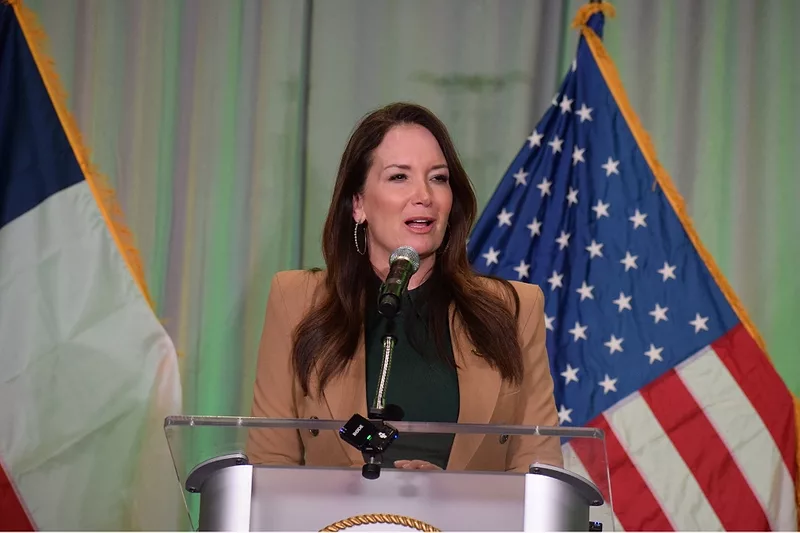
Agriculture Secretary Brooke Rollins says she'll keep working to lower farm production costs and uncover what's behind a surge in input prices for American growers.
The Department of Agriculture forecasts that the overall average cost of production will decline in 2026 for the first time in five years, Rollins said in a speech at Commodity Classic in San Antonio.
"This is good progress, but there's still so much work to do," she said. "My commitment to you is we will never stop until we get our arms around why all of these inputs _ so many _ have increased 20%, 30%, 40% at a time when our farmers are barely surviving. We will not rest until we get to the bottom of it and we provide real solutions to you."
Rollins has drawn some backlash over the last week from farmers who disagree with her recent comments about lower input costs.
Rollins on Thursday said costs of items like fertilizer and seeds are "starting to moderate," with some "even coming down" as a result of President Donald Trump's policies.
Rollins also affirmed the administration's goal of expanding U.S. ag markets and pledged that biofuels would be a key part of those efforts. She again called on Congress to "do its job" and pass legislation that would allow year-round, nationwide sales of higher ethanol blends, known as E15.
On the EPA's national biofuel-blending rules currently under review by the White House budget office, Rollins said she's hopeful the final regulations will create a surge in domestic demand for American crops.
Rollins told the conference made up of producers and other ag professionals that USDA is "working tirelessly" on feedstock rules that will allow farmers to take full advantage of the 45Z biofuel production tax credit by getting premium prices for crops grown using regenerative practices.
Later at a news conference, Rollins said USDA had no plans "anytime soon" to reopen the border to Mexican cattle amid the ongoing outbreak of New World screwworm in Mexico.
"Every day I get an update, and every day I have to make the decision to continue to protect livestock on our side of the border. And I understand there are so many implications. There are so many of our fellow Texans that rely on those ports being open," she said.
For more news, go to Agri-Pulse.com.
.webp?t=1762183428)
