

Federal agencies, including USDA, say they’re working to comply with court orders to return probationary employees to their jobs, but instead have placed them on administrative leave with pay, citing logistical challenges in reinstating workers who were fired just a month ago.
One of USDA’s concerns in bringing fired workers back is the safety of their former colleagues.
Before returning people to the office, Mary Pletcher Rice, the department’s acting principal deputy assistant secretary for administration, told Maryland and California courts that USDA must address “any identified or substantiated threats to the physical safety of USDA’s existing 111,000-person workforce and security of USDA’s physical plants and assets across the nation.” Pletcher Rice's declarations did not specify the nature of threats to workers or property.
The department is subject to orders from courts in both states as well as the Merit Systems Protection Board. In declarations Monday and Tuesday, Pletcher Rice said USDA had reinstated 5,714 probationary employees by “restoring them to the status they were in prior to their terminations and provided each with back pay” from the date they were fired four weeks ago.
The department started informing employees March 14 and has been “diligently working” to give notice to all affected employees, Pletcher Rice said.
In an email to personnel in the Research, Education and Economics mission area Tuesday, the department said “employees will remain on paid administrative leave until USDA provides additional notice and information on the specific return to duty date, along with instructions concerning LincPass, systems access, government-furnished equipment, and work site location, if applicable.”
It’s part of what USDA on March 11 called a phased-in approach to returning those workers to their offices. In a notice Tuesday to federal District Judge William Alsup in California, the Justice Department said “administrative leave is not being used to skirt the requirement of reinstatement but is merely a first part of a series of steps to reinstate probationary employees.”
In her declaration, Pletcher Rice said “reinstating the terminated probationary employees is complex and places … logistical burdens on USDA and its approximately 29 subordinate mission areas, agencies, and staff offices, including USDA’s multiple human resources offices.”
In addition to the safety of humans and property, one of the examples cited is “reinstituting and ensuring operational status of secured LincPasses, office space, and equipment (including laptops in most instances) for those individuals whose mission criticality requires onsite work.”
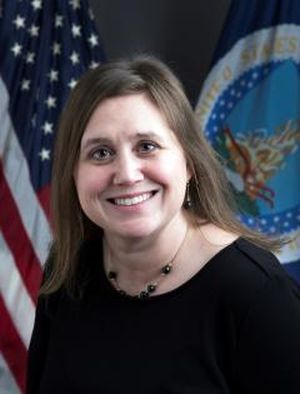 Mary Pletcher Rice (USDA photo)
Pletcher Rice and other federal officials who filed declarations with the court also argued that probationary employees are not promised anything.
“Probationary and trial periods are essentially extended tryouts for finalized appointments,” she said. “Supervisors evaluate probationary and trial period appointees to determine whether the individuals would be a good fit for long-term employment. While working throughout probationary or trial periods, individuals receive no assurance of final appointments or of becoming permanent employees.”
Probationary employees across the government were fired at the direction of the Office of Personnel Management, which Alsup said in a Friday opinion has never been given statutory authority to terminate employees in other agencies.
Cut through the clutter! We deliver the news you need to stay informed about farm, food and rural issues. Sign up for a FREE month of Agri-Pulse here.
They were fired nonetheless, in messages that cited their performance. But Alsup provided examples of probationary employees who had received exemplary performance reviews.
He also said issuance of a preliminary injunction was justified because the plaintiff unions would suffer “irreparable harm.”
“That harm continues,” he said, citing staffing cuts in agencies such as the Forest Service and Natural Resources Conservation Service.
“Each agency had (and still has) discretion to hire and fire its own employees,” Alsup said. “Here, the agencies were directed by OPM to fire all probationary employees, and they executed that directive. To staunch the irreparable harms to organizational plaintiffs caused by OPM unlawfully slashing other agency’s staff required immediately reinstating those employees.”
Alsup subsequently asked six agencies affected by his decision – USDA and the departments of Veterans Affairs, Defense, Treasury, Energy and Interior – to “state the extent to which any rehired probationary employees are being placed on administrative leave” by Tuesday afternoon.
“The court has read news reports that, in at least one agency, probationary employees are being rehired but then placed on administrative leave en masse,” he said. “This is not allowed by the preliminary injunction, for it would not restore the services the preliminary injunction intends to restore.”
The 9th U.S. Circuit Court of Appeals in San Francisco upheld Alsup’s injunction in a 2-1 ruling Monday.
In its response to Alsup, the government attached the same declarations from federal officials it used in its status report to the court in Maryland – including the one from Pletcher Rice.
Probationary employees who spoke to Agri-Pulse said they were pleased they received the email from USDA but also mentioned the uncertainty of being put on administrative leave, especially since all federal agencies have recently prepared plans to RIF employees. The reduction in force plans have not been made public, but The New York Times reported that EPA’s plan envisions firing of about 1,100 scientists in the Office of Research and Development.
For more news, go to www.Agri-Pulse.com

