
Land grant universities are sounding the alarm about potential damage to agricultural research as USDA goes through a rapid transformation that's likely to include deep funding and staff cuts.
The Trump administration has already axed nearly 20 Feed the Future Innovation labs at land grants that were funded by the U.S. Agency for International Development. The administration also is considering consolidating Natural Resources Conservation Service offices and has held up reimbursements in the Partnerships for Climate-Smart Commodities program.
The FTF labs, which employed about 200 people, “did incredible work that not only helps developing countries be food secure, but also directly benefits U.S. agriculture,” said George Smith, director of AgBioResearch at Michigan State University.
Now, however, ag researchers are worried that the new administration will look to save money by cutting not just researchers, but funding for the work they were doing.
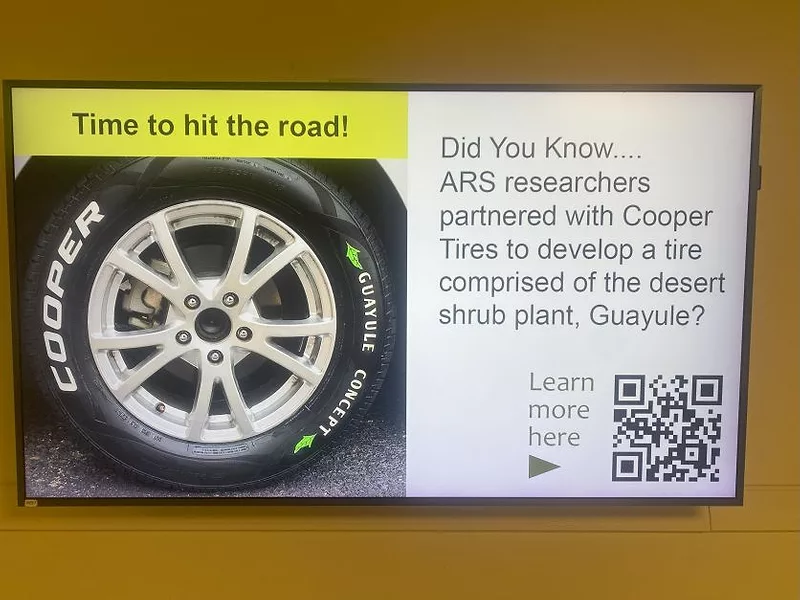
At risk is the nation's reputation for agricultural innovation, fueled in part by the public land grant system and the work of the Agricultural Research Service, founded in 1953. Researchers warn that if the U.S. continues to underfund research it will fall further behind China, which took the top spot among nations funding ag research around 2010, according to the Economic Research Service. That 2022 report had the U.S. in third place behind China and the European Union.
Funding for new competitive grants at the National Institute of Food and Agriculture has been frozen since the Trump administration took office, an employee at the agency told Agri-Pulse. The principal competitive grant program at the agency is the Agriculture and Food Research Initiative, which was funded at $452 million in fiscal 2024.
Capacity grants that go to land grants for research and extension appear safe for now, but university officials are worried about their future.
Capacity grants are important to land grants because they can be used to pay for faculty salaries and to research emerging issues, a provision that allowed Michigan State to work on avian flu.
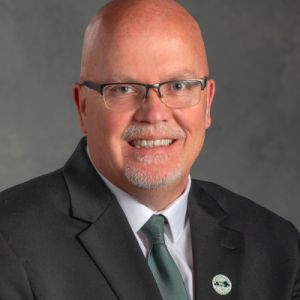 George Smith (MSU photo)
That flexibility allowed Michigan State “to immediately provide funds to our faculty to start to do research” shortly after bird flu was first detected in dairy cattle, Smith said. “If either the competitive funding or the capacity funding were to be interrupted, it would be pretty devastating.”
Steven Lommel, director for research in the College of Ag and Life Sciences at North Carolina State University and chair of agInnovation, an organization that includes the directors of ag experiment stations at universities, said many ARS scientists work side by-side with university researchers. He said the recent firing (and rehiring) of probationary employees wasn't well-timed.
“A lot of USDA research and our research involves putting field plots out and doing year-long in-field experiments,” a procedure that was interrupted this year during planting season by the firing of probationary workers, he said.
“We were able to put a Band-Aid on that and get it all back going again,” Lommel said. “But if it was any longer than it was, we may have missed planting fields.”
It’s easy to be “in the know” about agriculture news from coast to coast! Sign up for a FREE month of Agri-Pulse news. Simply click here.
Sonny Ramaswamy, who was director of NIFA during President Barack Obama’s second term and the Trump administration’s first term, said in an interview that he’s been advising post-doctoral students to seek jobs elsewhere.
“I encourage them to apply for jobs in Europe or Australia,” he said. Lommel said professors “who are gaining a good reputation are being poached by European and Asian universities already.”
Ramaswamy also offered a clue as to this administration’s priorities, noting that during Trump’s first term, he worked to reverse a proposed “zeroing out” of capacity funding provided under the Hatch Act and Smith-Lever Act.
Ramaswamy hearkened back to Abraham Lincoln’s establishment of the land grant system in 1862 in describing the work of researchers. Scientists at ARS, the Forest Service, Food Safety and Inspection Service and NIFA experiment stations “are the economic engines” of America. “So if you destroy your economic engine, how are you going to make America great again?”
Meanwhile, USDA employees are bracing for staffing cuts. April 8 was the deadline for them to decide whether to take a deferred resignation offer from the department or hang on and hope to survive planned reductions in force.
A report in Government Executive April 7 said some employees have been told to expect the department to cut back to 2019 staffing levels, which would mean a reduction of about 9,000 of its approximately 98,000 employees. The article also said USDA staff had been told to expect relocation of some employees to three undisclosed “hubs” somewhere in the U.S.
“It's a mess right now,” said Ethan Roberts, a physical science technician in Peoria, Illinois, and president of American Federation of Government Employees Local 3247, who spoke with Agri-Pulse on Friday. “It's all rumors.”
Roberts said he’s been trying to coordinate with congressional offices, “trying to get Congress to maybe shake some information out of the USDA, but I've only just started working on that, and they've only just started working on it. So it's all hearsay.”
However, he added, “The general feeling is we're going to get hammered. And we just don't know how much, but it's not going to be good. That's what the administration was telling us.”
Roberts said at a recent meeting with management, the message changed from the usual “we’’ll get through this together” – the line that’s been used in the past during difficult times – to “do what you think is best for you and your family.”
“That was such a shock,” he said.
A USDA employee who spoke on condition of anonymity said morale in their agency was “horrible.”
“We are exhausted and demoralized,” this person said, predicting that many people will take “DRP 2.0,” the second deferred resignation proposal offered.
Asked for details about the cuts, a USDA spokesperson said, “Under President Trump’s leadership, USDA is being transparent about plans to optimize and reduce our workforce and to return the department to a customer service-focused, farmer-first agency. We have a solemn responsibility to be good stewards of Americans’ hard-earned taxpayer dollars and to ensure that every dollar is being spent as effectively as possible to serve the people. Secretary Rollins is actively pursuing plans to reduce USDA’s workforce to better serve the needs of the people we serve.”
For more news, go to www.Agri-Pulse.com.

