
Now the real hard work begins. The House narrowly passed the Senate-amended budget resolution Thursday. That unlocks the budget reconciliation process that will be used to try to enact President Donald Trump’s legislative priorities. But there are certain to be a lot of pitched battles ahead on a range of details.
Members of the House Freedom Caucus were initially frustrated by the significantly lower spending cut targets within the Senate instructions. They only supported the bill because of commitments from the House, Senate and White House that cuts will reach $1.5 trillion.
But reaching those levels without upsetting more moderate GOP factions of both chambers will be a very tall order for Republican leaders.
Some Republicans in both the House and Senate are wary of significant cuts to Medicaid, and instead say they support reforms like work requirements. However, the House Energy and Commerce Committee is expected to find at least $880 billion in savings, which are largely expected to come from Medicaid.
Under the resolution, the House Agriculture Committee is expected to find $230 billion in cuts, while the Senate counterpart was instructed to find $1 billion.
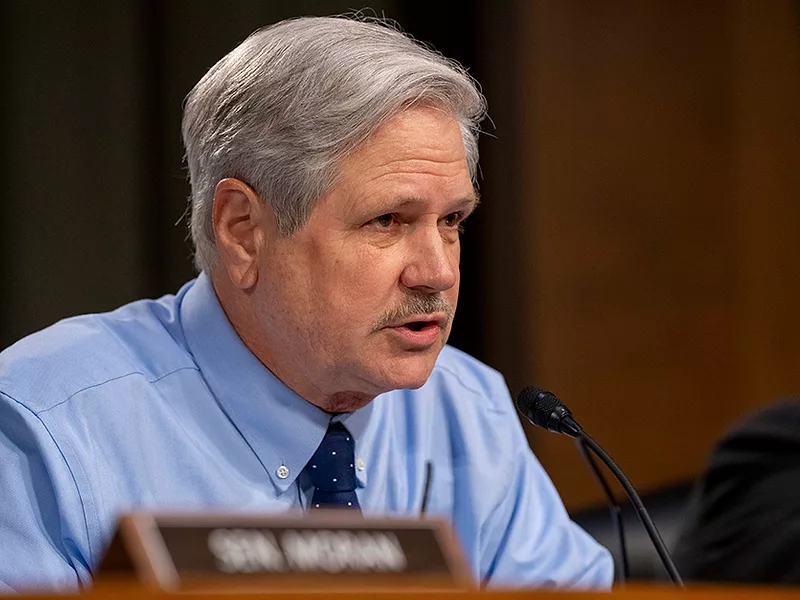
Sen. John Hoeven, R-N.D., said the Agriculture committees haven’t settled on a final number for spending cuts but they are actively working to identify policies. “We will find savings, but we haven’t pegged a number yet,” Hoeven said.
Keep in mind: Whatever size cut the Ag committees are required to make, that’s a net number. So, if the committees decide to use the reconciliation bill to increase funding for commodity programs, they’ll have to offset that cost with enough savings from SNAP or other programs to meet the net reduction.
Take note: Some members are already looking to set a deadline for reconciliation. Senate Budget Committee Chair Lindsey Graham, R-S.C., said he’s hoping Republicans can pass the reconciliation bill by Memorial Day. But if things drag on too long, he said he’s going to suggest splitting up the bill to get funds for the border and defense immediately.
It’s easy to be “in the know” about what’s happening in Washington, D.C. Sign up for a FREE month of Agri-Pulse news! Simply click here
USDA: We’re finalizing buyout numbers
A statement from a USDA spokesperson says the department is still “reviewing and finalizing” numbers from the latest buyout offer, which closed Tuesday. “While Secretary Rollins is actively pursuing plans to reduce USDA's workforce to better serve the needs of the people we serve, she will not compromise the critical work of the Department,” the statement says.
E&E News reported Thursday that as many as 12,000 employees may have taken the offer.
Newhouse: ‘Mixed feelings’ on farm bill elements in reconciliation
Rep. Dan Newhouse, R-Wash., says he has “mixed feelings” about including parts of the farm bill in a reconciliation measure.
“We'd love to see a lot of those things happen, but I think my bigger priority is to get the entire farm bill passed,” Newhouse told Agri-Pulse Newsmakers. “If we start taking it apart and pass bits and pieces of it, that takes away some of the incentive to get the entire package across the finish line.”
Newhouse, a Yakima Valley hops farmer, says he supports the intent of USDA staff cuts to make the “federal government leaner and meaner.” However, he says the administration should preserve staff critical to delivering crucial support to the nation’s ag producers.
Newsmakers is available at Agri-Pulse.com.
House quashes effort to force tariff vote
The House won’t get a vote on a Democratic effort to repeal Trump’s 10% across-the-board tariff. A measure buried in the House rule adopted to tee up a vote on the budget resolution blocks future votes on challenges to the economic emergency underpinning the duties.
House leadership used an identical playbook to prevent a similar vote on the Canada and Mexico duties last month. Senate Democrats are expecting their effort will get a vote in the upper chamber after the Easter recess.
Meanwhile: A group of House Democrats are mounting a new effort to repeal Trump’s tariffs and give Congress a say on future duties.
House Ways and Means ranking member Richard Neal, D-Mass., and trade subcommittee chair Linda Sánchez, D-Calif., are leading the effort, which has the backing of at least six other committee Democrats. The bill would scrap all of Trump’s reciprocal tariffs and the 25% duties on Canada and Mexico, as well as give Congress a vote on future tariffs.
The White House has already indicated it would veto the legislation, and it won’t likely get a House vote anyway.
Trump offers flexibility to farmers on deportations
The president appears to be open to giving undocumented farmworkers a path to legal status. At a cabinet meeting Thursday, Trump said he wanted to ensure that farms and hotels with undocumented workers can continue to employ them.
Trump said they would be able to “come in with a letter concerning certain people, saying they're great, they're working hard. We're going to slow it down a little bit for them, and then we're going to ultimately bring them back. They'll go out; they’re going to come back as legal workers.”
A White House spokesperson did not respond to a request for details on the process Trump was outlining.
Ag reaction: "As details of this proposal become clearer, NCFC looks forward to working with the Administration to ensure that the plan works for all types of farmers and ranchers," National Council of Farmer Cooperatives President and CEO Chuck Conner said in a statement.
Senators press Rollins to include turkeys, dairy cattle in HPAI plan
Four Midwestern senators are pushing Ag Secretary Brooke Rollins to include turkeys and dairy cattle in the agency's strategy to fight highly pathogenic avian influenza.
In a letter, Sens. Amy Klobuchar, D-Minn., Chuck Grassley, R-Iowa, Elissa Slotkin, D-Mich., and Mike Rounds, R-S.D., say HPAI has impacted more than 18.6 million turkeys and nearly 1,000 dairy herds in the U.S. since the outbreak began.
"Since avian flu has impacted a wide array of animals we believe any biosecurity and vaccine measures, including discussions with foreign trading partners, offered by the Department should be available to all livestock producers dealing with avian flu, including turkey and dairy producers,” they wrote.
Lawmakers launch bipartisan effort to curb fraudulent organic feed imports
Sens. Pete Ricketts, R-Neb., and Tina Smith, D-Minn., have introduced legislation to tighten checks on organic feed imports and stamp out fraud. The legislation would direct USDA to identify high-risk organic imported feedstocks and design a residue-testing regime for prohibited substances.
The legislation has the backing of the Organic Farmers Association, the National Organic Coalition and the Organic Trade Association.
Final Word
“China’s position is clear and consistent. The door is open for talks, but the dialogue must be conducted on an equal footing based on mutual respect.” — He Yongqian, Chinese Ministry of Commerce spokesperson, during a press conference Thursday.
As of Thursday evening, China had not retaliated against the latest U.S. hike raising duties to 125%.
For more news, go to Agri-Pulse.com.


