
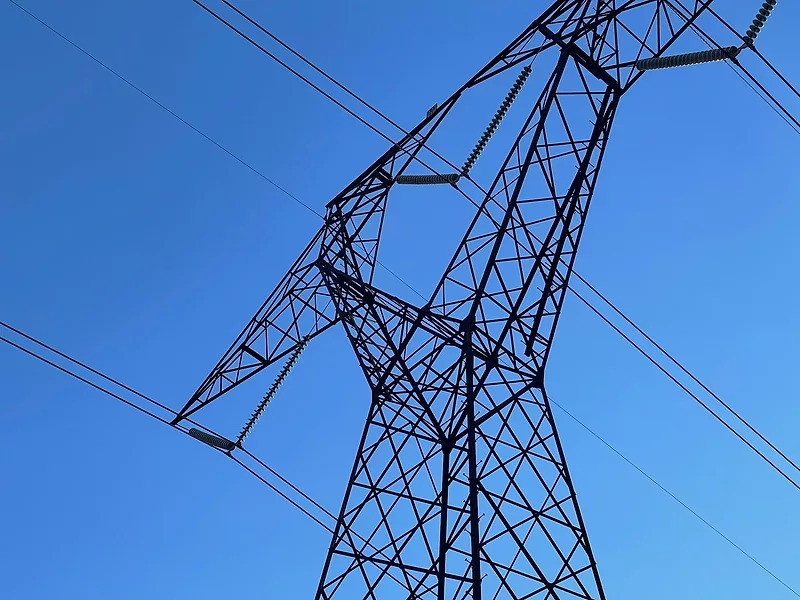
The Biden administration tapped never-used legal authority dating back to 2005 to fast-track a series of electric transmission corridors, the types of projects that – while touted as critical to improving the grid and expanding clean energy – frequently run into local opposition.
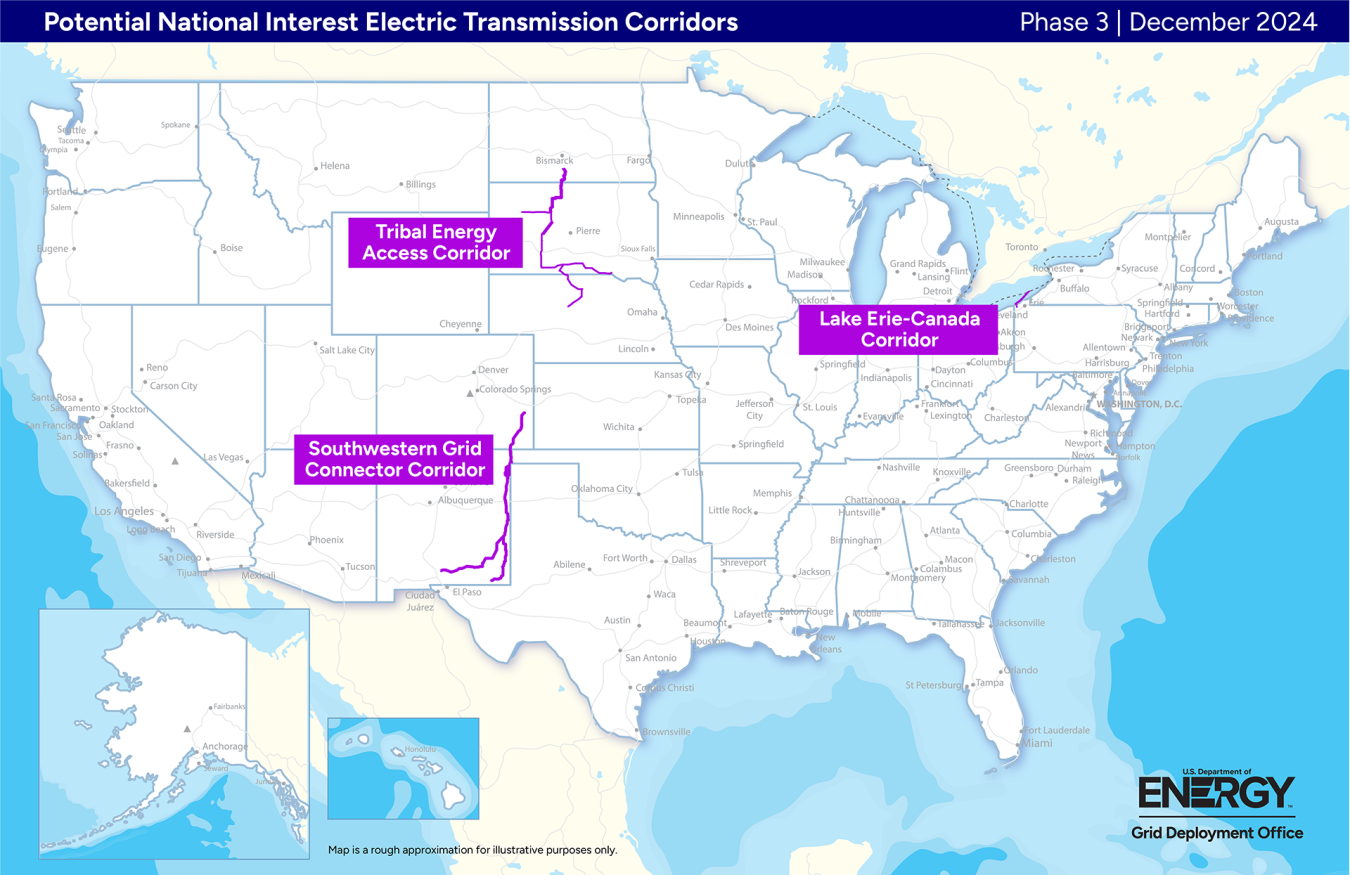
At least one of the three prioritized projects, called the Southwestern Grid Connector Corridor, is facing criticism from farmers and ranchers along its route, which would run from southeastern Colorado to eastern New Mexico, skirting the Oklahoma and Texas panhandles.
The Department of Energy says the project would “maintain and improve reliability and resilience, alleviate congestion, meet future generation and demand growth, and increase clean energy integration.” Opponents fear eminent domain by the federal government.
The Tribal Energy Access Corridor, which would run from North Dakota through South Dakota to Nebraska, is less controversial locally. But South Dakotans question the need to designate the project as a National Interest Electricity Transmission Corridor. The designation is intended to increase electric reliability and reduce costs in the area where new lines would be sited.
Several members of Congress are appealing to the Department of Energy to extend the comment period, which ended Tuesday, on the Southwestern corridor.
Rep. Lauren Boebert, R-Colo., asked Energy Secretary Chris Wright in February to halt the Southwestern corridor.
Boebert said landowners in Baca, Prowers and Kiowa counties in Colorado were given little to no notice and could not meet the comment deadline. She terms it “the Biden administration’s reckless push for inefficient green energy at the expense of rural communities.”
 Rep. Lauren Boebert (Official photo)
Rep. Teresa Leger Fernandez, D-N.M, expressed concern about DOE’s community engagement in a March 18 letter to Wright and said, “there appears to be a significant misunderstanding of what is happening on the corridor proposals.”
Leger Fernandez said the corridor designation does not approve a specific transmission project or acquisition of property for a line. Even if a corridor is designated, New Mexico state agencies would need to review and permit specific projects proposed by utilities.
The office of Sen. Ben Ray Luján, D-N.M., said the department is responding to requests for additional information about the corridors with more briefings in the community, but this has not been confirmed.
The proposed corridors would connect segments of transmission lines currently divided by the boundaries of various grid operators, which operate under different tariffs and market rules. Power prices and transmission access can differ across adjoining control areas, creating what are known as "seams issues."
The Tribal Access corridor is served by both the Southwest Power Pool (SPP) and the Midcontinent Independent System Operator. The Southwestern Grid Connector traverses SPP and the Western Electricity Coordinating Council.
The grid control areas have power sources as diverse as hydro from Manitoba and coal-fired generation in the central states, but wind and solar have dominated recent additions to the mix.
More transmission would allow power to flow more easily across the boundaries or seams, to and from areas with both more supply and demand.
In May 2024, 10 corridors were under consideration, but those were reduced to three in December. The third corridor borders Lake Erie from Pennsylvania into Canada.
Ranchers view Southwestern corridor as land grab
Leger Fernandez asked for in-person meetings so DOE can clarify plans for withdrawing private land or the implications of the corridor designation for landowners. Some constituents support an increase in transmission and the export of wind and solar energy, while others speculate that the designation could lead to federal land seizures through eminent domain.
 Rep. Teresa Leger Fernandez (Official photo)
In a February meeting in Clovis, New Mexico, cattlemen said they are not against wind and solar.
It’s easy to be “in the know” about agriculture news from coast to coast! Sign up for a FREE month of Agri-Pulse news. Simply click here.
Cliff Copeland, northeast vice president of the New Mexico Cattle Growers Association, said the group is against a DOE land grab. “None of the corridors has been completed yet because the people don’t want it,” he said. “We don’t stand a chance with the threat of eminent domain.”
The designation does not put land in federal hands but establishes how the Federal Energy Regulatory Commission can grant a permit if a state is unable to approve a power line application serving that area. States approve the construction of new power lines and FERC approves tariffs that govern their use.
One option to put a line in a corridor could arise when a state does not have authority to approve new transmission lines or to weigh the interstate benefits of new lines. Another option is when a utility has no end-use customers in the state proposed for the line. A third case would occur when a state body has withheld approval for more than a year of a transmission line application or withheld it for one year after a federal corridor is designated.
FERC could also step in if a state approves a project that will not significantly reduce interstate transmission congestion or is not economically feasible.
FERC adopted a rule in October on how to exercise its authority, including a landowner bill of rights, an applicant code of conduct and environmental justice considerations for communities and tribes.
DOE will continue to examine corridor routes, assess its obligations under the National Environmental Policy Act and take public comment to establish the full scope of an environmental impact statement in the current phase of corridor planning.
In the next phase, DOE would publish the EIS and a record of decision under NEPA, followed by final designation of a corridor.
Bronson Corn, president of New Mexico Cattle Growers, said at the Clovis meeting that the federal government wants to skip the environment impact work affecting local communities. The corridor could be 5 to 15 miles wide, Corn said, and could be a repository for anything the government wants to put there, including nuclear waste.
Leger Fernandez said a transmission line usually involves an area between 100 to 200 feet wide, with accommodations made for construction and maintenance.
The Tribal Energy Access Corridor would connect the Cheyenne River, Pine Ridge, Rosebud, Standing Rock and Yankton Indian reservations and mostly follow existing rights of way. But Krystil Smit, executive director of the South Dakota Farm Bureau, questions the federal role.
“We are a watchdog of federal overreach. We would prefer to see state control.”
She said her group is accustomed to working with the tribes and is not sure why the DOE study identified a need for the corridor. “We believe the process is working well in South Dakota and are puzzled by the findings that fast-track a corridor,” she said. “Our public utility commission has not denied anything.”
The North Dakota Farm Bureau does not have policy on the corridor. The Nebraska Farm Bureau supports wind and solar power and is opposed to eminent domain.
The Midcontinent Independent System Operator, which sets power grid rules for part of the country where the tribal access corridor may be located, has been reluctant to endorse corridors, citing conflicts in planning procedures. The Southwest Power Pool declined comment.
For more news, go to Agri-Pulse.com.
