
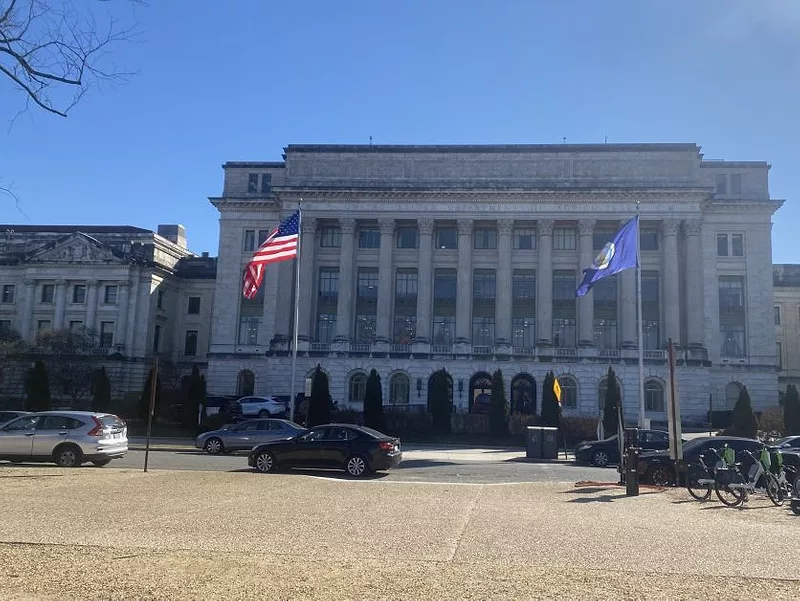
A federal judge has ordered the Agriculture Department and four other agencies to release frozen funding for Inflation Reduction Act and Bipartisan Infrastructure Law conservation and energy programs.
U.S. District Judge Mary McElroy in Rhode Island ordered leaders of USDA to resume processing grants already awarded under the IRA and BIL and refrain from further "freezing, halting or pausing" of already appropriated funds.
The case involves funding withheld from recipients under President Donald Trump's Jan. 20 "Unleashing American Energy" executive order, including USDA's Regional Conservation Partnership Program and the Urban and Community Forestry Program, among others.
"Considering the likelihood of success on the merits" of the plaintiffs' claims, the judge said "the nature of this case favors a nationwide injunction."
"[I]t would be anathema to reasonable jurisprudence that only the named nonprofits should be protected from the irreparable harms of the likely unlawful agency actions," McElroy wrote in her opinion.
The government failed to consider the impacts of its actions, McElroy said.
"Nothing from OMB, the [National Economic Council] director or the five agency defendants shows that they considered the consequences of their broad, indefinite freezes: projects halted, staff laid off, goodwill tarnished," the judge wrote. "Instead, they "essentially adopted a 'freeze first, ask questions later' approach."
Other agencies named in the lawsuit include the EPA and the departments of Energy, Interior, and Housing and Urban Development.
"The court wants to be crystal clear: elections have consequences and the president is entitled to enact his agenda," McElroy said. "The judiciary does not and cannot decide whether his policies are sound. In other words, 'the wisdom' of his decisions is none of our concern.”
However, "agencies do not have unlimited authority to further a president’s agenda, nor do they have unfettered power to hamstring in perpetuity two statutes passed by Congress during the previous administration," she said.
It’s easy to be “in the know” about agriculture news from coast to coast! Sign up for a FREE month of Agri-Pulse news. Simply click here.
The nonprofits that filed the case asserted the funding freeze was "unlawfully arbitrary and capricious." McElroy found that argument compelling.
Plaintiffs in the case include the Woonasquatucket River Watershed Council, the Eastern Rhode Island Conservation District, the Childhood Lead Action Project, Codman Square Neighborhood Development Program, Green Infrastructure Center and the National Council of Nonprofits.
Acting Assistant Attorney General Yaakov Roth and Alex Haas, the director of the federal programs branch at the Justice Department's Civil Division, had urged the court to deny the motion, arguing that the plaintiffs "never define exactly what agency actions they are challenging."
However, McElroy wrote that that argument contradicts with "exactly what the agencies did here," pointing out that the federal government "froze all available [BIL] and IRA funding that it administers 'in the abstract' and 'in an across the board manner,' just based on the funding's origin in the [BIL] and the IRA,'" the judge wrote.
"If the court must evaluate the specifics of each withholding to determine its lawfulness, it follows naturally that the agencies likely exceeded their statutory authority in freezing them in totality, without regard to that same analysis," McElroy wrote.
For more news, go to agri-pulse.com.

