
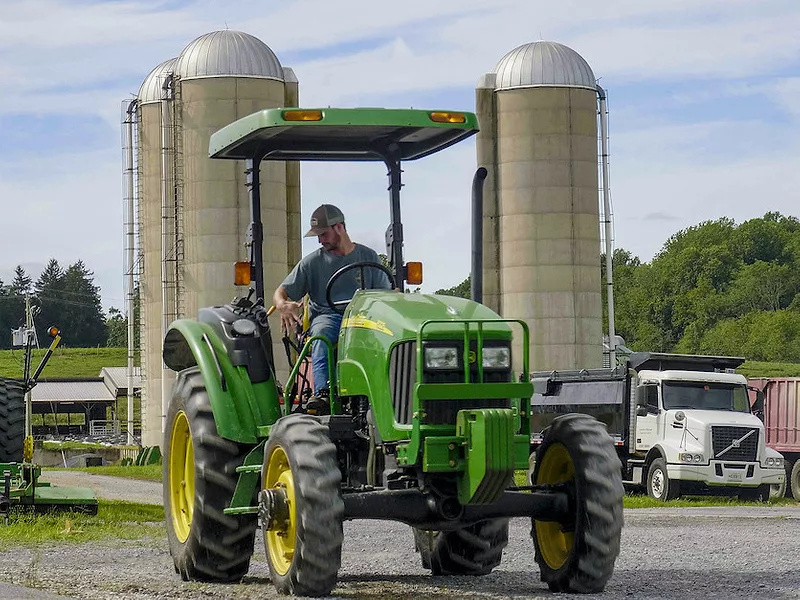
Anthony Marco drove his International 1206 up a pile of silage, using the tractor’s weight to pack down the feed he would give to his dairy herd later in the year. As the tractor puttered along the pile’s soft edge, Marco knew he was taking a risk.
Then things went wrong.
The tractor tipped. In that moment, the 10,000-pound machine could have rolled onto its back and crushed him. But thanks to two thick metal bars that protruded from both sides of the driver's seat and held up a sun canopy, the vehicle instead fell on its side. When Marco pulled himself out, only his pride was injured.
Those bars are rollover protective structures, which shield tractor drivers from overturns, a leading cause of farm deaths. In the 14 years since the New York farmer’s first incident, he has installed them on three other tractors. They helped him avert potential injury again last year.
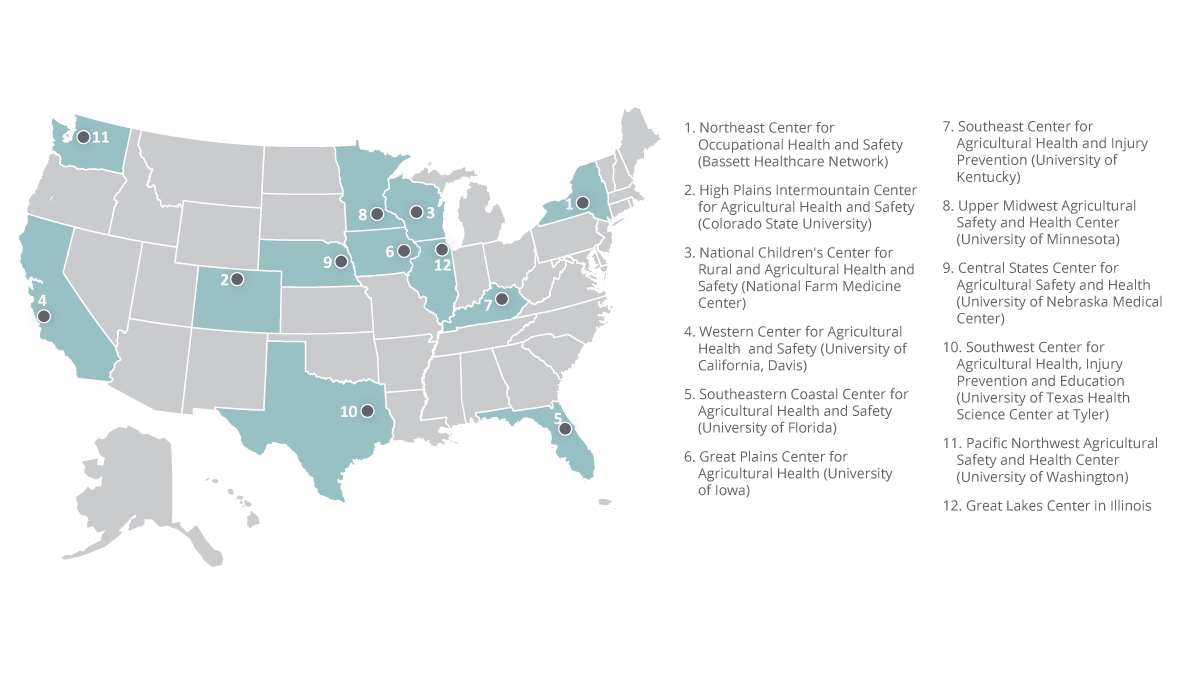
Marco’s access to the life-saving technology was made possible by the National Institute for Occupational Safety and Health, a small agency that funds worker safety research and education, and one of 12 regional Agricultural Safety and Health Centers it supports. Experts at the NIOSH-funded Northeast Center for Occupational Health and Safety have for years helped farmers across the region retrofit decades-old tractors with such structures.
But that work is now at risk of ending.
Planned staffing cuts are likely to gut NIOSH’s workforce. Roughly 1,500 employees and contractors at the agency, housed within the Centers for Disease Control at the Department of Health and Human Services, are expected to be subject to reductions-in-force, according to a letter from 115 House Democrats. More than 90% of the agency’s workers will be impacted, including researchers who certify personal protective equipment, respond to avian influenza outbreaks, and study the impacts of wildfire smoke on farmworkers.
Some NIOSH employees lost access to their computers and offices soon after receiving RIF notices early this month, while others will remain in their positions until June, multiple agency workers told Agri-Pulse.
The Trump administration is looking at cutting funding for most of the agency’s programs, except for a few that study cancer in firefighters, provide 9/11 survivors with medical treatment, track mesothelioma cases and compensate Energy Department employees for exposure to radiation, according to an internal budget document leaked last week. Under the plan, NIOSH's $363 million annual budget would be pared down to $6.7 million.
As a result, a network of non-federal agricultural safety research centers scattered across universities and healthcare systems throughout the nation may suffer, too. Leaders of these centers fear that the NIOSH funding supporting their research and education efforts will be eliminated. Even if it is not, there may be no employees left at the agency who are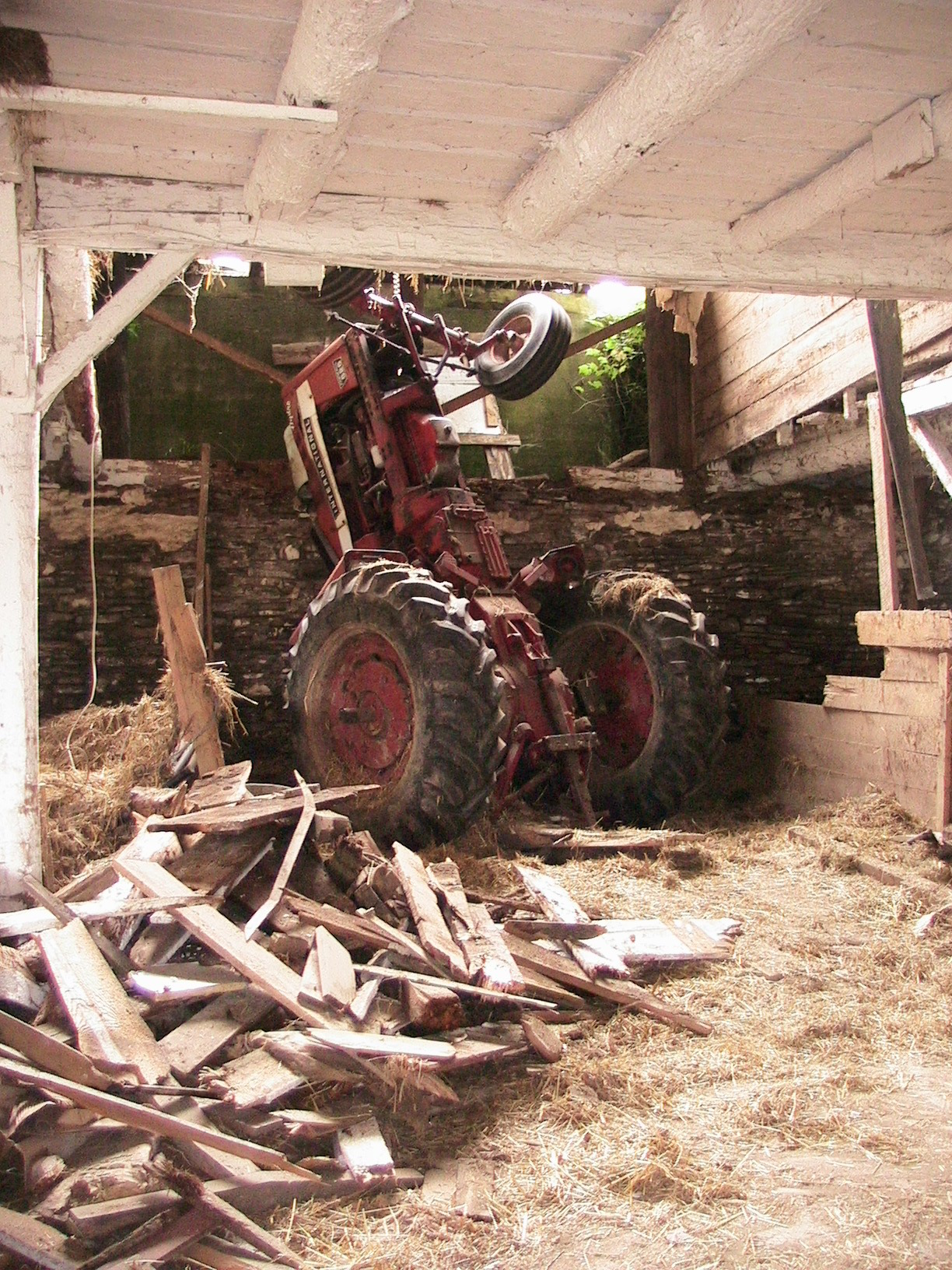 A rollover protection system obtained with the help of the Northeast Center for Occupational Health and Safety saved a farmworker’s life when a 5-ton tractor fell two stories through a barn. (Photo by New York farmer Bill Olin). able to distribute it to them.
“The centers are the agriculture safety and health training infrastructure for the country,” said one NIOSH employee, who added that they will “either go away or be critically impaired by these cuts.”
A statement provided by an HHS spokesperson did not directly address the staffing cuts, but said NIOSH will become part of the Administration for a Healthy America, a new agency being formed in the department. Last month, HHS Secretary Robert F. Kennedy Jr. announced a restructuring within HHS that included the elimination of 20,000 employees and the consolidation of regional offices.
"We aren't just reducing bureaucratic sprawl. We are realigning the organization with its core mission and our new priorities in reversing the chronic disease epidemic,” Kennedy said in a March 27 release. “This department will do more — a lot more — at a lower cost to the taxpayer."
Agri-Pulse spoke to more than a dozen sources, including affected NIOSH employees, former agency officials and leaders of external agricultural health and safety centers, who said the cuts could force ongoing research to end prematurely and halt the agency’s respirator certification program. Programs to make tractors safer, train emergency responders to handle farm incidents, and prevent producers or children from being killed or injured on the farm could be defunded.
Cut through the clutter! We deliver the news you need to stay informed about farm, food and rural issues. Sign up for a FREE month of Agri-Pulse here.
And Marco, the New York farmer, doesn’t understand why the cuts are being made in the first place.
“There’s nothing more worthy to spend money on than the people taking care of our country,” he said.
Cuts hollow out a longstanding worker safety institution
While NIOSH was created in 1971, its roots go back more than a century. As the U.S. population saw increasing industrialization and urbanization, concerns about worker health led to the 1914 creation of an Office of Industrial Hygiene within the U.S. Public Health Service, a predecessor to Health and Human Services.
The office employed a wide range of scientists, who ventured into farms and factories to study some of workers’ most frequent ailments, like TNT poisoning, silicosis, radiation, heat stress and lead exposure.
Over the next several decades, the office would be moved into and out of the National Institute of Health, as well as temporarily being placed in other health agencies. In the 1970s, Congress officially reorganized the agency as NIOSH and moved it into the CDC.
Unlike the Occupational Safety and Health Administration, NIOSH focuses solely on research and education, trying to help solve workforce health challenges through innovation and training, rather than through regulation. It works cooperatively with employers to find solutions for problems that afflict their workers and, in many cases, cost them money. A RAND corporation analysis found that between 2013 and 2017, NIOSH research helped companies avoid between $4 million and $7 million per year in workers' compensation costs and between nearly $700,000 and $16 million per year in uncompensated wage losses.

“NIOSH doesn’t do any enforcement,” said Jordan Barab, a former deputy assistant secretary of labor for OSHA. “They can’t level any penalties or anything. I think employers are much more willing to work with NIOSH."
In September 1988, roughly 170 scholars and agricultural leaders headed to Iowa for an eight-day conference. Their goal? Develop a set of policy recommendations to make farms safer.
A “Report to the Nation” subsequently released by the attendees laid out several challenges they believed had kept an agricultural safety policy agenda from advancing: farmers’ rugged individualism and reluctance to seek help from others; farm groups’ concerns about regulation and preference for advocating on economic issues as opposed to health-related ones; limited research dollars; and a lack of knowledge among the general public about farm risks.
The situation was worthy of policymakers’ attention, they believed. National Safety Council surveys conducted between 1977 and 1986 found that roughly 50 deaths occurred per 100,000 workers in the agricultural industry annually. An estimated 170,000 farm injuries happened each year, with nearly half of all survivors being permanently impaired. And approximately 300 children were found to have been killed each year in farm settings, they pointed out.
The farm safety advocates’ plea did catch Congress’s attention. In 1990, lawmakers passed a bill establishing regional centers focused on farm safety research and education, which would collaborate with and be funded through NIOSH.
Twelve such centers currently exist in university and hospital systems across the U.S., which analyze ways to make farming safer. They receive NIOSH funding in annual increments over a 5-year cycle.
 (NIOSH photo)
 With looming cuts, these centers are now at risk of closing. Jeff Bender, the director of the Upper Midwest Agricultural Safety and Health Center at the University of Minnesota, said his center will be funded through September, but fears next year’s money may not come in.
“I think there’s a real possibility that we will lose this center,” Bender said.
Funding awards for nine centers in HHS’s online tracker have been zeroed out for fiscal 2025, according to an Agri-Pulse analysis. No awards were listed past FY2024 for the Upper Midwest Agricultural Safety and Health Center, and Agri-Pulse was unable to find data for the Central States Center for Agricultural Safety and Health and the National Children’s Center for Rural and Agricultural Health and Safety. Jeff Bender (University of Minnesota photo)
Risto Rautiainen, director of the Central States Center for Agricultural Safety and Health at the University of Nebraska Medical Center, said university administrators are “fairly hopeful” that local philanthropy may be able to keep some of the center’s functions going for at least a year. But he added that even if that were to happen, the center would still likely not have the resources to continue mailing materials to large groups of farmers or host training events and continuing education courses.
More than 50 major research projects are currently underway at the 12 centers and “most, if not all, will be stopped or severely hampered,” a NIOSH employee said. Many graduate students’ positions are funded by this money as well, and the employee is unsure of whether those universities will have enough funding to support them on their own.
The current project pool is diverse. Researchers at the Upper Midwest center have been trying to craft a device that can detect viruses in the air inside of facilities like dairy barns, Bender said. Another center at the University of California, Davis, is currently working on designing and testing crush protection devices for ATVs, which are commonly used on farms but can be “incredibly dangerous,” said Heather Riden, the center’s director.
At the Northeast center, scientists are placing tubes of cotton soaked with permethrin around farms, which rodents use for nesting. The goal is to reduce populations of ticks that carry Lyme disease, though funding cuts may prevent them from conducting a final tick survey, making it impossible to determine whether the “tick tubes” actually work, said center director Julie Sorensen.
“What’s really wasteful is for the federal government to pay for these studies that sometimes take years to accumulate data and then to shut it off before you actually get those results,” Sorensen said.
The centers do education work, too. Specialists at the Western Center hand out pocket guides explaining signs and symptoms of heat illness to California farmworkers, Riden said. South Dakota farmer Troy Boomsma spent a lot of time reading through the stories and information published on the National Children’s Center’s website after his seven-year-old son, Jaxon, died in a tractor-related incident.
“When I lost Jaxon, I just basically Googled anything and everything on farm safety. If you do that, their website comes up,” Boomsma said of the National Children’s Center. He frequently recites safety statistics from the website when he talks to other farmers.
Cuts could eliminate federal funding for the ROPS Rebate Program, which helps farmers purchase rollover protective structures for their tractors. Losing NIOSH funding would force program administrators to call most of the 2,500 farmers on the program waitlist and tell them, “sorry, we can’t help you,” Sorensen said. It may continue in states that provide supplemental funding like New York and Wisconsin, but with constraints.
Another program at risk of losing federal dollars trains emergency responders to deal with on-farm health and fire emergencies, like rescuing producers from grain bins, farm machinery or confined spaces. The program is available in 16 states, according to a press release from the National Farm Medicine Center.
“We teach first responders how to respond to farms, and we teach farmers how to communicate effectively with responders so they can have the best outcome,” said Amanda Norr, an EMT who helped establish the program in Utah.
Agricultural, fishing and forestry workers are still believed to experience the highest fatal injury rate of all industries, with more than 18.6 deaths occurring per 100,000 full-time workers in 2022, according to NIOSH’s website. One study released last year found that injuries and deaths in the agriculture, forestry, and fishing industries result in an estimated annual medical and productivity loss of $11.3 billion.
If the centers ce Risto Rautiainen (University of Nebraska Medical Center photo)ase to exist, Rautiainen fears farm safety experts will lose their reach. Farmers may not have a voice around to tell them they should wear ear protection to prevent hearing loss, or to explain how to safely handle pesticides, he said. He worries they may take more risks without being made fully aware of the consequences.
“I am afraid that we are shifting to some sort of macho culture where we feel we are invincible, we don’t need any protection, we don’t need any safety advice from anybody,” he said. “That’s the wrong attitude."
Bird flu response threatened by cuts
On a sweltering day last July, a group of researchers wandered through a Colorado chicken farm. Their goal was to determine how Highly Pathogenic Avian Influenza jumped from poultry to a group of the farm's workers.
As they inspected one of the chicken barns, they made an important discovery. Amid the 104-degree heat, industrial fans had been turned on to cool the building down. But as the fans blasted air through the barn, workers’ goggles and N-95 respirators may have blown out of place while they were culling sick birds, potentially exposing them to the virus.
An industrial hygienist who worked for NIOSH made that discovery possible. As bird flu spreads across poultry flocks and dairy herds across the U.S., the agency's researchers have been at the front lines of the fight against the virus, with a distinct focus on keeping workers from getting sick. But these officials are among those who are preparing to lose their jobs, and Meghan Davis, an associate professor at the Johns Hopkins School of Public Health, fears combatting HPAI will become more difficult without the knowledge and support they are able to provide to the effort.
"What we're going to need to do is really increase our level of biosecurity and without industrial hygienists and people doing research on workers who also understand the context of agriculture, I think that’s going to be just impossible to do,” Davis said, noting HPAI’s “remarkable” staying power.
Davis said NIOSH has been integral to not only helping track the spread of the disease, but also coming up with ways farmers can better keep workers safe. For instance, the agency has supported efforts to reengineer herringbone milking parlors to better prevent raw milk from contaminated cows from splashing onto workers, who might get conjunctivitis as a result. Dairy farms often do not have the capacity to do such research the Meghan Davis (Johns Hopkins Photo)mselves, Davis said.
“To commercialize these activities, I think, would be very, very difficult,” Davis said of the agency's research efforts. “There’s a lot of return on value from what NIOSH does and it ultimately is a really cheap investment. A big bang for your buck in terms of what businesses get out of it.”
Some fear the staffing cuts will make it harder for the government to keep up with mutations of the virus, which could have consequences for not only workers, but the public at large.
"For years, that organization has been at the helm of making sure — pardon my French — sh-- doesn’t hit the fan,” one NIOSH employee said of the agency, pointing to its researchers’ willingness to jump in and respond to a stream of HPAI outbreaks over the past few years. “So now that they’re gone, now that public health is under attack as a function in our world, I think that the consequences, nobody understands how bad they are going to be. And it's a shame."
HPAI efforts at NIOSH-funded agricultural centers are at risk, too. The Central States Center for Agricultural Safety and Health puts together “PPE packets” containing safety glasses, N95 respirators, sanitizing wipes and plastic booties poultry workers can use to protect themselves. These packets are freely handed out upon request and similar packets are available for dairy workers, with slightly different items.
While the program has only been going on for roughly three weeks, the center has so far received requests for approximately 272 PPE kits from farms in Iowa, Kansas, Minnesota, Missouri, Nebraska and North Dakota. It has also posted videos in both English and Spanish that explain how to use, clean and store the equipment, while also offering additional safety tips to help workers avoid exposure to the disease.
“All of that will go away without this funding,” said Matthew Nonnenmann, an industrial hygienist involved in the project.
Respirator certification lab prepares to shut down
Hundreds of respirators are sent to Pittsburgh each year, where NIOSH scientists run them through tests. Those that meet the agency’s criteria are given approval numbers, which tell consumers that they are safe to use.
In a normal year, the agency’s National Personal Protective Technology Laboratory receives around 450 applications for the certification of new or updated respirator products, according to Rich Metzler, the lab's former director. Roughly 40% of these applications are denied each year.
But now, the lab’s workers are disposing of gases used in the testing process, as well as taking other steps to prepare the facility to be shut down, he said. By the end of June, these employees are expected to be gone. The lab’s work is expected to stop.
“Workers are going to pretty soon find out that the respirators that they’re wearing, a federal agency’s not standing behind," he said.
Jon  Jon Szalajda (National Council on Radiation Protection and Measurements photo)
Szalajda, who served as the lab’s deputy director before accepting an early retirement offer, told Agri-Pulse that only around 70 of the lab’s 120 employees still remain after the cuts, though they too will likely be gone after June. Szalajda’s final day was last Friday.
“I think the elimination of this program is going to compromise the quality and reliability of respiratory protection that’s out there in the United States, and it’s going to introduce widespread health and regulatory challenges for people that need respiratory protection,” Szalajda said.
NIOSH’s respirator certification program is not just a tool workers can use to tell if a product is safe. Under some OSHA or Environmental Protection Agency regulations, employers are required to provide workers with NIOSH-certified respirators.
Nonnenman, the Nebraska-based industrial hygienist, said he doesn’t often see concentrations of dust and gases on farms that exceed OSHA limits, though it can happen at times. But he advises producers to always have appropriate face protection on hand to allow workers to voluntarily wear as a safeguard.
“I think that’s a great approach, because the workers really know when it’s dusty,” he said.
Nonnenman said NIOSH’s certification process is “vital” to ensuring respirators are safe. He added losing the lab could also stifle future innovation. While N95 respirators can be uncomfortable to wear, he said future designs might be able to help address that. But if more comfortable varieties are developed after the lab shuts down, their manufacturers will not be able to secure NIOSH approval for workplace use.
The Pittsburgh lab’s scientists are not only tasked with certifying respirators, but also investigating counterfeit ones sold online. Prior to being told to stop work, lab workers were testing cartridges that attach to the front of organic vapor respirators, which are often worn when applying pesticides, according to Metzler.
 Matt Nonnenman (University of Nebraska College of Medicine photo)
None of the cartridges the lab workers tested met the agency’s standard, Metzler said. Yet, they could be mistaken as certified products if attached to respirators that had been approved by the agency. So the employees were in the process of writing a report notifying the public that those cartridges should not be used.
“These are the risks that workers are going to be exposed to when NIOSH goes away,” Metzler said. "No one’s there to test them."
‘American workers deserve better than that’: Researchers prepare for work to end
Brenda Jacklitsch has spent 15 years at NIOSH, working primarily as a heat stress expert. She assisted with a 2016 document that recommended ways to protect workers from heat stress. She also helps operate an app that uses temperature and humidity data to provide regular guidance in both English and Spanish to workers and employers about daily heat risks, which she said was downloaded more than 1 million times in the last year.
Like many of her colleagues, Jacklitsch received a letter earlier this month notifying her of the agency’s intent to RIF her. She is still waiting to be formally let go.
“I’m sad for myself, but I’m heartbroken for NIOSH in general because we really were making a difference and serving a purpose and serving the people,” Jacklitsch said. “And now it’s almost all gone.”
One of the NIOSH employees interviewed by Agri-Pulse said their RIF notice said they were eligible for severan Matt Keifer (University of Washington photo)
ce despite them finding out two weeks later that they were not. They said notices received by agency staff have also contained incorrect performance review ratings.
“The whole thing was incredibly sloppy,” the source said. “I know one person who had paperwork placing them in a division that has not existed for years.”
Inside of NIOSH, scientists are scrambling to find ways to preserve information from research projects currently underway. NIOSH employees told Agri-Pulse efforts to finalize recommendations for protecting farmworkers from wildland fire smoke will likely go unfinished, as will attempts to piece together data that could help better illustrate the mental health challenges faced by farmers. Jacklitsch said she is unsure of who — if anyone — will oversee the heat stress app.
“Instead of putting more money where something so important is, they’ve stripped it away like it's not even a concern,” Jacklitsch said of funding for heat stress research and education. “And American workers deserve better than that. Most of their lives are spent doing their job, and we should respect them enough to try to make sure that they go home in the same condition they went to work in.”
Many of the programs training U.S. physicians in occupational medicine are funded through NIOSH. Without support from the agency, those programs will likely go away, as will training opportunities for industrial hygienists, said Matt Keifer, a former director of the National Farm Medicine Center.
 Julie Sorensen (Northeast Center for Occupational Health and Safety photo)
“We’re basically just wiping out a future workforce,” Keifer told Agri-Pulse. “We’re effectively not just pouring out the research that’s being done, we’re dismantling the educational capability of the nation to train people who protect workers at work.”
While Sorensen, the director of the Northeast Center for Occupational Health and Safety, said she understands the sentiment of wanting to be more thoughtful about how taxpayer money is spent, she added that NIOSH does a lot of work despite having a relatively small budget for a federal agency. Collecting data and doing research that could save lives has a lot of value — for both employers and the families of the people who work for them, she said.
Sorensen said if NIOSH is shuttered, “we will live to regret the decision.” Workers and their families, she warned, will bear the brunt of the impact.
“You want to talk about something that’s expensive? Orphans. Orphans are really expensive.”
For more news, go to www.agri-pulse.com.

