
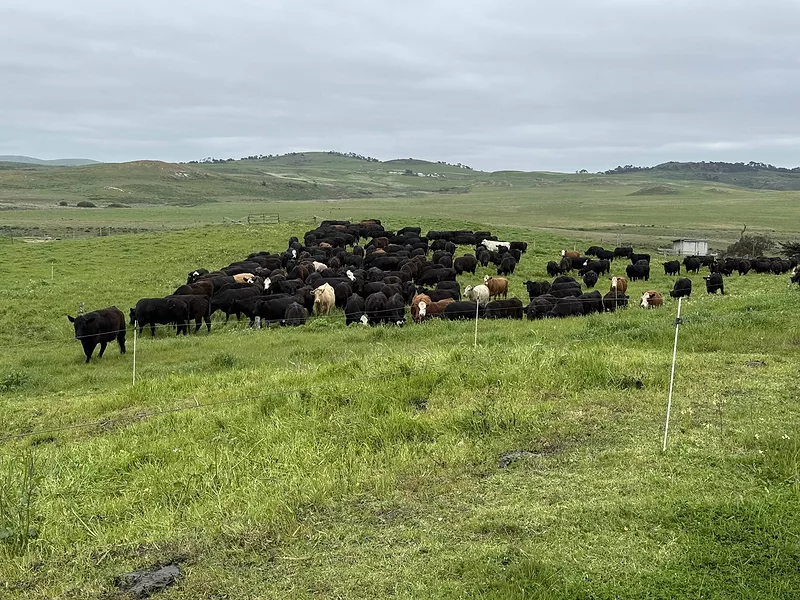
A new lawsuit against the National Park Service is attempting to ensure the long-term viability of agricultural land in the Point Reyes National Seashore.
The legal action comes after The Nature Conservancy brokered a settlement between 12 local ranches and the NPS to buy out the operations. The broad use of nondisclosure agreements paired with the negotiations happening in private has led to speculation about the voluntary aspect of the deal.
The departing ranch families and their employees — a total of 90 people — must vacate their operations within 15 months of the Jan. 8 settlement. Seven ranches chose to stay in their leases, along with two others that were not party to the agreement.
On Jan. 6, NPS revised and released an updated 2025 Point Reyes Seashore General Management Plan that would eliminate agricultural zoning for those vacant leases.
"Thanks to agreements between TNC and the closing ranch operations, the park’s future management will include additional opportunities for visitors, non-lethal management of native tule elk, and honors the co-stewardship agreement with the Federated Indians of Graton Rancheria," PRNS Superintendent Anne Altman said in the agency’s Jan. 8 announcement that also publicly shared news of the updated management plan.
The settlement is the result of a 2022 lawsuit against the park service, when the environmental advocacy groups Resource Renewal Institute, Center for Biological Diversity and Western Watersheds Project claimed the 2021 management plan unlawfully prioritized pastoral land uses by extending ranch leases up to 20 years.
The three environmental groups have not responded to Agri-Pulse’s interview request.
The future of Point Reyes ranching
Nicolette Hahn Niman, co-founder of BN Ranch who has lived and worked in the PRNS for decades, said the park service’s actions invariably constrain the region’s livestock operations.
In the lawsuit filed April 18, Hahn Niman and her husband, Bill Niman — and H ranch lesees David Evans and Claire Herminjard — argue the NPS made significant changes to the Point Reyes Seashore General Management Plan without engaging parties outside the settlement agreement or issuing an environmental impact statement as required by the National Environmental Policy Act.
Among the changes, the 2025 Record of Decision amended portions of the plan to repurpose the former ranching leases to “scenic landscape” zones, which would prohibit the use of formerly leased land for agriculture.
It also calls for the reduction in fencing that ranchers have historically used to manage the native tule elk population, despite the native species posing a conflict to livestock.
The lawsuit lists new restrictions under the 2025 ROD that the Niman and Evans families were not consulted on and that were not listed under the 2021 management plan. These include limitations on the size of their herds and restrictions on regenerative practices like composting and cover cropping.
David Evans, founder of Marin Sun Farms and cattle rancher on the Point Reyes H ranch, predicts that a major reduction in cattle across the region will lead to a speedy degradation of the grassland ecosystem.
“The elk can no longer manage this ecosystem because they don't roam in the large herd they once did,” said Evans, describing portions of the PRNS where cattle have not been allowed to graze have largely turned to bramble.
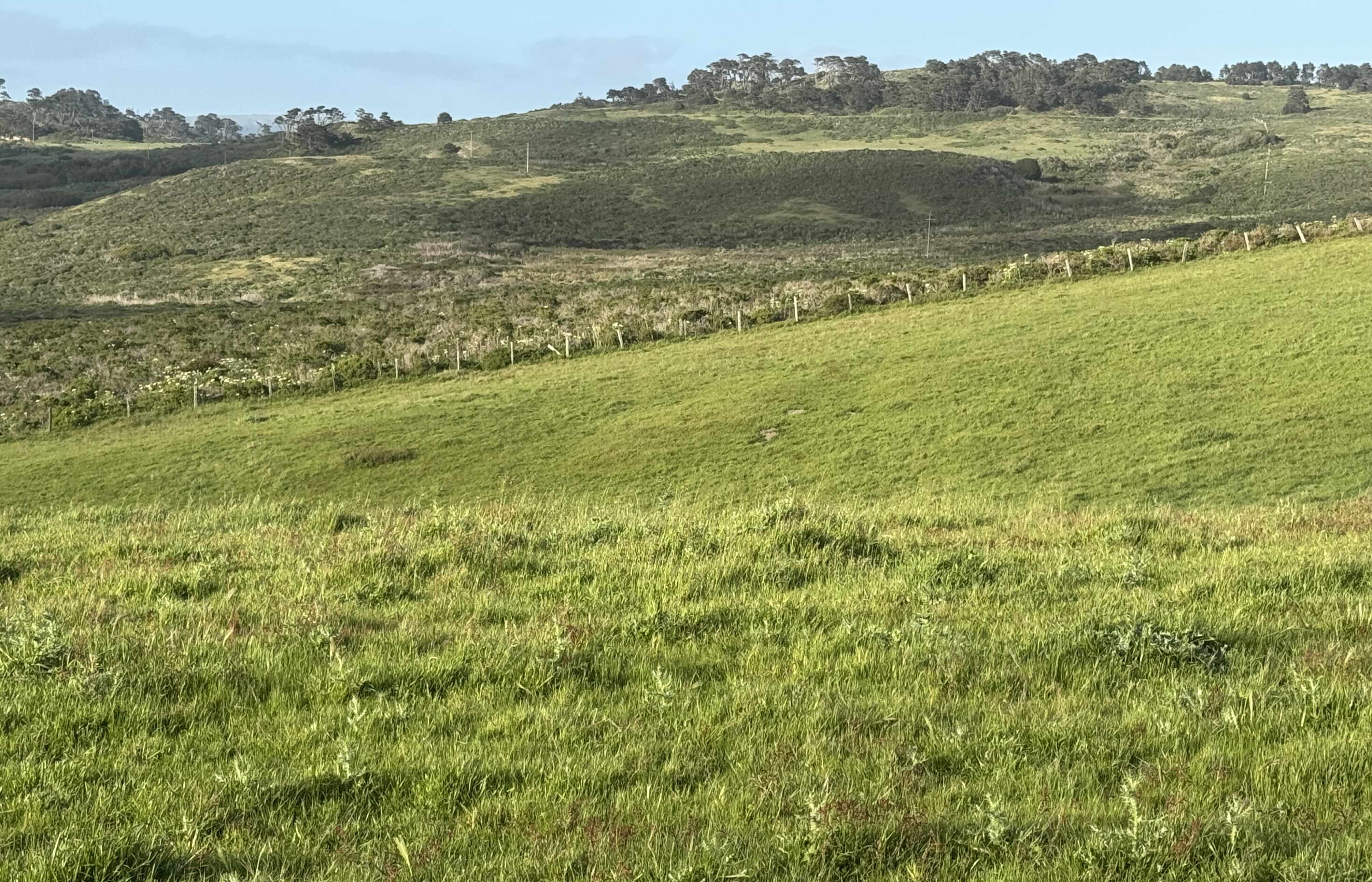 Evans' cattle graze up against the fence line. (Photo: David Evans)
“[The lawsuit process] really crystallized in my mind for the first time that the park has been an obstacle here, rather than being a facilitator,” said Hahn Niman.
Peter Prows, an attorney representing the ranchers, told Agri-Pulse the issue comes down to a culture clash between the park service and local farm families.
“I think it's a pretty unusual setup in the first place for the park service to be the landlord for farmers and ranchers,” said Prows.
He clarified that the lawsuit does not intend to change the settlement outcome, acknowledging that pressures put on the ranching and dairy families had become “intolerable.” Prows instead hopes the lawsuit will allow the Department of the Interior to consider alternatives the NPS never pursued during closed-door conversations.
Prows also noted that 20-year leases for ranchers in the seashore never took effect due to litigation stalling the allowance under the 2021 plan. With leases running as short as six months, Hahn Niman said farmers across the region have been less likely to invest in on-farm infrastructure, such as building a culvert.
She also felt the NPS kept increasing restrictions on what crops each operation was allowed to grow and the types of animals permitted. Hahn Niman said at one point NPS told them they would not allow most operations to farm heritage turkeys, but Hahn Niman’s life estate on 200 acres allowed for it.
Cut through the clutter! We deliver the news you need to stay informed about farm, food and rural issues. Sign up for a FREE month of Agri-Pulse here.
“They're failing to allow people to do things that would make themselves economically and ecologically vibrant,” she said.
Hahn Niman believes The Nature Conservancy made a deliberate push to settle before the Biden administration left office. She is hopeful the new administration will help renew agricultural zoning.
Should they win their case and restore farm access to the terminated PRNS leases, Hahn Niman would like to see any of the settlement ranchers return to their properties, should they want to. She also wants the land managed by an entity besides the NPS, whether that be another federal agency or a third party altogether.
She would like to see early-career and first-generation ranchers be afforded the opportunity to steward the land. She denies rumors that the Niman or Evans families were motivated in their lawsuit to purchase additional land.
“This could be a wonderful opportunity to really steward some beautiful land that has been well taken care of and with kind of a new level of commitment and knowledge,” she said.
Prows added that NPS did not consult the California Coastal Commission prior to rezoning the land, nor does he think they considered leasing the land to somebody else before passing it to The Nature Conservancy.
“I think we have a pretty open-and-shut case that the Park Service violated the law when it issued that decision,” said Prows.
Heather Gately, The Nature Conservancy media and communications director, wrote in a statement emailed to Agri-Pulse that the conservancy was asked by all parties to find a compromise in the 2021 litigation.
“We agreed to take on this role after meeting with all of the Seashore ranchers and hearing directly from them that the status quo was not working,” Gately wrote.
She added that the organization has a “long history of partnering with ranchers, farmers and communities who work closest to the land to help conserve the lands and waters that sustain us all.”
Gately said the Point Reyes settlement echoes The Nature Conservancy’s non-partisan and non-adversarial approach to community engagement that led to a voluntary agreement and allowed nine ranches to obtain long-term leases.
The NPS public affairs office declined to comment on the pending litigation but reiterated the voluntary nature of the settlement.
Over a century of stewardship
Industrial agricultural operations along the Point Reyes peninsula began in the 1850s. In 1857 the Shafter family ranch purchased the majority of the peninsula and began leasing portions to other ranches. The Shafter family is credited with starting California’s large-scale, quality dairy industry.
Rising property taxes due to urban expansion in Marin County put pressure on the ranchers to advocate for the dairy district, leading to a partnership with the Sierra Club. Then in 1962 President John F. Kennedy signed legislation creating the Point Reyes National Seashore and placing it under NPS jurisdiction.
In the 1970s Congress established nearly 30,000 acres of protected PRNS wilderness for public use; a 1980 management plan delineated nearly 20,000 acres for a “pastoral zone.”
The community has since been known for leading in the regenerative agriculture space. Hahn Niman said her operation and many others are a primary dairy and egg supplier for local communities. Farms along the seashore produce roughly 20% of Marin’s agricultural products — including cheese, milk, eggs and meats — according to the Point Reyes Seashore Ranchers Association.
They also supply products to some of the biggest names in California’s organic dairy industry, including Straus Family Creamery and Cowgirl Creamery.
Joseph Button, vice president of sustainability and strategic impact for Straus, said North Coast communities’ support for ranching remains strong, evidenced by Sonoma County’s overwhelming vote against last year’s ballot Measure J, which would have banned concentrated animal feeding operations across the county.
Button wants to dissolve notions that organic farming and land management occur in conflict. He said Straus is among a group of organic dairy buyers — including Clover Sonoma and Organic West Milk — developing a coalition to work with politicians and land trust organizations to help relocate the bought-out farms to maintain the regions’ stable milkshed.
He said the coalition’s grand objective is to maintain land access for the next generation of farmers in the North Coast.
“Point Reyes National Seashore is part of that but it goes well beyond that, to creating opportunities for farmers to thrive and to continue to provide food for their local community,” said Button.
Congressional probe
On April 10, seven Republican members of the House Committee on Natural Resources wrote to the conservation groups involved in the 2022 lawsuit — and The Nature Conservancy — requesting all documentation related to the settlement and other land-use conflicts at the PRNS.
They claim the groups wrongfully attacked the 2021 management plan “without any understanding of its purpose,” citing that the 1962 PRNS legislation called for multiple land uses.
“But, more importantly, PRNS was specifically established to protect the livelihoods and lands of ranchers in the area while allowing for multiple use,” they wrote.
Point Reyes families involved in the settlement asked the committee in recent weeks not “to take any action that would jeopardize” the settlement, The Press Democrat reported. But in their letter, the representatives shared concerns over the closed-door process that led to the settlement and the “environmental and legal consequences the settlement may impose.”
Rep. Doug LaMalfa, R-Calif., is the only California member involved with the investigation. He has been outspoken over how the settlement played out. Rep.Jared Huffman, D-Calif., is the representative for Marin County and has told reporters that the settlement was the best option for the ranchers moving forward.
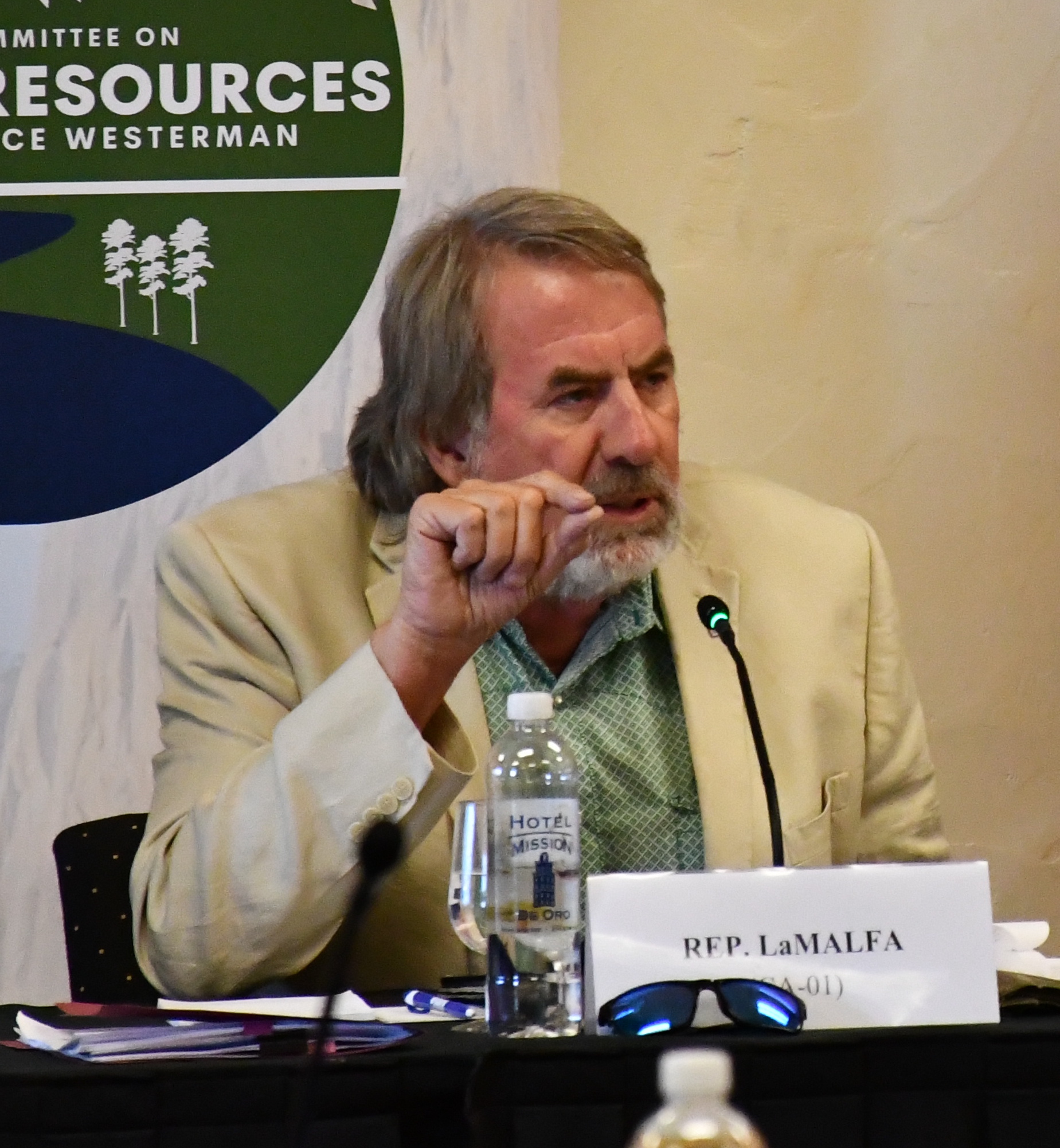 Rep. Doug LaMalfa (Agri-Pulse photo)
The two previously clashed over the removal of four Klamath River dams, with Huffman praising the plan’s benefits to fisheries and wildlife. LaMalfa, on the other hand, warned the project would harm endangered species by mixing effluent from the dams into the water system.
LaMalfa’s office did not respond to Agri-Pulse’s request for comment. Huffman’s office directed Agri-Pulse to the congressmember’s previous interviews related to the Point Reyes conflict.
In October, Huffman told The Press Democrat that he sees some “real opportunities” in taking down elk fencing to expand the species’ habitat. He also acknowledged how difficult the settlement mediation process was for the ranchers, referring to them as “really good, multigenerational stewards.”
“I think we will find out now whether these politicians, who claim to be so concerned about the ranchers, actually care about the ranchers or about the political opportunity,” Huffman told The Press Democrat over news of the settlement investigation, which he did not get a heads-up on.
The deadline for environmental groups to turn over settlement documents fell on April 24. The committee panel has not responded to Agri-Pulse’s inquiry on whether that request was fulfilled, but as of Monday Gately told Agri-Pulse The Nature Conservancy has received the letter "and will respond to the Committee."
In a letter to the House panel, Evans and Herminjard expressed gratitude for Congress’ interest in their family’s century-long commitment to caretaking the land, calling the changes made to the 2021 ROD “a true insult” to years of careful land management.
They also expressed concerns that environmental groups would target their operations next — which would end ranching on the peninsula.
“Please protect this cultural resource, our families ranch lands, so that we can continue producing wholesome and healthy food for our country, while supporting beautiful and thriving ecosystems,” the Evans wrote.
Prows hopes Congress focuses more on the future during their probe, pointing to Huffman’s previous leadership in requiring NPS issue 20-year agricultural leases.
Evans said the Presidio Trust could be a model for managing public resources on behalf of the federal government. The San Francisco national park — roughly 30 miles from the PRNS — was created by Congress as a public-private partnership between the National Park Service and Golden Gate National Parks Conservancy.
The Trump administration is currently scrutinizing the Presidio Trust among several federal entities it identified as possible avenues for reducing federal authority. But the agency told local outlets they would continue to operate as usual.
Evans hopes the relationship between the PRNS ranchers and the NPS can change. He doesn’t want to be treated as “a thorn in their side,” but maintains that the Department of Interior and NPS should be working harder to understand agriculture.
“Congress said that agriculture is going to be here as part of this National Seashore,” said Evans. “The opportunity now is to figure out how we are going to make this work.”
For more news, go to Agri-Pulse.com.

