

The California Legislature is considering several bills to ramp up regulations on air pollution and climate emissions. The state budget, however, is mired in an ongoing deficit forecast and federal funding has hit a roadblock with the Trump administration. That is driving some lawmakers to seek new ways to shift more of the implementation costs to regulated entities.
Among the most contentious of the measures still in play is Senate Bill 684, dubbed the Polluters Pay Climate Superfund Act, by Senator Caroline Menjivar, D-San Fernando Valley.
“It's time to hold super polluters accountable and have them pay for their fair share,” charged Menjivar in the first hearing on SB 684.
The measure aims to assess the climate damages from major fossil fuel companies and fine them likely billions of dollars for the recovery costs. The state would spend the fee revenues on programs to help residents adapt to climate change and to mitigate greenhouse gas emissions — ranging from supporting energy efficiency technologies to incentivizing farmers to adopt regenerative agricultural practices. Proponents argue the bill would boost agricultural resilience and farmworker health, while benefitting many other industries and communities.
The California Air Resources Board is already struggling to finance the rollout of ambitious climate mandates approved under the Newsom administration. The governor, attempting to trim costs to tackle the deficit, took heat from environmental interests last year for not including funding in his initial budget proposal to support CARB’s sales ban on diesel truck engines through its Advanced Clean Fleets rule. The revised budget later added money from the taxpayer-funded general account.
This year CARB is seeking $6 million to implement ACF, though it has withdrawn its request for a U.S. EPA waiver to enforce the regulation, and $3.5 million to implement new rules for converting warehouses to clean forklifts.
The threat of saddling employers with more regulatory costs drew intense labor opposition to SB 684 from the State Building and Construction Trades Council of California, along with business pushback from the California Chamber of Commerce.
“This signals that California's legal and regulatory environment is unpredictable, unstable and punitive,” said Jon Kendrick, a new CalChamber policy advocate. “We don't want to undermine our economic competitiveness. We don't want to deter investment in California.”
He warned SB 684 would “increase prices on everything” that deals with fuel, electricity, transportation, goods and services.
A nearly identical bill in the Assembly garnered opposition from the Nisei Farmers League and the California League of Food Producers, among many other interests.
Several lawmakers worried the two bills would force gasoline refineries to move out of state, taking jobs with them and raising prices at the pump, while exporting the environmental justice issues to other states and countries.
Menjivar’s previous attempt with the legislation died on the Senate floor last year.
More directly impacting agriculture is another pair of bills that would overhaul the system for air quality permits and expand CARB’s fee authority.
“We're at a pivotal moment for climate action,” said Sen. Josh Becker, D-Menlo Park, alerting a policy committee last week that congressional Republicans are attempting to revoke the state’s clean air waivers, along with other deregulatory actions. “Despite the uncertainty caused by the erratic federal administration, California's climate future is in our own hands.”
Becker asserted his bill, SB 318, would “move our existing air permitting systems into the future.”
Several agricultural groups registered their opposition to the bill, raising concerns about forcing food producers to replace conventional processing equipment with costly electric versions.
To that end, Christian Bisher, the air programs coordinator at the Central California Environmental Justice Network, cited two boilers powered by walnut shell waste that recently gained permits from the San Joaquin Valley Air Pollution Control District. In backing SB 318, Bisher said the proposal would have directed the district to consider cleaner power sources to protect residents from potential pollution.
Cut through the clutter! We deliver the news you need to stay informed about farm, food and rural issues. Sign up for a FREE month of Agri-Pulse here.
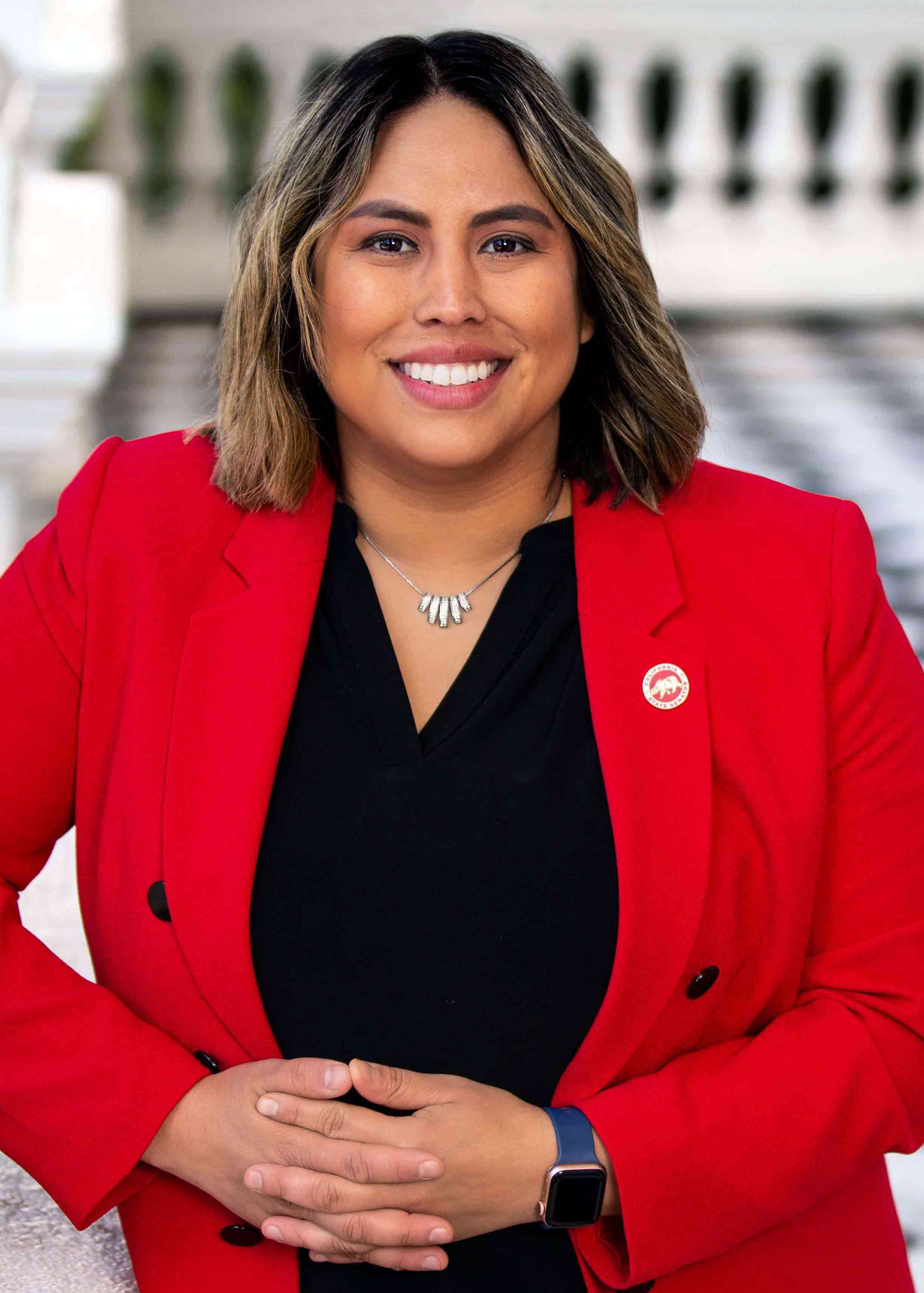 Sen. Caroline Menjivar, D-San Fernando Valley (photo: Menjivar's office)
The pressure on air districts drew retorts from the California Air Pollution Control Officers Association. Lobbyist Brendan Twohig contended the bill would shift valuable resources away from the districts to CARB to expand the state’s authority, which he argued would conflict with federal law.
Becker agreed to remove provisions on fees and other controversial aspects of the bill. Yet, like the initial version of SB 318, Assembly Bill 914 proposes to boost CARB’s regulatory power by requiring it to adopt an indirect source rule targeting industrial facilities and vehicles.
“The South Coast Air Quality Management District has seen vast improvements in air quality in just four years after establishing their own indirect source rules for warehouses,” said Assemblymember Robert Garcia, D-Rancho Cucamonga, who introduced his bill to a committee on Monday. “But there's still more that needs to be done in both the region and the state.”
Opposing AB 914, Sarah Wiltfong, chief public policy and advocacy officer at the Supply Chain Federation, described indirect source rules as a de facto tax and called them unproven and unnecessary. Wiltfong pointed to the district’s success with reducing 99% of diesel particulate matter in the Los Angeles basin before the adoption of the warehouse rule. Expanding CARB’s authority, she warned, would enable the agency to impose fees without legislative oversight. CARB is already facing an uphill battle in the Legislature in pushing for a similar proposal through a budget trailer bill.
In a letter urging lawmakers to not support the “sweeping new authority” proposed in the legislation, Jon Kendrick of CalChamber claimed the new mandates, fees and permitting requirements would “introduce significant regulatory uncertainty and increase the cost of operating in California for critical sectors, such as energy, food production and manufacturing.” He added that the proposal would disrupt long-term investments for capital-intensive facilities for food processing, manufacturing and energy production.
The threat of driving up everyday costs for Californians through state air quality mandates drove lawmakers to take the rare step of voting down an ambitious climate proposal in its first hearing. Sen. Scott Wiener, D-San Francisco, proposed to recoup the costs for climate damages by enabling residents and organizations to sue oil companies and other emitters for the harms suffered from disasters like the LA wildfires in January. Several agricultural groups had joined the broad coalition of businesses and construction unions in opposition to SB 222. The rejection has provided industry advocates with hope that lawmakers will take affordability concerns to heart this year.
For more news, go to Agri-Pulse.com.

