
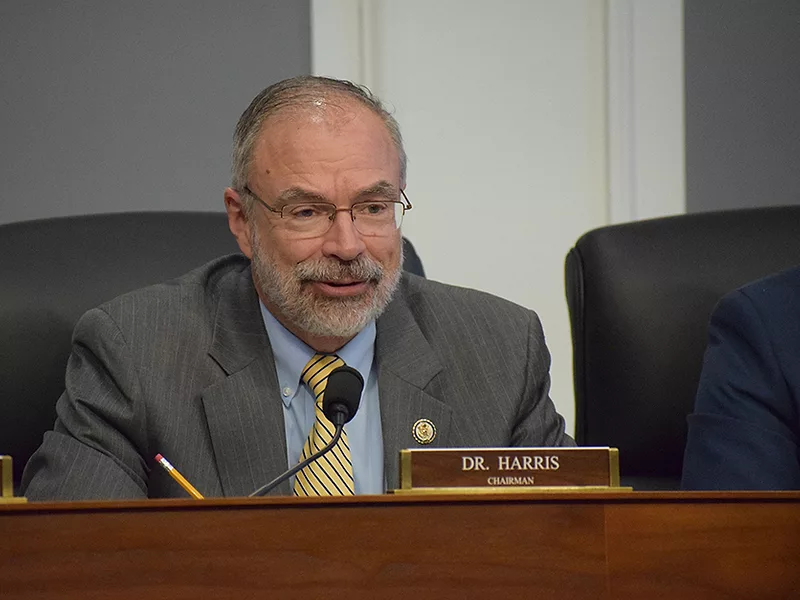
The top Republican on the House Agriculture Appropriations Subcommittee wants to impose Buy American restrictions on Supplemental Nutrition Assistance Program benefits.
Rep. Andy Harris, who also chairs the House Freedom Caucus, has long championed the idea of prohibiting the use of SNAP benefits for sugary beverages, an idea now being pursued by Agriculture Secretary Brooke Rollins and many governors. Harris, R-Md., floated his Buy American idea during a hearing with Rollins on Tuesday.
“There is no nutritional product that is only grown outside the United States,” Harris told Rollins. “There might be a preference product, but from a nutrition point of view, we could grow everything for that program here.”
After the hearing, Harris told Agri-Pulse he would likely try to attach the Buy American requirement to his subcommittee's annual appropriations bill for USDA and the Food and Drug Administration. He said Congress was unlikely to consider a standalone farm bill this year.
He said the Buy American requirement would ensure federal dollars are not used in a nutrition program to purchase nutritious foods grown overseas.
Harris said sugary beverages account for about $12 billion a year in SNAP purchases. These dollars could instead go to American farmers, Harris said.
Rollins didn't respond directly to the Buy American proposal for SNAP but said it had been "very encouraging" that states had requested rule waivers to prohibit the use of SNAP benefit for sodas.
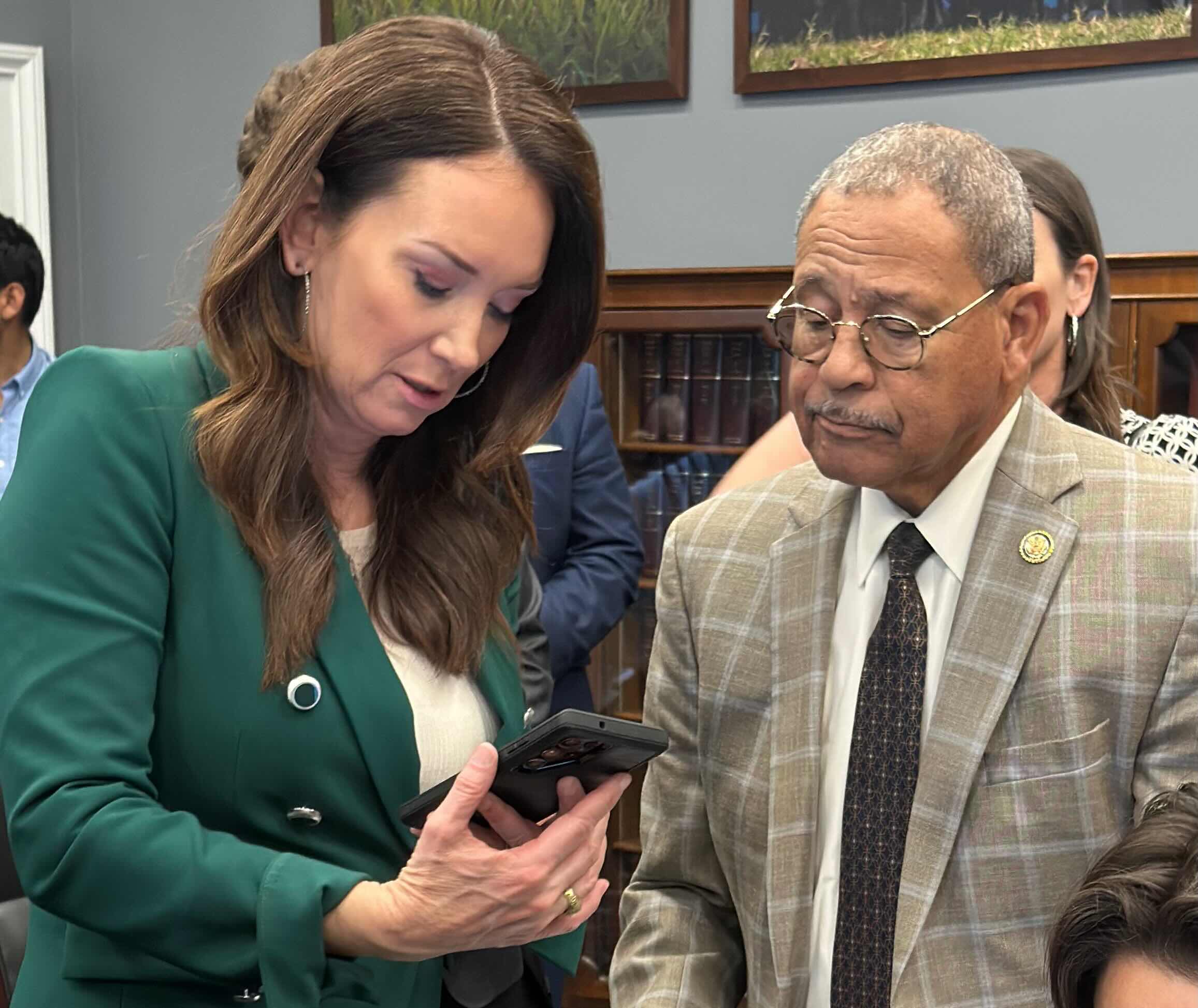 Ag Secretary Brooke Rollins with Rep. Sanford Bishop, D-Ga., ranking member of House Ag Appropriations Subcommittee. (Agri-Pulse photo)
During the hearing, Harris suggested Rep. Marcy Kaptur, D-Ohio, could be a partner on this proposal. After the hearing, Kaptur told Agri-Pulse she wants USDA nutrition programs to focus on local production, and could be on board with the idea. But she has yet to see any bill text.
In her second Capitol Hill visit as many days, Rollins was grilled on cuts to Farm Service Agency regional offices, disaster aid and programs the administration had cut or frozen.
The top Democrat on the full Appropriations Committee, Rosa DeLauro, D-Conn., said the country is in a cost of living crisis that is directly hurting farmers. She said the cuts to staff and congressionally appropriated funds are making these issues worse.
DeLauro rattled off several USDA programs that she said were cut or where funds have been frozen. These included:
- National Institute of Food and Agriculture
- Local Food Purchase Assistance Cooperative Agreement
- Environmental Quality Incentives Program
- Conservation Stewardship Program
- Agriculture Conservation Easement Program
- Regional Conservation Partnership Program
- Technical assistance for conservation and for underserved producers
- Watershed program
- The Emergency Food Assistance Program
- ReConnect Broadband Loan and Grant Program
“By cutting these funds, the administration prioritized corporate interests over the hard working farmers who need these supports to continue operating,” DeLauro said.
Other members on the panel, largely Democrats, also highlighted issues with frozen funds or staffing cuts they are hearing from their constituents.
Cut through the clutter! We deliver the news you need to stay informed about farm, food and rural issues. Sign up for a FREE month of Agri-Pulse here.
Rollins said the department is continuing to review and release frozen funds. Of the $20 billion originally frozen, she said USDA has reviewed and unfrozen all but $5 billion. Some of the programs could have been restructured to better fit the administration’s priorities, however, Rollins said.
She also advised members to reach out to USDA with information about FSA office closures or understaffing and specific programs they are hearing concerns about from their district.
Rep. Chellie Pingree, D-Maine, pressed Rollins on the cancellation of the LFPA program, which several members of the Senate Agriculture Appropriations Subcommittee raised on Tuesday. During her Senate appearance, Rollins emphasized that this was a temporary pandemic-era program, and many states still had money sitting around for the program.
Pingree said the program was partially in response to the supply chain disruptions caused by the pandemic, and these taught the country that it can’t depend so heavily on international and national travel. She also noted that the reimbursement process for states can take a while, or some states may have taken longer to develop relationships with farmers for the program, which could explain the reserve funds.
“But now that they have them, we’re going to lose them when you cut down this program,” Pingree said.
Pingree also suggested that since the LFPA program was funded through the Commodity Credit Corporation, the funds are being pulled back to potentially be used as a tariff bailout. During the first Trump administration trade war, the CCC was used to help farmers hurting from retaliatory tariffs. USDA only has about $5 billion currently available in the CCC account until Congress replenishes it.
Pingree said she doesn’t want to see the local foods funding pulled back to offset the cost of Trump's trade policy.
Pingree also brought up the budget request’s proposal to replace the Commodity Supplemental Food Program with “MAHA food boxes.” She asked the secretary to commit to putting fresh and local foods in those packages.
Rollins said she’s excited about the MAHA food box opportunity, and would do whatever she can to ensure those boxes are sourced locally and filled with nutrient-dense items.
Rep. John Moolenaar, R-Mich., took issue with a Biden administration rule that reduced the eligible dairy allotment under the Women, Infants and Children nutrition program.
Rollins said she was open to working on a fix to this issue, but also said an important piece of this could be solved in the Dietary Guidelines for Americans. USDA and the Department of Health and Human Services are currently tasked with writing the final updates to the guidelines.
She said the agencies are hoping to release the guidelines by early fall and that Moolenaar is likely to be pleased by the final product.
“I won’t say that we’re starting from scratch, because I think a lot of well-intentioned people did a lot of good work on that,” Rollins said. “It will be very simple, it will speak directly to the American family, it will support our local farmers and producers, and it will ensure that the incredible product of milk is right up there at the top.”
For more news, go to Agri-Pulse.com.

