
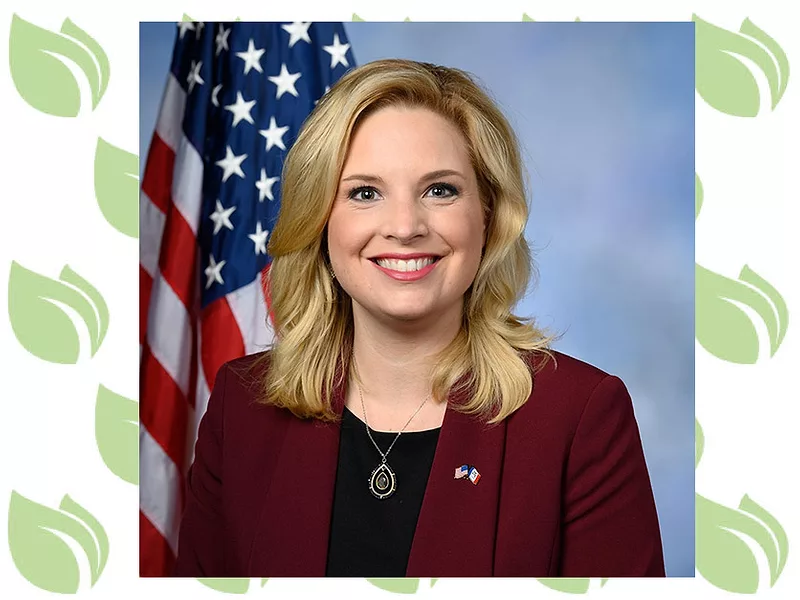
Iowa’s 2nd Congressional District is home to some of the most productive farmland in the country, and agriculture has long been the backbone of our state’s economy. But with shifting market demands, Iowa farmers are facing the real risk of declining farm income, shrinking cash receipts, and fewer opportunities to grow and compete.
Fortunately, there’s a major opportunity that could reverse these trends and bring in economic growth for rural Iowa: sustainable aviation fuel (SAF).
SAF is jet fuel made from biomass products like farm crops and agricultural waste—resources that are abundant in Iowa. SAF was developed to enhance and support fossil fuels in commercial aircraft that millions of consumers are flying in today.
Fuel consumption by commercial airlines has been rising steadily. In 2023 alone, the global aviation industry consumed 91 billion gallons of jet fuel. That figure jumped to 99 billion in 2024 and is expected to continue climbing. This is a largely untapped market where Iowa’s farmers should be leading.
With the right policies, SAF can open a new revenue stream for American farmers, create good-paying jobs in the biofuel sector, support rural economies, and bolster our national energy security by increasing our domestic fuel supply.
Although current federal policies have supported early growth of SAF, Congress must now work with President Trump to ensure that SAF is a pillar of his American energy dominance agenda. That starts with giving energy producers the long-term confidence they need—making it clear the federal government is committed to scaling U.S. domestic SAF production.
By stimulating private investment, we can enable the construction of new facilities and expanded operations to meet the aviation industry’s growing fuel demands. This growth would position Iowa as a leading SAF hub, supporting more than 22,000 permanent jobs and adding $2.7 billion to the state’s GDP by 2050, according to the agricultural economic research firm Decision Innovation Solutions.
I have long supported cutting onerous red tape that holds back American businesses and stifles innovation. Iowa’s farmers and biofuel producers are ready to lead, but Washington’s overregulation is shutting them out of the SAF market.
It’s easy to be “in the know” about what’s happening in Washington, D.C. Sign up for a FREE month of Agri-Pulse news! Simply click here
Instead of stringent mandates, we need smart, forward-looking policies that give farmers and SAF producers the certainty they need to invest, expand, and innovate. That’s how Iowa farmers can fully benefit from their efficient practices—and how we can ensure America retains control of its energy future.
SAF is meant to work with our existing fossil fuel supply, not replace it. By expanding SAF production, we will help meet growing demand in the aviation sector while driving down fuel prices and improving market stability. More supply means more competition, and that’s good for both the aviation industry and American consumers.
Integrating SAF into our existing fuel mix can lower overall fuel costs while pursuing President Trump’s energy dominance agenda, making sure that the United States—not China—leads the future of aviation fuel.
I have always supported an all-of-the-above and all-of-the-below energy strategy, with biofuels front and center. Investing in domestically produced SAF will reduce our dependence on foreign fuel sources and support rural economies.
We have the technology, the crops, and the workforce to lead. We just need the policies to unlock these opportunities, realize SAF’s wide-ranging benefits, and ensure Iowa remains at the forefront of American energy leadership for decades to come.
Rep. Ashley Hinson, R-Iowa, represents the 2nd District of Iowa. She is a member of the House Appropriations Committee, the House Ethics Committee, and the Select Committee on the Strategic Competition between the United States and the Chinese Communist Party.