
House Republicans are proposing to cut $290 billion from nutrition assistance spending over the next 10 years and use some of the savings to increase spending on commodity programs, crop insurance and other farm bill programs.
The draft text released Monday evening for the House Agriculture Committee’s piece of a massive budget reconciliation bill is designed to comply with the panel’s instructions to make a $230 billion net reduction in projected spending over the next 10 years.
The bill’s agriculture provisions would increase Price Loss Coverage reference prices by 10% to 20%, in line with the farm bill the committee approved a year ago. The bill also would increase the Agriculture Risk Coverage guarantee to 90% and allow producers to enroll as many as 30 million new base acres that would be eligible for PLC or ARC coverage.
The individual limit for commodity program payments would be increased from $125,000 to $155,000 and indexed to inflation. For crop insurance, the premium subsidy for the supplemental coverage option would be raised from 65% to 80%.
The bill also would bring Inflation Reduction Act conservation funding into the farm bill baseline but remove requirements that limited the funding to climate-smart practices.
Funding for the Environmental Quality Incentives Program would rise from $2.66 billion in fiscal 2026 to $3.26 billion in fiscal 2031. Funding for the Conservation Stewardship Program would go from $1.3 billion in FY26 to $1.38 billion in FY31.
Trade promotion programs also would get $489.5 million a year through 2031, under the bill. Of that amount, $400 million a year would go to the Market Access Program. The Foreign Market Development would be funded at $69 million a year.
Funding farm bill provisions by cutting SNAP risks rupturing a urban-rural coalition that has long been seen as crucial to enacting farm bills, but the budget reconciliation process provided an avenue for Republicans to carry out the funding shift without Democratic votes. The budget reconciliation process allows the majority party to pass bills in the Senate without the 60 votes ordinarily needed to move legislation.
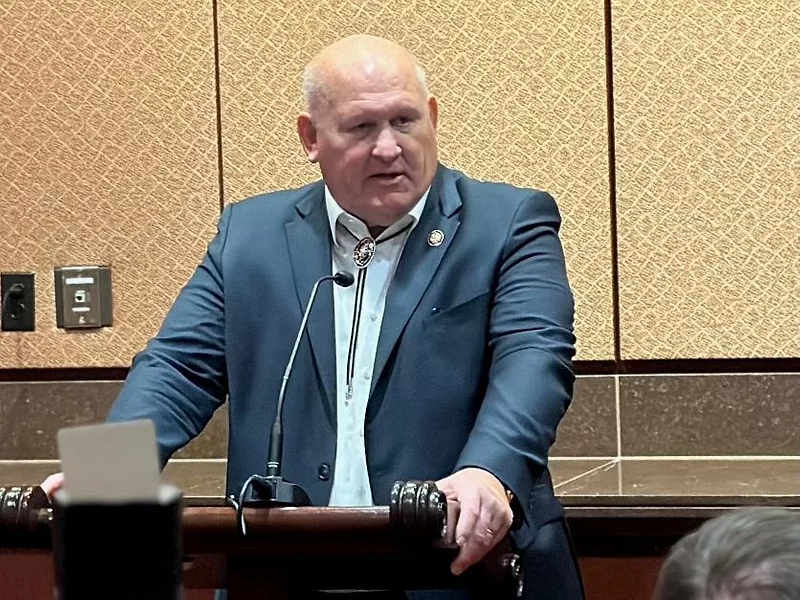
“For far too long, the SNAP program has drifted from a bridge to support American households in need to a permanent destination riddled with bureaucratic inefficiencies, misplaced incentives, and limited accountability,” House Ag Committee Chairman Glenn “GT” Thompson, R-Pa., said in a statement.
"This portion of the One Big, Beautiful Bill restores the program’s original intent, offering a temporary helping hand while encouraging work, cracking down on loopholes exploited by states, and protecting taxpayer dollars while supporting the hardworking men and women of American agriculture," he said.
The draft incorporates a range of proposals to expand work requirements and require states to start footing a portion of the program’s cost.
The state cost-share requirement would be partially determined by the error rate of each state.
Starting in 2028, all states will be responsible for 5% of the cost-share. Also starting that year, states with error rates between 6% and 8% will have to contribute 15% of the cost-share. States with 8% to 10% error rates will have to pitch in 20%, and states with error rates 10% or higher will be responsible for 25% of the match.
Additionally, states will now be responsible for 75% of the administrative costs rather than the current 50%.
The cost-share proposal threads the needle between the committee’s original suggestion of a flat 10-25% cost-share for states, and concerns from some members about the impact on their states’ budgets.
Rep. Derrick Van Orden, R-Wis., took issue with the flat cost-share suggestion and proposed basing the figure on state SNAP error rates. Wisconsin had a 4.74% SNAP error rate in 2023. If the state maintained or lowered this figure, it would only be responsible for the flat 5%.
Separately, the bill would implement a cost-neutral provision preventing updates to the Thrifty Food Plan based on a reevaluation or update of market baskets. It would also require the agriculture aecretary to publish any TFP updates in the Federal Register and allow for public comment. TFP is an economic model of the cost of eating.
It’s easy to be “in the know” about what’s happening in Washington, D.C. Sign up for a FREE month of Agri-Pulse news! Simply click here
Another major change Republicans had previously discussed involves work requirements. The reconciliation proposal would increase the maximum age from 54 to 64 years old and also apply to parents of school-age children, although there would be an exception for one parent when the other parent is working.
Republicans have also taken issue with the number of waivers granted to states for the ABAWD work requirements. Under the proposal, unemployment rates would be calculated on a county or county-equivalent basis.
Twenty-three Democratic governors released a statement criticizing the plan to cut SNAP as well as Medicaid in the reconciliation bill.
In a reference to the cost-share requirement, the statement said, “The notion that states will respond to massive cuts to federally appropriated dollars by backfilling with state resources is simply inaccurate and impossible.”
House Ag's top Democrat, Minnesota Rep. Angie Craig, also criticized the SNAP cut.
“With American families feeling anxious about the economy and so much uncertainty in farm country, this is not the time to make reckless cuts to basic needs programs. Yet, Republicans are fast-tracking catastrophic cuts to food assistance, taking food away from seniors living on fixed incomes and parents who are struggling to afford groceries for their children," she said in a statement. "Decimating the nutrition title of the farm bill to fund tax breaks for the already wealthy and large corporations leaves farmers and the families they feed behind."
The draft text of the bill is here.
A section-by-section is here.
For more news, go to Agri-Pulse.com.


