
Coree Carver, founder of Boise-based Grove Fruit Growers, thought her Cambodian associates were mistaken when they told her that President Donald Trump had unveiled steep new tariffs on the country’s exports in early April.
“I didn't believe them,” Carver told Agri-Pulse. “It was like a lost-in-translation moment.”
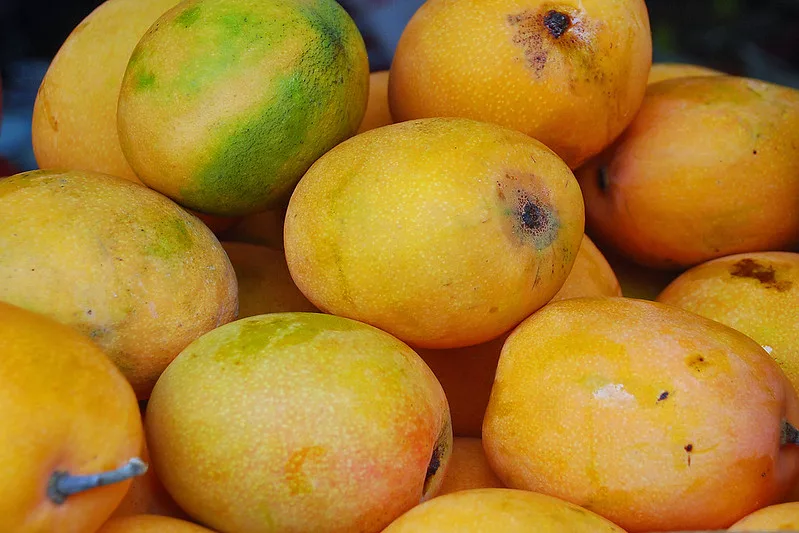
Grove Fruit Growers imports mangoes from the company’s 110-acre mango farm in Srey Noy, Cambodia, and supplies dried fruit to U.S. retailers. Carver was on a call with some input suppliers in Southeast Asia and immediately had to check the veracity of what she was hearing.
Sure enough, the president’s April 2 reciprocal tariff announcement would see imports from Cambodia face 49% duties, while those from Vietnam, where Grove processes the fruit, would be subject to new 46% duties.
“I had to get off the call because I thought, ‘How's this possible?’” she said. Suddenly the call’s original purpose – a regular check in on the company’s traceability practices – seemed immaterial. “That's not going to matter if these tariffs go into effect,” Coree said.
Around a week after that April 2 announcement, the president paused many of the country-specific tariffs for 90 days, leaving only a 10% baseline tariff in place for most countries. He signaled that the administration would cut a flurry of deals with countries to avert reciprocal tariffs in exchange for trade concessions.
The president initially said his administration would chase 90 deals in 90 days, but nearly halfway through the 90-day pause, the administration has announced an outline for just a single deal with the United Kingdom. Public comments from Trump and other senior officials suggest they are scaling back their negotiating ambitions.
Meanwhile, importers such as Carver are left with continued uncertainty.
Treasury Secretary Scott Bessent said on Sunday that the administration is focusing dealmaking efforts on 18 to 20 major U.S. trading partners. The remaining countries that don’t secure a deal with the U.S. could face a return of the April 2 reciprocal tariffs, Bessent told CNN’s Jake Tapper, or could be bundled into what Bessent called “regional deals” where countries in the same geographic region could be subject to a single tariff rate.
Trump himself has also said that the U.S. could set new tariff rates in the coming weeks for countries that do not secure deals, citing an inability to cut deals with every U.S. trading partner in the 90-day window.
“It's not possible to meet the number of people that want to see us,” Trump told business leaders during a Middle East visit last week.
Cut through the clutter! We deliver the news you need to stay informed about farm, food and rural issues. Sign up for a FREE month of Agri-Pulse here.
For smaller economies at the back of the negotiating queue, the news is an unwelcome development, as many are still waiting for their negotiations to begin.
For example, the Chilean ambassador to the U.S., Juan Gabriel Valdés, told Agri-Pulse on Friday that his government has yet to receive concrete demands from the U.S. to kickstart trade discussions.
But for Grove, the return of the reciprocal tariffs on Cambodia and Vietnam announced on April 2, would prompt existential supply chain decisions. A tariff of more than 40% on incoming mangoes, Carver said, would make business “impossible.”
Markets don’t grow overnight
Carver is all too aware of the time and resources needed to build out new markets and rejig supply chains – as well as the speed at which they can unravel. Soaring shipping costs during the pandemic prompted the company’s first reshuffle. Then came the Russian invasion of Ukraine.
 Cambodian farmer securing harvested mangoes for transport (Grove Fruit Growers photo)
 Before February 2022, Grove was sending a truckload of mangoes a day through Vietnam and China to buyers in Russia, in a deal worth around $5 million annually. Western sanctions wiped the market out almost overnight.
“The international SWIFT payments were shut down, so we couldn't work with them,” Carver said.
The Russia experience prompted Carver to explore shipping fruit to her home market in the U.S. Although meeting the higher U.S. standards would be challenging, Carver said she was craving a stable market that could provide predictability for her business.
She received grants from the U.S. Agency for International Development and the Asian Development Bank to implement new standards on the farm and improve supply chain traceability. Finally, in November 2024, Grove signed a contract with a company in Washington state to sell a million pounds of frozen processed mango annually.
“Everything was going great, and then these tariffs hit,” Carver said.
Carver has weathered the 10% baseline tariff by sharing the new costs across the players in the supply chain. The buyer in Washington has absorbed some of the tariff costs, Carver said, as have the processors in Vietnam, the fruit collectors and transporters in Cambodia, and Grove Fruit Growers.
“We're all doing what we can to mitigate the cost,” Carver said. But she stressed that if the reciprocal tariff rates return after the July 9 deadline, her business model will become unviable.
“There's just not enough margin along the supply chain” to absorb tariffs of more than 40%, she argued. Other major mango exporting countries like Mexico, Peru and Brazil are subject to much lower reciprocal tariff rates, putting Grove at a disadvantage in U.S. markets.
Difficult decisions
The idea to buy the farm in Cambodia struck Carver during a trip to the country in 2018. Carver and her family were living in Taiwan at the time and took a trip to Cambodia to volunteer in a school after learning about the Khmer Rouge and the genocide in the 1970s.
“We went out to the village area to see where the kids live, and there were all these mangoes piled up,” Carver said. She asked a local woman about the stacks of rotting mangoes and the woman told her that the farmers had no buyers for their fruit.
“I had this small food distribution company, so I thought, ‘Oh, I can connect them to buyers,’” Carver said.
 Coree Carver (Grove Fruit Growers photo)
From the beginning, her motivation was driven as much by development and altruism as it was by business goals. Carver turns a small profit on her sales, but she says the business is primarily “a labor of love.”
If the reciprocal tariffs return, Carver could sell the farm and establish a production facility in another mango-producing nation like Peru, she said. But that would mean turning her back on the Cambodian farmers and communities that she set out to support.
“Farmers aren't going to be able to sell their fruit, and they're going to be in that same situation where they bought the inputs and they thought they were going to sell into the U.S. market, and now they can't,” Carver said. “So, they're just going to be hosed again. They're the ones that lose.”
Alternatively, she’s considering moving her company out of the U.S., and finding an alternate market to sell into.
“I feel just so deflated,” Carver said. “It's just been one thing after another.” The stress of the tariffs, Carver added, have triggered a return of symptoms from a brain injury sustained in a car accident over two years ago.
“I've just been in so much shock,” she said.
While other fruit importers may not be facing the same existential threats from the return of reciprocal tariffs, tariff uncertainty is weighing on companies across the industry.
Tony Thompson, a co-owner at Iowa-based Prudent Produce, told Agri-Pulse that he is struggling to make key business decisions ahead of the July 9 deadline.
“It’s on again, off again, on again, off again,” Thompson said of the tariffs. In such a climate, he added, “it's tough to make vehicle purchase decisions.”
Thompson said that he was considering adding a new part or full-time position to his staff but is now hesitant.
“From a business planning standpoint, who knows what's going to happen, and it's tough to take anything perceived as a risk,” he added.
Fruitless exemption effort
Carver read about Trump’s trade policy goals in the media and saw that the president wants to use the tariffs, in part, to spur domestic investment and re-shore industries to the U.S.
“That makes sense,” Carver said. But she thought there might be an opportunity for an exemption given mangos aren’t grown in the United States.
Accordingly, she has thrown herself into an effort to try to secure a tariff exemption. Carver met with Sen. James Risch, R-Idaho, and spoke with the Idaho Department of Agriculture and the state’s chamber of commerce.
“Everybody's open and listening and empathetic, but there's not really a lot that can be done,” Carver said.
The president has not opened a formal exemption process for his reciprocal tariffs announced on April 2 – although some products were excluded from the order. In written comments to Senate Finance Committee members obtained by Agri-Pulse this week, U.S. Trade Representative Jamieson Greer said that the administration is not considering exemption requests at this time.
“So, we're all just kind of waiting until the Trump administration makes an announcement,” Carver said. “To be honest, nobody really knows.”
For more news, go to Agri-Pulse.com.

