
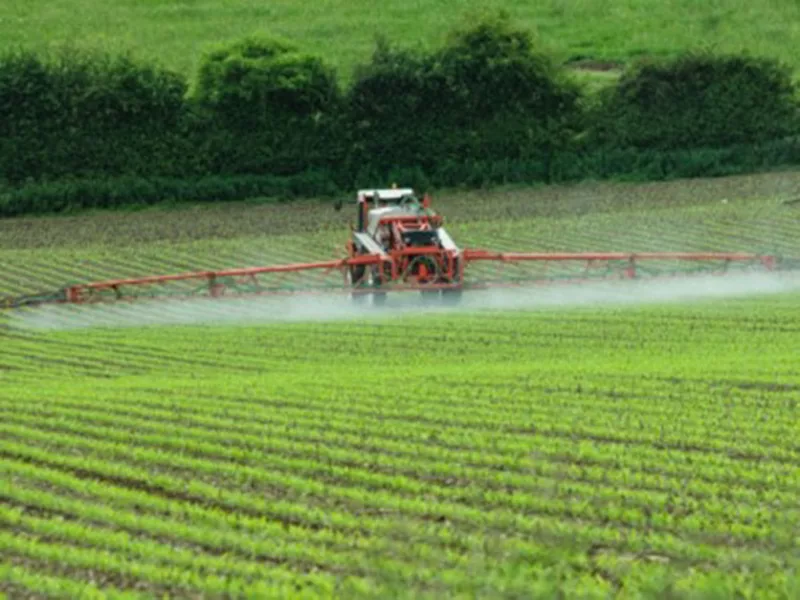
With criticisms of pesticides, seed oils and ultraprocessed foods, the Make America Healthy Again Commission’s first report is shaking up the traditional Washington alignments.
And at a White House event touting the report and sitting in between the government’s top agriculture and health officials, President Donald Trump made it clear he’s all in on the MAHA movement.
The nearly 70-page report covered a lot of ground and received a lot of pushback from farm groups. Here’s a breakdown of what you need to know:
- Pesticides: The report cites studies that link popular farming products like glyphosate and atrazine to adverse health outcomes. However, it notes more independent studies are necessary. The report and cabinet officials have tried to soften the blow by emphasizing the commission’s work will not hurt agriculture. But farm groups aren’t buying it.
- Ultraprocessed foods: A large portion of the report focuses on the prevalence of ultraprocessed foods in children’s diets, and the potential health impacts. It specifically targets seed oils, added sugars and fats. It also urges whole food diets and takes aim at food dyes, which the administration has already issued a plan to phase out.
- USDA programs: The report also criticizes the food system at large, including lobbying by food groups, farm consolidation and even the distribution of crop insurance, which has traditionally focused on row crops, not specialty crops.
Judge is likely to continue her pause on RIFs at USDA, other agencies
A federal judge is likely to issue an injunction indefinitely halting reorganization efforts at about 20 major federal agencies, including USDA, according to published reports.
“Agencies may not conduct reductions in force in blatant disregard of congressional mandates, whether the president orders them to or not,” U.S. District Judge Susan Illston, in San Francisco, said at the start of a hearing Thursday, according to an account in USA Today.
Illston issued a temporary restraining order May 9 that expires today. The hearing was on a request by the plaintiffs, including federal employee unions, for a preliminary injunction to stop the government from proceeding with reductions in force.
Cut through the clutter! We deliver the news you need to stay informed about farm, food and rural issues. Sign up for a FREE month of Agri-Pulse here.
“I believe injunctive relief, preliminary at this stage, remains necessary to preserve the status quo and protect the power of the legislative branch,” Illston said, according to Government Executive.
Keep in mind: The Trump administration has argued that the president has the constitutional authority to proceed with the reorganization efforts. It also has asked the Supreme Court for emergency relief from Illston’s TRO.
JBS employees ratify new contract with meatpacker
The United Food and Commercial Workers International Union on Thursday announced a new agreement with JBS to create a pension retirement plan for 26,000 workers at 14 facilities across the country.
The agreement creates a Taft-Hartley pension fund that will be jointly managed by JBS and UFCW, while also adding safety and ergonomic committees in each plant to address worker safety concerns.
Additionally, the agreement includes the creation of a paid sick leave program at the company, as well as retroactive wage increases, “new ergonomic safety measures to reduce workplace injury and fatigue,” and updates to vacation and paid leave time, according to Mark Lauritsen, international vice president at UFCW International.
“A new standard has just been set in meatpacking,” Lauritsen said.
USDA axes aid for food-insecure children
The Agriculture Department is scrapping a slate of programs that provide food aid for foreign schoolchildren from U.S. food products.
Catholic Relief Services, which administers some of USDA’s McGovern-Dole Food for Education program, said 11 of the 13 projects it maintains have been terminated. Reuters reported Thursday that the department had axed 17 projects in total.
CRS estimates 780,000 children will lose access to school meals through its nixed projects alone. CRS President and CEO Sean Callahan called the move a “life-altering blow” for children “who rely on these meals to stay healthy, stay in school and stay hopeful about their future.”
McGovern-Dole received $248 million in funding in the 2024 fiscal year, and USDA recently opened applications for the FY2025 program. The White House has proposed eliminating the program’s funding in its FY2026 budget.
But the American Soybean Association’s Virginia Houston said she remains hopeful for the project’s future, in part, because of its broad support on Capitol Hill. “There are members who still care a lot about these programs,” she said.
Trade uncertainties are depressing new soybean and corn crop sales, report finds
Uncertainty around international trade and tariff policies is shrinking early sales of the 2025/2026 soybean and corn crops, according to a new CoBank report.
Grain elevators and merchandisers often get sales on the books several months out. But as of May 1, U.S. soybean new-crop sales were 88.2% below their historical five-year average. Corn sales were 26.9% down, while wheat was slightly up.
China had bought no soybeans, corn or wheat.
The U.S. and China have significantly reduced their tariffs on each other’s exports since May 1, but the CoBank analysts argue that sales could continue to lag while trade uncertainty persists.
Students seek to stop USDA from collecting SNAP data
Students and hunger groups are asking a federal judge to bar USDA from ordering contractors to hand over SNAP participants' personal data without complying with federal privacy laws.
In a lawsuit brought by the National Student Legal Defense Network, the plaintiffs allege USDA acted unlawfully in seeking social security numbers, addresses and personal information of SNAP recipients. USDA sent requests to state administrators and contractors to pull into a comprehensive federal database.
The plaintiffs, along with the Jewish hunger organization MAZON and the Electronic Privacy Information Center, claim the agency’s data-consolidation efforts are arbitrary and capricious and violate the Privacy Act, the Paperwork Reduction Act and the Administrative Procedure Act.
Take note: In a May 6 letter to state Food and Nutrition Service directors, FNS Senior Policy Advisor for Integrity Gina Brand said the data would be used to “ensure program integrity, including by verifying the eligibility of benefit recipients."
Final word
“Unlike other administrations, we will not be silenced or intimidated by the corporate lobbyists or special interests.” — President Donald Trump on the MAHA report.
Rebekah Alvey, Oliver Ward and Noah Wicks contributed to today’s Daybreak.


