
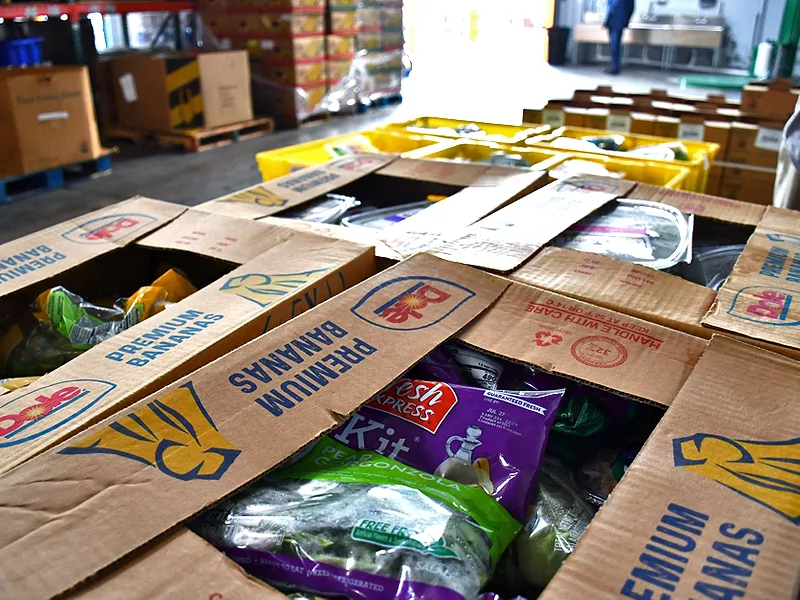
The Legislature is advancing a bill to remove the sunset date for a tax credit program for donations of fresh fruits, dairy products and vegetables to food banks. The California Farm Bureau and the Western Growers Association have allied with dozens of organizations focused on food security and food waste to support Senate Bill 353.
The Legislature established a 10% credit on donations in 2011 and increased it to 15% in 2016, extending it again in 2019 to the end of 2026. According to the Franchise Tax Board, taxpayers reported $12 million in donations in 2021, a similar amount the following year and in 2023 slightly less, at $8 million. During that time, the state delivered $4.2 million in credits on 1,992 tax returns.
The Senate Appropriations Committee approved SB 353 despite staff estimating the state could lose up to $1 million a year in tax revenue due to the credits. The bill has advanced through another committee and off the Senate floor with unanimous approval.
“This program has proved its effectiveness and is still going strong today,” said Senator Marie Alvarado-Gil, R-Jackson, during a policy committee hearing last month on her bill. “SB 353 is about long-term food access and agricultural sustainability.”
It’s easy to be “in the know” about what’s happening in Washington, D.C. Sign up for a FREE month of Agri-Pulse news! Simply click here
She added that making the tax credit permanent would enable both farmers and food banks to establish more lasting investments in the program, while tackling food insecurity by “ensuring that fresh, healthy food gets into the hands of those who need it most.” She cited research by the California Association of Food Banks that found 22% of California households and 27% of households with children struggle to put food on the table. The credit allows farmers to prevent food waste and save food products that farmers cannot sell but still have quality, explained Alvarado-Gil.
“We have no way to plan anymore,” said Mike Sproull, founder and director of the Food Bank of El Dorado County, testifying in support of the bill. “We don’t know when we’re going to be cutting programs [from USDA].”
Sproull said food banks need to be able to plan, to “know what they are getting.”
“I’ve been meeting with food banks and suppliers in my district and they’re hurting,” said committee Chair Jerry McNerney, D-Pleasanton, who thanked Alvarado-Gil for authoring the measure. “I also have a large ag community and they are also facing difficult choices.”
The Assembly will take up the measure later this month.
For more news, go to Agri-Pulse.com.

