
President Donald Trump is pushing congressional Republicans to delay their July 4 vacations if that’s what it takes to get the One Big Beautiful Bill to his desk. But first, Senate Republicans must pass their own version of the budget reconciliation measure.
Republicans appear to have found a fix for their SNAP state cost-share requirement that passes muster with the Senate parliamentarian. But GOP leaders are still struggling to address concerns about the impact of Medicaid cuts on rural hospitals.
Craig Thompson, CEO at Golden Valley Memorial Healthcare in Missouri, told reporters the bulk of his rural hospital’s Medicaid patients are “farmers, ranchers, small business owners, veterans and a whole bunch of kids.”
For more on the reconciliation bill, read our weekly Agri-Pulse newsletter.
Senate weighs aligning with House on foreign feedstocks
The Senate is considering a shift closer to the House reconciliation provision on foreign feedstocks for the 45Z tax credit for clean fuel producers. The change could result in a shorter extension.
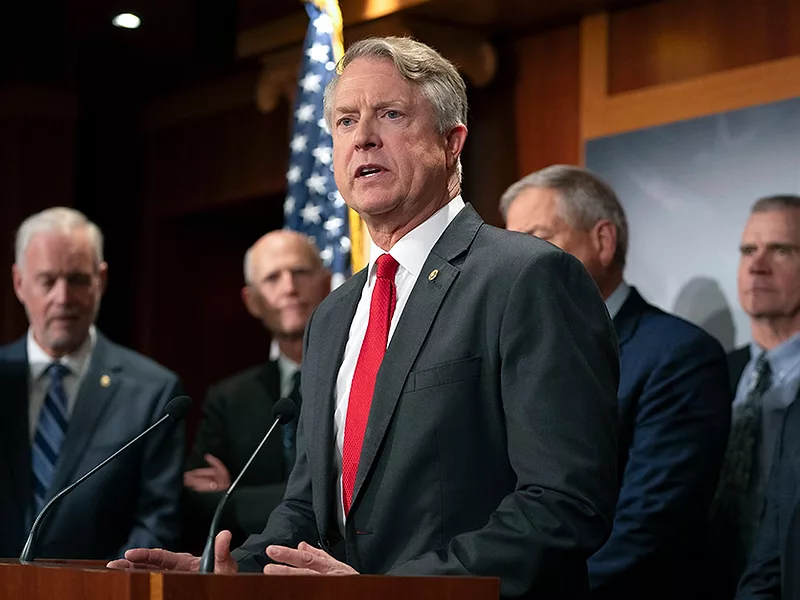
Senate Finance Committee member Roger Marshall, R-Kan., told Agri-Pulse he would personally prefer the Senate bill look closer to the House provision on feedstocks. The House prohibited the credit from applying to fuels made with feedstocks produced outside North America. The Senate proposal, which has not been finalized, would reduce the credit value of fuels using foreign feedstocks.
“Personally, I would like to get rid of any foreign feedstock. I don't know why we’d want to help China or Brazil out. I want to help American farmers out. So, I bet we get that in there. We may have to tweak the number of years that it's going to go for, but I think overall, it's a win,” said Marshall.
RFK Jr.: Expect dietary guidelines no later than August
Health and Human Services Secretary Robert F. Kennedy Jr. says he and Agriculture Secretary Brooke Rollins will have the next dietary guidelines for Americans out by August at the latest.
Speaking before a House Energy and Commerce subcommittee, Kennedy emphasized that the guidelines will be short – about four to five pages – and will move away from processed foods. He said this will drive more consumption of “good food” in federal nutrition programs like school meals, hospitals and military meals.
The secretary appeared before the committee to testify about the agency’s fiscal 2026 budget. While there, he was also grilled by Democrats on staffing reductions and the Make America Healthy Again Commission report.
Rep. Raul Ruiz, D-Calif., criticized the erroneous citations contained in the commission report. Reporting found dozens of incorrect citations or instances of misinterpreted or nonexistent studies. The report was also largely criticized by the food and agriculture industry for its findings on pesticides, seed oils and other food ingredients.
It’s easy to be “in the know” about what’s happening in Washington, D.C. Sign up for a FREE month of Agri-Pulse news! Simply click here
Kennedy said he had not fact-checked the report himself, and that the citations were corrected within 24 hours of the news reports. He also defended the report and said all the findings are accurate.
“If someone turned this in as an undergrad to their professor at UCLA, they would have received an F, sir,” Ruiz said. “An F, for the misinterpretation, the falsehoods, the denials and also citing references that don’t even exist.”
State AGs sue Trump administration over grant terminations
A group of 21 attorneys general are suing Agriculture Secretary Brooke Rollins and eleven other federal agency heads for terminating federal grants to states.
The AGs argue in a filing in a Massachusetts district court that the Trump administration unlawfully used a subclause in Office of Management and Budget regulations to end billions of dollars in grants to state governments.
The subclause in question allows federal agencies to terminate awards that no longer serve program goals or agency priorities. The AGs charge that it "provides no support for a broad power to terminate grants on a whim based on newly identified agency priorities."
Take note: The lawsuit says Local Food Purchase Assistance cooperative agreements have been revoked using language that points to a shift in USDA priorities.
USTR port fee proposal to increase ag shipping costs by over $2 billion
A new study finds that proposed port fees for Chinese-operated and Chinese-built ships will increase shipping costs for ag exporters by $2.3 billion a year, rising to $6.2 billion in 2028.
The Office of the U.S. Trade Representative outlined the new fees in April. They are set to go into effect in October and phase in through 2028.
The analysis from North Dakota State University finds that grain exports, particularly corn and soybeans, will be disproportionately impacted because of their use of dry bulk carriers and lower export values. Depending on the crop and route, the shipping costs could amount to five to seven cents per bushel.
The authors note that although the final version of the proposed provisions softened the impacts on ag exporters, “they do not fully offset the impact on agricultural exporters.”
GOP lawmakers urge administration to continue talks to lower trade barriers
Republican lawmakers are applauding the Trump administration’s efforts to lower trade barriers for U.S. exporters and urging officials to press forward with further trade negotiations.
In a letter to four cabinet members, more than 50 House members and senators highlighted multiple pressing trade issues which the U.S. “cannot delay addressing,” they say.
“However, we are confident in your ability to utilize this 90-day pause to come to agreements that can benefit all American industries while providing opportunity for continued dialogue,” they write.
“International trade is fundamental to the continued success and vitality of U.S. industry, particularly agriculture,” say the lawmakers, led by Rep. Adrian Smith, R-Neb., and Sen. Steve Daines, R-Mont. “Given the current agricultural trade deficit and the state of the farm economy, it is more important than ever to build on the achievements of President Trump’s first term.”
Final word
"NIH should be telling us what are seed oils doing to our children. What is ... corn syrup doing to our children? What are food dyes doing to our children? What is packaging and microplastics doing to our children ... What are pesticides doing to our children? None of those studies were being done," Health and Human Services Secretary Robert F. Kennedy Jr. on the National Institutes of Health.
Rebekah Alvey, Philip Brasher, Oliver Ward and Noah Wicks contributed to today’s Daybreak.
Questions, comments, tips? Email Steve Davies at agri-pulse.com.


