
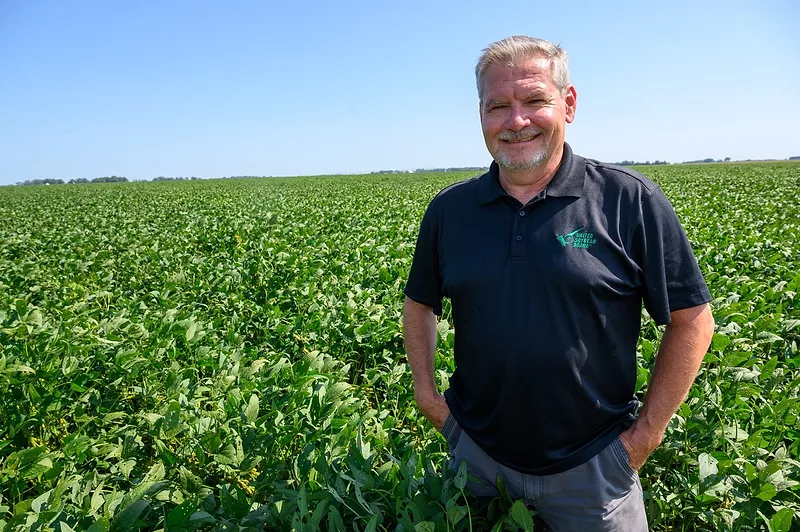
On our Mississippi farm, we should have been planting soybeans in April. It’s now July and they’re taking root and progressing slowly – but we’re more than 70 days behind.
Weeks of unrelenting rain washed away our plans and our timelines. Even when the skies cleared, the price tag to plant, nourish and protect a crop has never been higher. Input costs like seed, fertilizer, and equipment have soared. And just beyond our fencerows, broader challenges loom: global trade scenarios that can change overnight, and public confusion over the very products we grow, like the health benefits of vegetable oils.
For farmers like me, these pressures stack up fast. We are no strangers to uncertainty, but lately it feels like we’re being asked to gamble more with less. Fewer guarantees. Thinner margins. Longer odds.
Yet we keep going.
Because even through the storm clouds, literal and metaphorical, we’re building something better. Something more resilient. And soy is at the center of it. Our country’s #1 exported ag commodity.
Soybeans have long been the workhorse of American agriculture. Dating back to Henry Ford who tried to build a car made from soybeans, the innovation continues. Today, U.S. soy is powering commercial trucks, trains, and even jets with clean-burning biofuels. It’s in sustainable shoes, synthetic turf, PFAS-free firefighting foam, tires, and even the plywood that frames new homes. These aren’t experiments. They’re real markets. New domestic demand that brings hope to farm families and value to American consumers.
My colleague and friend, Lucas Lentsch, CEO of United Soybean Board, says U.S. soy is no longer solely an animal feed or export crop, it’s a platform for American innovation, and I couldn’t agree more.
This aspirational thinking is helping us rebuild from the ground up – literally. Across the country, farmers are adopting precision agriculture and sustainable practices that make our land more productive, not just today but for the next generation. My son Christian will eventually take over the farm, and the choices we make now will shape the soil he inherits.
We’re embracing conservation tillage, planting cover crops, and using technology that helps us apply only what the crop needs and nothing more. These practices aren’t just good for the environment, they’re good for our bottom line. They improve soil structure, reduce erosion, and help us weather the extremes of drought and flood alike. And thanks to collaborative initiatives like Farmers for Soil Health, we’re working to double the acreage planted in cover crops to 30 million acres of soybeans and corn by 2030.
Don’t miss a beat! It’s easy to sign up for a FREE month of Agri-Pulse news! For the latest on what’s happening in Washington, D.C. and around the country in agriculture, just click here.
My 99-year-old father once told me to treat our soil like a bank account: make more deposits than withdrawals. That lesson guides me every season, even in years like this one where planting feels like a moving target. Sustainability isn’t a buzzword on our farm. It’s a daily decision.
There’s also a growing conversation around biofuels and their role in our food system. Some people see it as a tradeoff – food or fuel. But that’s a false narrative. Soybeans are a complete crop: the oil is used for renewable fuels and hundreds of biobased products, while the protein-rich meal is a cornerstone of human diets and animal feed for dairy, poultry, pork, and aquaculture. We’re not choosing between feeding people and fueling progress. We’re doing both, and proud of the versatility of our bean.
And that’s the broader story America needs to hear: that rural innovation can help solve global problems. That farms aren’t relics – they’re labs. That soy can replace petroleum in the products we use every day. And that a future shaped by American crops and American ingenuity is well within reach.
If domestic demand continues to grow over the next five years, we’ll see fewer market shocks and more stability for farming families. Soy-based fuels will reduce emissions across trucking and rail. Biobased products will reduce petroleum in homes and businesses. And the benefits will ripple beyond agriculture, strengthening local economies, creating jobs, and making our supply chains more resilient.
We won’t pretend it’s easy. But when you see a farmer turning delayed planting into a longer-term pivot, or watch a train run on soy-based biofuel, or wear Skechers shoes made in part from soybeans, it’s proof. Proof that even in tough seasons, good things can still take root.
Philip Good is a Mississippi farmer and chair of the United Soybean Board.