
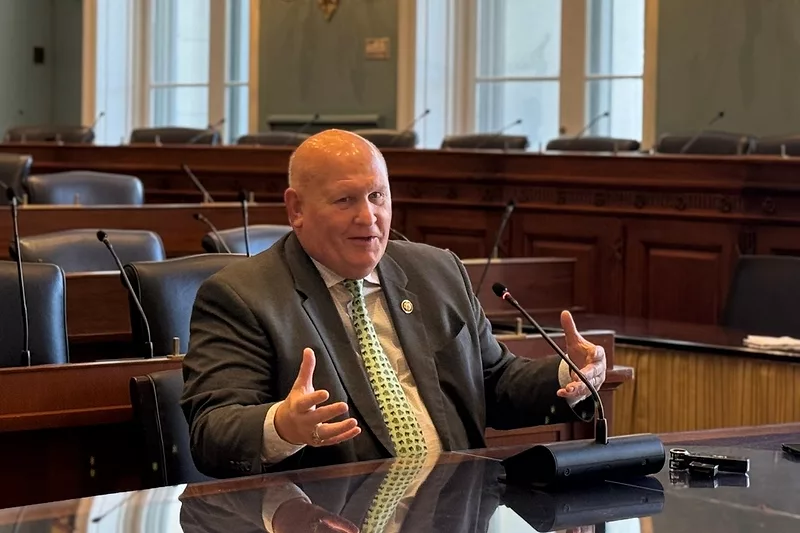
The House is now out of session until September. But Ag Committee Chair Glenn “GT” Thompson says committee staff will be working through August on the next iteration of the farm bill. He says the legislation will be a “high priority” for the panel.
“I’ve met with ranking member Craig and I think we’re both committed towards — I don’t want to speak on her behalf — but I believe we’re both committed working towards a good, strong, bipartisan farm bill 2.0,” Thompson told Agri-Pulse’s Rebekah Alvey.
Rep. Angie Craig, D-Minn., for her part, said she was “open to sitting down with the chairman” and that she expects GOP and Democratic staffers “will be in touch over the recess. Certainly, the chairman and I will continue our conversation.”
However, Craig said the way the reconciliation bill and rescissions package were pushed through Congress has caused “a lack of trust right now that whatever we agree to with Republicans is going to be undone within days or weeks of having done it.”
Fordyce praises workforce, pledges technology focus
Richard Fordyce, nominated to lead the Food Production and Conservation mission area at USDA, on Wednesday praised the quality of the employees he would lead if confirmed to the post.
“I cannot say enough about the folks that work … across all three agencies within the mission area, but I'm most familiar with the Farm Service Agency, and they are some of the greatest folks that you'll ever work with,” the Missourian said at a Senate Agriculture Committee confirmation hearing. Fordyce led FSA during the first Trump administration.
Fordyce was asked by ranking member Amy Klobuchar, D-Minn., about significant staffing losses through the administration’s buyout program. Fordyce said he’s “confident that we can deliver our mission-critical responsibilities in a very positive way.” Klobuchar said FPAC, which includes FSA, the Natural Resources Conservation Service and the Risk Management Agency, lost 4,100 people.
He did say that if confirmed, he would “dig into the data to understand where those retirements came from, where they're located.” He also indicated that if there are “coverage issues,” agencies might be able to use technology to bridge the gaps.
The committee didn’t set a date for a vote on Fordyce’s nomination, which seems assured of sailing through the committee.
China suspends tariff exemptions for US ag products
USDA says Chinese importers are reporting that they are unable to apply for exemptions of U.S. ag products from retaliatory tariffs applied in Trump’s first term.
It’s easy to be “in the know” about what’s happening in Washington, D.C. Sign up for a FREE month of Agri-Pulse news! Simply click here
Beijing has not issued a formal statement. But USDA’s Foreign Agricultural Service says it has received reports from importers of grains, oilseeds, meat, pulses, tree nuts, alcohol, leather and fruit that Beijing is not accepting new exemptions past Aug. 1 and that existing exemptions will expire Sept. 14.
Around 150 agricultural products are eligible for exemptions from China’s retaliatory tariffs imposed in response to U.S. Section 301 tariffs. Beijing stood up the exclusion process as part of the 2020 phase 1 deal.
Take note: The move comes just weeks before the Aug. 12 deadline when temporary relief from U.S. reciprocal tariffs is set to expire. It also comes days before Commerce Secretary Howard Lutnick and Treasury Secretary Scott Bessent are slated to meet with Chinese counterparts in Stockholm.
But U.S. Trade Representative Jamieson Greer told House Ways and Means Committee members Wednesday that Chinese negotiations are proceeding on better terms than they have been, according to one lawmaker present.
Lutnick: Japan deal could serve as ‘model’ for EU
Lutnick is touting a new investment mechanism created under a Japan-U.S. trade and investment pact, arguing it could serve as a model for others looking for tariff relief.
“They basically bought down their tariff rate,” Lutnick told Bloomberg on Wednesday. Japan will make $550 billion in U.S. projects, the White House said in a fact sheet. In return, the U.S. dropped its planned tariff rate on Japanese products from 24% to 15%.
The investment vehicle could be a model for Brussels, Lutnick said.
“That’s up to them to negotiate,” Lutnick said. But he added that he doubted that big countries would be able to negotiate below a tariff rate of 15%.
Take note: The Financial Times reported Wednesday that the U.S. and EU are closing in on a deal that would feature a reciprocal tariff rate of 15%. But it is not clear whether this would be sufficient to avoid EU retaliation.
MAHA figures push commission on glyphosate
More than 500 Make America Healthy Again individuals and organizations are urging Health Secretary Robert F. Kennedy Jr. and the MAHA Commission to take action on pesticides through the panel’s upcoming report.
The MAHA Commission is expected to release its second report next month with recommendations on how to address chronic diseases among children. In a letter, the MAHA groups recommended the commission propose an immediate ban on some pesticides, including glyphosate, atrazine and paraquat.
Additionally, they suggested the commission oppose federal pesticide preemption, invest in regenerative and organic agriculture, and improve USDA conservation training to help farmers reduce pesticide use.
Take note: The commission’s first report received backlash from across the ag sector for its critical references to pesticides. Shortly after, the White House held meetings with farm groups and ag lawmakers to discuss the report.
Final word
“If there's anything that's negative to the way we raise food in this country, and anything that would increase the cost of production or the increase of labor input into raising food, then I'm going to raise Cain about it” — Sen. Chuck Grassley, R-Iowa, on the coming MAHA report.
He was one of the senators who met with Kennedy after the first MAHA Commission report.
Rebekah Alvey and Oliver Ward contributed to today’s Daybreak.
For more news, go to Agri-Pulse.com.


