
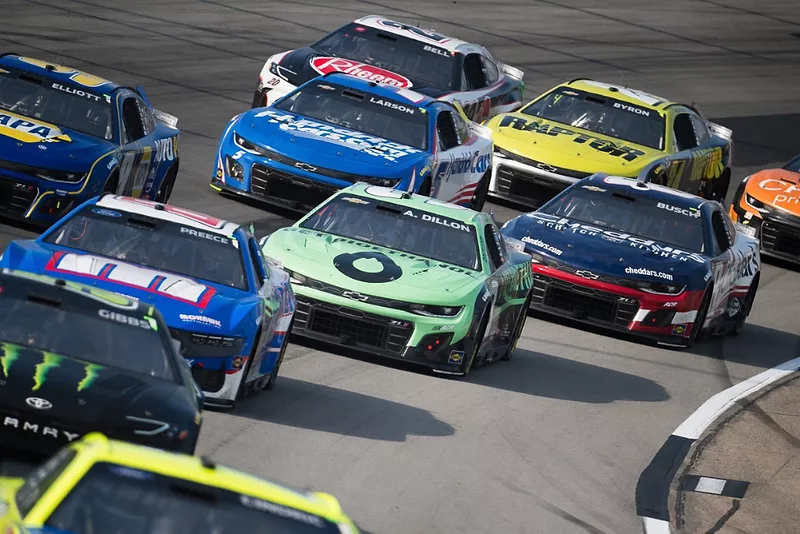
“Racers, start your corn ethanol powered engines!” yelled Iowa Corn Growers Association President Stu Swanson as the green flag dropped to start the Iowa Corn 350 Powered by Ethanol.
Amid rolling miles of lush green cornfields in central Iowa, NASCAR racers and fans gathered around the “fastest short track on the planet” for the NASCAR Cup Series race spotlighting the biofuel.
“NASCAR right now uses all E15 on their engines, so the same fuel that we can provide for consumers in Unleaded 88 at the pump is what they're going to be using in their race car engines throughout the series,” said Joe Roberts, a third-generation corn and soybean grower from Belmond, Iowa, and vice president of the Iowa Corn Promotion Board. “It’s a really great opportunity to highlight what E15 can do and the power and performance it has.”
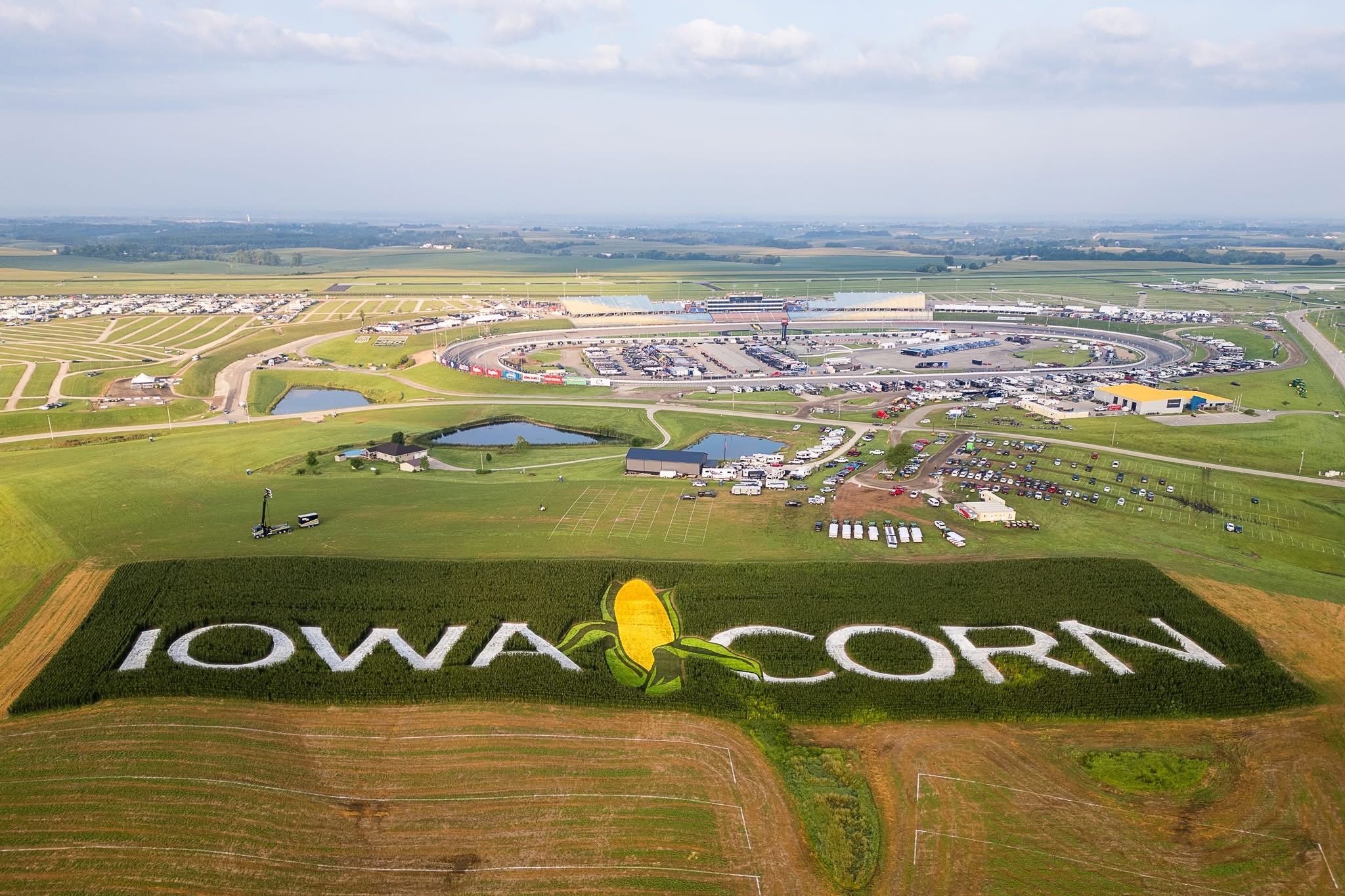 The Iowa Speedway during the Iowa Corn 350 Powered by Ethanol race. (Photo: Iowa Corn)
That fuel blend of gasoline and ethanol on the racetrack is Sonoco Green E15. It has been used by NASCAR since 2011 and reached a milestone of 25 million miles raced earlier this year.
“The higher performing fuel, the octane, the cooler burning. Everything about it is just a positive for us,” said Austin Dillon, a NASCAR driver in this year's Iowa Corn 350 race for Richard Childress Racing and driver of the No. 3 Chevrolet ZL1 Bioethanol car in the series.
Iowa leads the nation in ethanol production with nearly 30% of total U.S. production. Nearly 60% of Iowa’s corn crop is used to produce ethanol, according to the Iowa Corn Growers Association.
“I love that it’s coming from the heartbeat of America. It is American,” Dillon said.
Cut through the clutter! We deliver the news you need to stay informed about farm, food and rural issues. Sign up for a FREE month of Agri-Pulse here.
High octane, high speed racing history
The Iowa Speedway first opened its gates in 2006. At the time, there was little incentive for the Iowa Corn Growers Association to get involved — ethanol fuel wasn’t used, and corn’s connection to motorsports was mostly symbolic. But that changed when IndyCar announced it would switch to 100% ethanol fuel in 2007. Iowa Corn decided to sponsor the newly created Iowa Corn Indy 250, putting ethanol and Iowa farmers on the center stage.
For more than a decade, Iowa Corn stayed closely tied to the track through various sponsorships as ethanol became a bigger part of the racing world. Meanwhile, NASCAR took its own step toward biofuels in 2011 with the transition to Sunoco Green E15, a 15% ethanol blend, across all its national series.
 The pit crew for Todd Gilliland's No. 34 Love's Travel Stops Ford Mustang Dark Horse fuels the car with Sunoco Green E15 in the garage before the Iowa Corn 350 race begins. (Agri-Pulse photo)That national spotlight eventually returned to Iowa. After years without a top-tier NASCAR race, the Iowa Speedway found itself with a chance at something big in 2024: a Cup Series debut. NASCAR and Iowa Corn launched the first Iowa Corn 350 Powered by Ethanol race in June 2024.
“This relationship that we have, the Iowa Speedway with Iowa Corn Growers Association, is really impactful,” said Eric Petersen, president of the Iowa Speedway. A Kansas native, he was tapped to lead the racetrack ahead of the first Iowa Corn 350 event in early 2024.
“You look around and you see all the signage, but I'm looking in the crowd right now and I see this group of farmers. Corn farmers of all ages,” Petersen said, speaking to hundreds of Iowa corn growers and their families before the race. “I'm looking at future farmers. I'm looking at farmers that have done this a long time. And now, living in Iowa for the past year and a half, I see the importance and how impactful that is to everything that you all do here.”
The first race held in June 2024 sold out before Christmas and drew nearly 2.7 million viewers. Over 1,100 Iowa farmers were welcomed to the race to celebrate their role in fueling the sport.
The Iowa Corn 350 race sold out again in 2025 with over 40,000 fans watching around the track and the race garnered 2.2 million viewers, making it the most-watched sporting event of the weekend according to USA Network. The race had the second highest viewership of the last 10 NASCAR Cup Series races.
“We feel that it's a perfect marriage, a perfect partnership for what we're doing here on Cup weekend,” Petersen said about the partnership between Iowa Corn and NASCAR.
Promoting corn, sharing the agriculture story
As the cars roared around the Iowa Speedway, Iowa Corn took the opportunity to engage in a full-throttle promotion on the benefits of corn-based ethanol.
During the race, attendees could walk through Iowa Corn's mobile education and biofuels trailers to learn more about the crop and the fuels it creates. Roberts spoke with a die-hard race fan from San Francisco who made the trip to Iowa because she wanted to travel somewhere new.
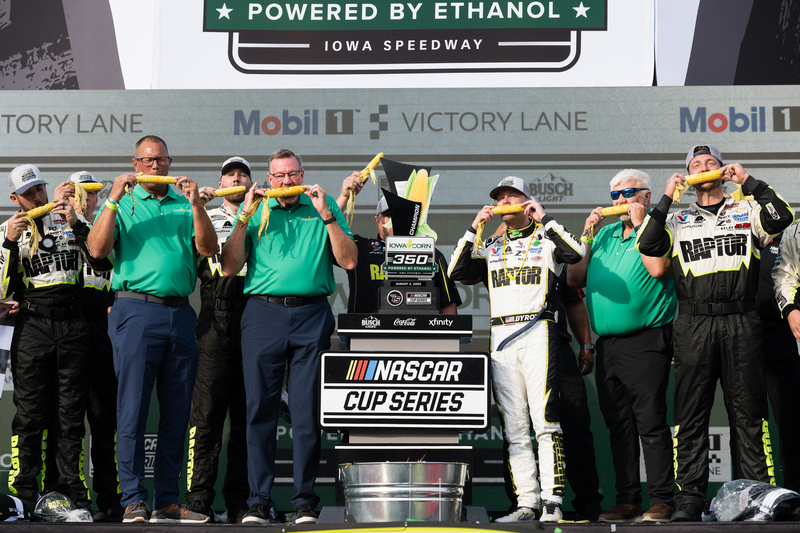 Iowa Corn Growers Association President Stu Swanson, Iowa Corn CEO Craig Floss and Iowa Corn Promotion Board President Ralph Lents enjoy corn on the cob with William Byron, winner of the Iowa Corn 350 Powered by Ethanol, and his racing team on stage during the trophy presentation. (Photo: Iowa Corn)
“I made the comment to her, ‘You know, the fuel that's powering these guys’ race car engines and what I do for a living is all surrounded in this track,’” Roberts recalls. “Anyone who comes in here is going to drive by a cornfield, so being able to make that connection of what's going into the engines is the same thing that you see outside the track is powerful.”
The amount of corn used for ethanol has jumped from 170 million bushels in 2000 to 1.56 billion bushels in 2024.The Iowa Corn Promotion Board estimates blending corn-based ethanol into fuel has saved Iowans $11 billion at the pump over the past 15 years.
The Iowa Corn Promotion Board’s Usage and Production Committee also held events ahead of the race educating drivers, mechanics and those in the auto industry about the benefits of ethanol and how it can be utilized in their own vehicles.
Looking ahead, Roberts said NASCAR is considering utilizing an E30 blend for racing, which would demonstrate what could be available to consumers in the future.
For more news, go to Agri-Pulse.com.

