
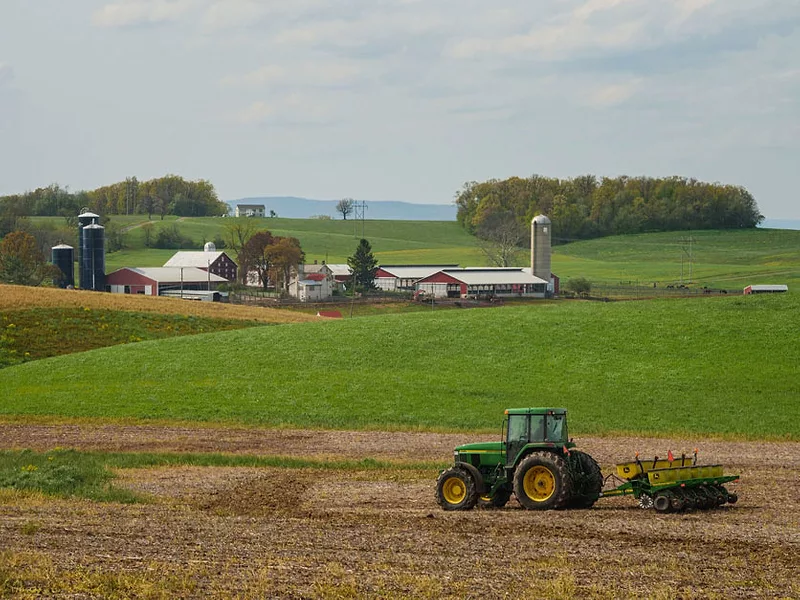
A new analysis is finding wide disparities among farmers and landowners when it comes to the changes to commodity programs in the One Big Beautiful Bill.
The analysis by the University of Missouri’s Food and Agriculture Policy Research Institute estimates the law will increase payments under the Price Loss Coverage and Agriculture Risk Coverage programs by a total of $47 billion under 10 years.
The average increases per base acre will vary from 62% for corn, 65% for sorghum and 72% for soybeans to 177% for cotton, 205% for peanuts and a 222% increase for rice.
Take note: The OBBB allows farmers to enroll up to 30 million acres of new base, depending on what they were producing from 2019-2023.
According to FAPRI, 10.4 million new base acres will go to corn, while 7.7 will go to soybeans, 6.9 million to wheat and 1.5 million to cotton.
Kansas will get nearly 2.8 million new base acres, the most of any state, the report says. Texas and South Dakota will get about 2.4 million, followed closely by North Dakota at 2.3 million.
CBO report to detail deportation impact
The Congressional Budget Office is releasing a report Wednesday that will estimate the impact of the Trump administration’s immigration policy and the potential effects of the One Big Beautiful Bill. The domestic spending and tax law dramatically increases funding for border security and immigration enforcement.
“CBO expects to revise its projection of net immigration lower,” the agency says in a notice.
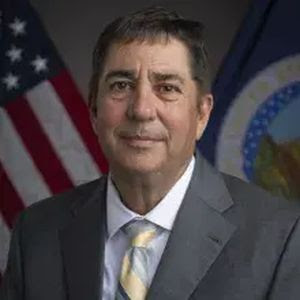 Bill Beam, FSA Administrator
Only USDA employees can access FSA data, Beam says
“No external entities” have access to personal information held by the Farm Service Agency, Administrator Bill Beam told lawmakers in a letter responding to reports that the Department of Government Efficiency gained access to a database of farm grants and loans.
"Secretary Rollins has hired people at USDA who are dedicated to finding and resolving inefficiencies,” Beam said in the letter. "Their charge is simple, to help refocus FSA and USDA as a whole on its core mission of serving the American people. All personnel with access to USDA systems are department employees, meaning no external entities have access to USDA employee information or any personal or proprietary information.”
Beam also noted in the letter that “all efficiency employees have undergone an extensive background and security clearance."
House approves Grain Standards Act reauthorization
The House has approved a five-year reauthorization of the U.S. Grain Standards Act by voice vote.
The bill includes some updates to existing law, including language directing the USDA to improve its grain grading technology, and exempting equipment and technology costs from a 30% cap on administrative and supervisory expenses that may be incurred under the law.
What’s next: The Senate Agriculture Committee has yet to take up a reauthorization bill, though the committee held a hearing on the legislation in July.
Farm health research center unveils child safety framework
A new national blueprint for ensuring farm children’s safety calls for continued public and private funding for farm safety research, a nationwide system for collecting injury and fatality data, and federal and state policies to protect youth hired to work in agriculture.
The national action plan was released Monday by the National Children’s Center for Rural and Agricultural Health and Safety at the Marshfield Clinic, replacing the most recent iteration of the framework, which was approved in 2012.
Why it matters: Hundreds of thousands of children work on or visit farms, facing risks from machinery, livestock, ponds, weather, chemicals and pollutants, the document’s authors state. They cite data suggesting that around 33 children are seriously injured each day in U.S. agriculture, with one child dying around every three days. Fatal and nonfatal youth agriculture injuries came at a cost of roughly $2.29 billion in 2024, they estimated.
Grocers seek prohibition on SNAP electronic fees
Grocers and convenience store owners are asking Congress to protect them and their customers by blocking additional fees on SNAP electronic benefit transfer transactions.
Don’t miss a beat! It’s easy to sign up for a FREE month of Agri-Pulse news! For the latest on what’s happening in Washington, D.C. and around the country in agriculture, just click here.
FMI-The Food Industry Association, the National Grocers Association, and the National Association of Convenience Stores have sent a letter to Senate and House Agriculture committee leaders, signed by more than 1,000 businesses and groups.
They have a specific request: Pass the Ensuring Fee-Free Benefit Transactions (EBT) Act as part of the farm bill or another legislative vehicle. The bill would prevent states and their contractors from levying processing and other related fees from a state's side of a SNAP EBT transaction onto SNAP authorized retailers and their merchant processors.
“Congress’ intent has always been clear: Retailers should not be charged fees to accept SNAP payments in order to create the greatest possible access for families in need,” said Stephanie Johnson, group vice president of government relations at the National Grocers Association.
Ag fairs bring in $30B annually
Agricultural fairs have a $30 billion economic impact in the U.S., with more than 29% of the nation’s population attending one each year, says a report commissioned by the International Association of Fairs and Expos.
The survey estimates that the average U.S. fair supports 165 jobs, generates more than $86,000 in tax revenue for the community daily, and operates for less than a week.
What happens when the fair ends? About 65% of the U.S. population attends an event at fairgrounds during the year. These year-round activities generate an estimated $1.3 billion in state tax revenue.
Final word
“One of the most nagging issues is that tractors remain the most common source of youth deaths on farms. Adding to the tractor problem is the increasing number of childhood fatalities associated with skid steers — a compact, versatile machine with lift arms, used for working in small spaces. In addition, the use of ATVs and UTVs for farm work by youth continues to be a steady cause of trauma.” — “Safeguarding Children in Agriculture: An Updated National Action Plan” from the National Children’s Center for Rural and Agricultural Health and Safety.
Philip Brasher and Noah Wicks contributed to today’s Daybreak.


