
Interior Department downsizing has resulted in the loss of at least 6,800 employees, leaving the agency with fewer staff for handling endangered species listings, Western water issues, outreach to tribal nations and geological research.
Data obtained by Agri-Pulse through a Freedom of Information Act request indicates 6,899 Interior workers took one of two deferred resignation program offers. That amounts to roughly 9.9% of the agency’s overall workforce when paired with Office of Personnel Management statistics from last September.
Some divisions of the agency, which is tasked with protecting and managing natural resources and U.S. cultural heritage, appear to have taken heavier losses than others. Analysis of the two datasets indicates that the Office of the Secretary lost 1,239 people representing 37% of its workforce, making it the unit that has seen the most departures.
Other offices with important agricultural or environmental functions also saw losses. The Bureau of Reclamation lost 941 employees (16% of its workforce), while the Bureau of Indian Affairs lost 553 (14.7%), the U.S. Geological Survey lost 965 (11.4%), the Fish and Wildlife Service lost 978 (10.7%) and the Bureau of Land Management lost 680 (6%).
“So many people have been lost,” said Jacob Malcom, a former acting deputy assistant secretary at Interior who left in March and has since founded an organization called Next Interior. He anticipates recent losses will make it more difficult for the agency to handle a growing backlog of endangered species act work, research natural hazards and help ranchers with grazing permits.
“The loss of institutional knowledge, the loss of being able to connect and get answers on stuff, is really mind-boggling,” Malcom said.
While the data illustrates voluntary buyouts, it does not include the number of employees who chose to leave the agency without participating in the DRP. As a result, it paints an incomplete picture of the overall scope of the losses the department sustained this year.
Don’t miss a beat! It’s easy to sign up for a FREE month of Agri-Pulse news! For the latest on what’s happening in Washington, D.C. and around the country in agriculture, just click here.
In response to a request for comment, Interior Department spokesperson Elizabeth Peace said the agency has nothing more to provide at this time.
Downsizing pressure fuels employee resignations
On Jan. 28, an email with the subject line “Fork in the Road” landed in the inboxes of more than 2 million employees across the federal government, including those at the Interior Department. It came with an offer: Resign immediately and receive all pay and benefits until Sept. 30.
The email also warned that if federal employees did not take the offer, the administration could not give them “full assurance” regarding the security of their positions or agencies.
More than 2,300 Interior Department employees chose to take the initial offer, despite union leaders urging them not to. When the first round of the DRP was announced, the American Federation of Government Employees warned its members that “there is not yet any evidence the administration can or will uphold its end of the bargain, that Congress will go along with this unilateral massive restructuring, or that appropriated funds can be used this way.”
As the result of an AFGE lawsuit, U.S. District Judge George O’Toole Jr. on Feb. 6 directed the administration to keep the signup period open temporarily but dissolved his order Feb. 12 after finding the plaintiffs had not established a likelihood of succeeding. Still, the case remains open.
Just one day after the end of the signup period for the DRP’s first round, the administration ramped up its efforts to shrink the federal workforce. On Feb. 13, as many as 200,000 probationary employees across the government received emails informing them they were fired.
Then in March, two judges ordered Interior to temporarily reinstate fired employees, although one decision was stayed by the Supreme Court and another by an appeals court. More than 980 affected employees were subsequently reinstated but faced the prospect of being fired again depending on the outcomes of court cases and potential reorganization.
When a second round of the DRP opened at Interior in April, the number of employees who chose to leave nearly doubled from the time of the first offer. Amid pressure from the threat of potential reductions in force, around 4,500 took the second offer, otherwise known as "DRP 2.0.”
Hiring at the agency has been halted by a freeze that has been in place since early May. Malcom told Agri-Pulse that remaining Interior staff are worried about the possibility of reductions in force occurring in “the coming weeks.”
Staffing losses felt across divisions
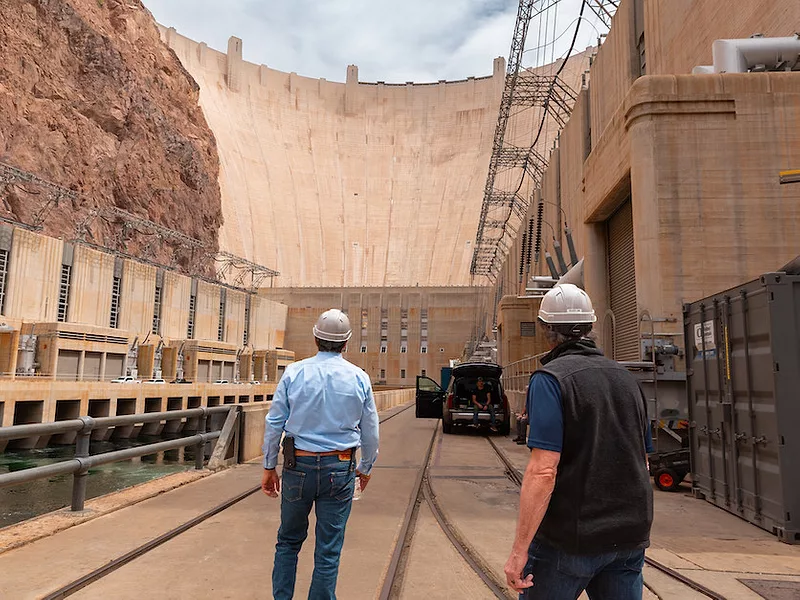
More than 940 employees have elected to leave the Bureau of Reclamation, the agency tasked with delivering irrigation and drinking water to farms and cities across the West. The agency manages 490 dams in 17 states, 360 of which are classified as high- or significant-hazard dams.
In Colorado, 186 Reclamation staffers accepted deferred resignation offers. Another 183 from California chose to leave, as did 94 from Idaho, 91 from Washington, 84 from Nevada, 61 from Montana, 54 from Arizona and 51 from Utah.
Reclamation offices are divided into regions, each overseen by a regional director. But three of five of these regions have lost their directors as a result of DRPs, forcing their deputies to take on their work in addition to their normal duties, one former staffer told Agri-Pulse.
The former Reclamation staffer, who spoke on the condition of anonymity, said 60% of the finance staff in the California-Great Basin office accepted buyouts. As a result, the office has been rendered “incapable of preparing the 2026 water year rate,” which determines how much Central Valley water districts will need to pay per acre foot for water in the coming year, they said.
Paul Helliker, who retired as general manager of the San Juan Water District in May, said he worries staffing losses at Reclamation will limit the agency’s capacity to coordinate with the California State Water Resources Control Board on the state's Bay Delta Water Quality Control Plan. He said Reclamation’s involvement in the project is crucial, since it oversees water deliveries from the region's federal reservoirs.
“Reclamation has been part of the discussions, but they now need to step up and take an active role,” Helliker told Agri-Pulse. "I don't know if they're able to do that, given all the demands on the time of staff and management.”
More than 970 employees have chosen to leave the Fish and Wildlife Service. Malcom believes the agency has lost around 27% of its ecological services staff, who oversee Endangered Species Act implementation. They already faced a “massive backlog” of listings that dates back years and the recent losses are likely to hinder their efforts to work through it, he said.
“Ecological services has been hit badly,” Malcom said, adding that: “It’s not going to be good for farmers. If anything, they probably needed a lot more people to be able to do the work."
Roughly 680 employees have accepted buyouts at the Bureau of Land Management, the agency that oversees 245 million acres of federal lands and 700 million acres of subsurface mineral estate.
Many BLM headquarters staff chose to take the buyout, including those overseeing environmental review implementation and repatriating thousands of museum artifacts to Native American tribes, said one former senior BLM official who spoke to Agri-Pulse on the condition of anonymity.
BLM has long struggled to maintain the staff needed to help sheep and cattle ranchers with grazing permits, and an “intolerable backlog” of work has built up in this area over the years, the former official said. They don't expect the recent staffing losses to help the situation.
More than 550 Bureau of Indian Affairs employees have taken buyouts, including local office staff. One Navajo reservation BIA office in Shiprock, New Mexico, used to have between seven and 10 employees, but now only has one, said Tracy Raymond, the leader of the Northern Navajo Farmers and Ranchers Union.
“One employee can’t really handle everything,” said Raymond, who formerly worked at BIA before retiring in 2013. He said the office struggles to keep track of the permits it issues.
Staffing limitations are not a new challenge at BIA. Agency officials told the Government Accountability Office in 2024 that understaffing limited the bureau's ability “to provide funds to tribes in a timely manner.” Current workforce shortages make it harder for Native American producers to secure land leases or permits, or have their trust land appraised in order to apply for USDA farm loans, Kari Jo Lawrence, chief executive officer of the Intertribal Agriculture Council, warned Interior Department leaders in July.
In a letter, Lawrence said BIA offices often fail to conduct land and soil surveys, rangeland health evaluations and vegetation inventories due to understaffing. The agency’s ability to help address overpopulation of feral horses on tribal lands has also been challenged, she said.
"Tribal agriculture and agri-businesses are already drivers of economic activity in tribal and surrounding communities, but additional support is needed to fully realize Indian agriculture’s full potential,” Lawrence wrote. "The current reduction trajectory is alarming for those in tribal agriculture who rely on local agency staff to process their documents and other requests to maintain their farming and ranching businesses."
For more news, go to Agri-Pulse.com.

