

It looks increasingly likely that farmers will get a new round of emergency payments in coming months. The big question is how the Trump administration or Congress will pay for it.
House Ag Committee Chair Glenn “GT” Thompson, R-Pa., floated the idea of using tariff revenue, but he then backed off the idea, saying it didn’t appear procedurally possible. But Agriculture Secretary Brooke Rollins has now told the Financial Times in an interview that the administration could, in fact, use tariff revenues to fund payments to farmers.
“There may be circumstances under which we will be very seriously looking to and announcing a package soon,” she told the paper.
Take note: The Trump administration used the Commodity Credit Corp. to provide tariff assistance to farmers in his first term.
A spokesperson for Senate Ag Committee Chair John Boozman, R-Ark., said he has shared his view with the administration that farmers need assistance.
Trump and Xi to talk today
President Donald Trump and Chinese President Xi Jinping are set to speak via phone today as the two close in on a deal on the future of social media app TikTok.
Senior administration officials met in Madrid this week to hash out a way forward on the app’s ownership but left talk of other trade issues for future discussions.
There are signs, however, that the relationship is on better footing than at the beginning of the week. The Financial Times reported Thursday that Beijing had dropped its antimonopoly probe into Google. On the other hand, it found Nvidia ran afoul of antitrust laws in a similar probe earlier this week.
It’s “hard to keep an accurate scorecard,” former U.S. trade negotiator Wendy Cutler said in a post to LinkedIn. She said both sides are “sending mixed signals of backing down and yet remaining tough and focused.”
“Beyond announcing a TikTok deal, let’s see if the Trump Xi call provides more clarity in a possible meeting and the direction of our bilateral relations,” Cutler added.
Take note: Trump’s U.K. visit wrapped up with a memorandum of understanding on transatlantic science and tech cooperation, but no public announcements on the existing trade framework.
Chuck Conner retirement tribute
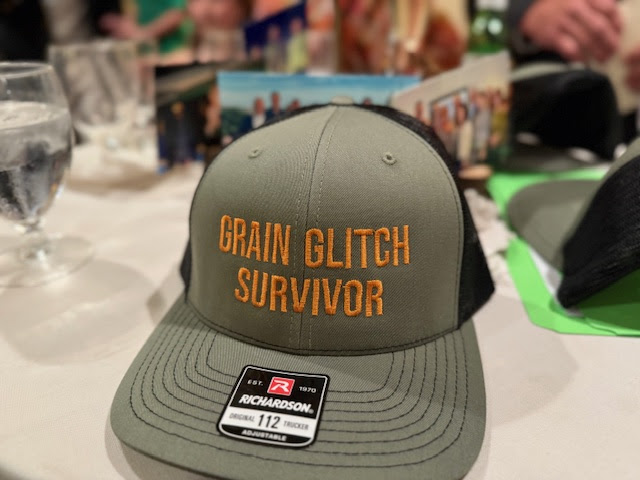


Scenes from Chuck Conner’s retirement party Thursday night at the Monocle. “When Chuck spoke, all of agriculture listened,” former Ag Secretary Tom Vilsack said in a tribute read at the party by Krysta Harden, president and CEO of the U.S. Dairy Export Council. Like Conner, Harden served as deputy ag secretary. Conner went on to lead the National Council of Farmer Cooperatives, where his challenges included fixing a problem for co-ops created by the 2017 Tax Cuts and Jobs Act and dubbed the “grain glitch.” (Agri-Pulse photos)
Small food importers warn consumer price hikes are coming
Small businesses say the full impacts of recent tariffs on U.S. food prices are likely to land in the next couple of months.
“October and November are going to be the months where you're going to see a lot more increases due to the tariffs,” said Mike Brundidge, vice president of sales at Seattle-based Acme Food Sales. Acme provides many leading grocery stores with their private label foods and is a prominent food importer.
Don’t miss a beat! It’s easy to sign up for a FREE month of Agri-Pulse news! For the latest on what’s happening in Washington, D.C. and around the country in agriculture, just click here.
Brundidge is in Washington this week, along with dozens of other small business representatives, to meet with lawmakers and talk about the impact of tariffs.
“Price increases are coming,” said Dan Anthony, president of Trade Partnership Worldwide. “I have had a lot of conversations where people just say, 'things feel expensive.' That's not going to stop. I think it's going to get worse.”
Zafar Raza founded World’s Best LLC, a New Jersey-based produce importer. He told Agri-Pulse that tariffs on Brazil have already caused him to let more than half of his 26 staff members go. His company is the largest importer of yams, which have not received a tariff exemption, despite not being grown in the U.S.
“We might have to even shut down the business,” he said.
Pepsi, Unilever launch STEP up for Agriculture
PepsiCo and Unilever say they’re joining forces along with other corporations and philanthropies to promote regenerative agriculture.
Through the initiative, STEP up for Agriculture, “corporate and philanthropic partners will provide funding and strategic support to help farmer support organizations,” the companies say in a news release.
The release does not say how much money will be involved in the initiative. However, it says the first phase of STEP up will include assistance for South East Research Farm in Saskatchewan; Practical Farmers of Iowa; and Farm Advisor, a farmer-led, Indiana-based initiative “that pairs experienced conservation farmers with peers to accelerate the adoption of soil health practices through mentorship, education, and on-farm support.”
The full name of the initiative is Supporting Trusted Engagement and Partnership (STEP) up.
Water levels falling in Mississippi, Ohio rivers
Water levels are dropping in the Ohio and Lower Mississippi rivers, triggering barge weight restrictions just as the harvest is getting underway.
According to a new report from the National Integrated Drought Information System, the Ohio River has dropped 10 feet at Cairo, Illinois. Meanwhile, the Mississippi River at Memphis, Tennessee, is expected to “reach low water thresholds within the next 28 days."
The U.S. Coast Guard has already issued some weight restrictions due to concerns over the grounding of barges, according to the report.
Farm Foundation panel calls for more tech in ag
Automation experts said Thursday at a Farm Foundation Forum that most growers are still reluctant to try new technology. Administration officials have been touting automation as a solution to ag workforce problems, given high labor costs and threats to the workforce itself from immigration enforcement.
However, the industry worldwide has only seen a 3-percentage-point increase in the number of farmers using or willing to adopt at least one new technological device since 2022.
“We really feel like automation can help growers,” said Ben Palone, senior director of automation and commercialization at Western Growers.
Panel members stressed the need for investment policies, reduced regulations and commercialization support in tech to keep the ag industry from falling behind.
Final Word
“If Congress wants to do something, if the White House wants to do something, they'll look and see what tools they have in the toolbox and ultimately deliver for agriculture.” —Economist John Newton, executive head of Terrain, speaking on this week’s Agri-Pulse Newsmakers about the challenges of funding an emergency assistance package for crop producers.
Newsmakers is available today at Agri-Pulse.com.
Philip Brasher, Parker Litterick, Noah Wicks and Oliver Ward contributed to today’s Daybreak.


