
U.S. policymakers and entrepreneurs can look north to Canada for some lessons as they work to expand domestic fertilizer production to reduce input costs and farmers' reliance on imports.
Beneath the prairies of Saskatchewan are the world’s largest potash deposits, critical to supplying the potassium that crops need to grow properly.
“You can drill a hole, really, anywhere in southern Saskatchewan, and you're likely going to hit potash,” said Zoe Belanger, who is general foreman for mine operations at a mine east of Saskatoon operated by Nutrien, one of the world’s largest fertilizer manufacturers and the dominant producer of Canadian potash along with Mosaic.
“It might not be the grade that you want, and it might not have the system around that is favorable for mining, but it's present.”
Saskatchewan’s biggest competition in the potash market is Belarus, and there are also deposits in China, South America and Australia, she said.
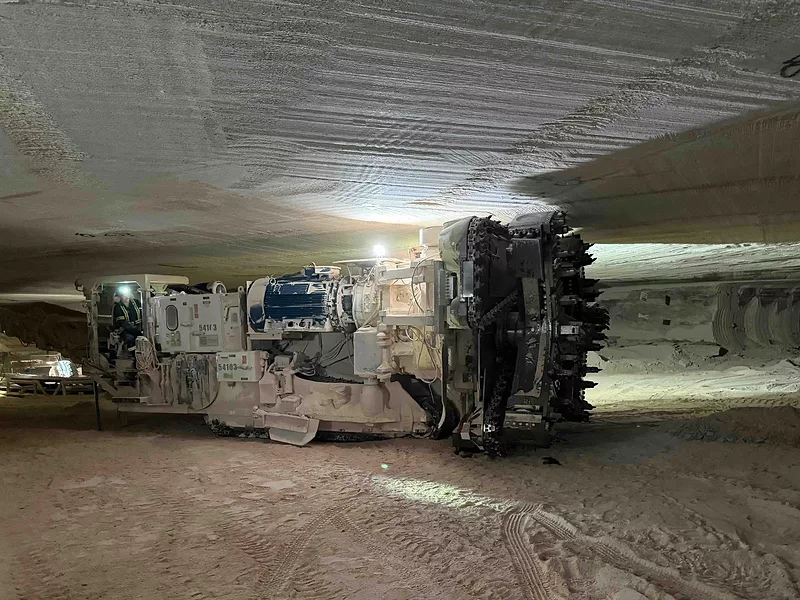
Potash ore is composed of roughly two-thirds sodium chloride, or salt, and one-third potassium chloride. At the Allan, Saskatchewan, mine where Belanger works, giant rotating sets of bits on boring machines the size of trucks grind up the ore, a kilometer, or about 3,000 feet, below the surface.
The ore is taken to the surface to go through a process that essentially washes the salt away, leaving the reddish potassium chloride in a granular or powdered form that farmers will apply to farms as far away as China and Brazil.
 Potash ore (Nutrien photo)
During a recent mine tour for U.S. agricultural journalists, Nutrien officials said they want to increase production even as they work to reduce costs and improve safety in the mines by automating the boring machines.
At the Allan mine, Nutrien wants to increase production from 3.2 million to 3.5 million tons a year while eventually automating all of its boring machines. Miners will be able to operate the machines from 150 to 300 feet away from the boring face, the most dangerous area to be because of the rock's instability. In turn, automated boring machines can run continuously since the operators don’t have to stop for breaks.
Mining jobs pay well – the average miner makes about $130,000 a year, according to supervisors – making the operations attractive to young farmers as well as local farm kids who are looking for more secure jobs outside of agriculture.
Curtis Ferguson, an environmental engineer at the Allan mine, also grows about 500 acres of wheat, canola and red lentils nearby. “I’m almost on harvest, but I had to come into work today. This job pays a little more,” he told the reporters.
It’s easy to be “in the know” about what’s happening in Washington, D.C. Sign up for a FREE month of Agri-Pulse news! Simply click here
Belanger feels the potash mines have “a huge impact on being able to feed the growing population, and for our farmers to produce the best that they can from their fields.”
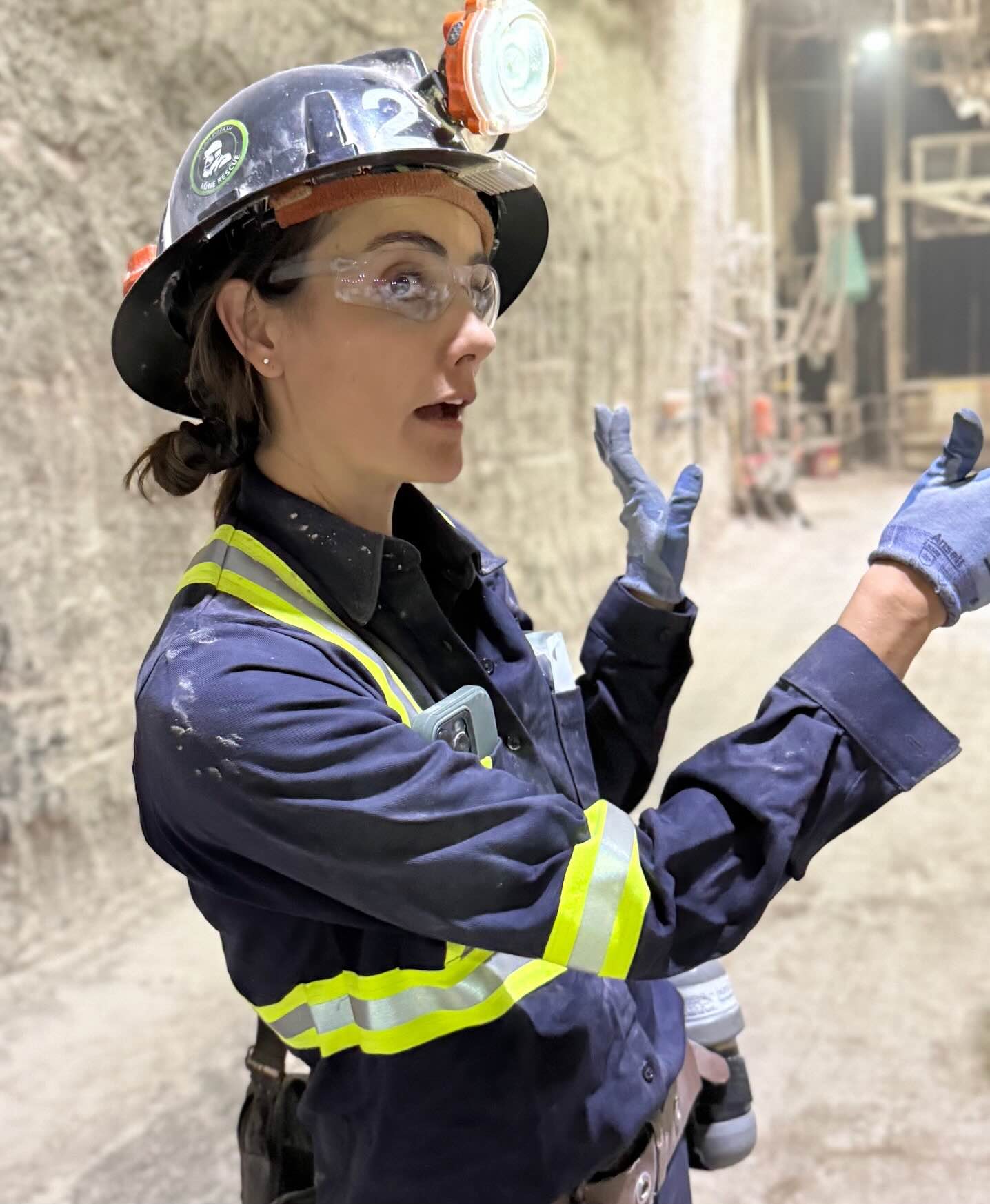 Zoe Belanger (Agri-Pulse photo)
“I grew up on a farm here in Saskatchewan, so seeing it [the potash] all the way through to them using it is awesome to see.”
Company officials say that cutting production costs and increasing efficiency to stay competitive means trimming contract employment and automation. The company relies on contractors for such jobs as maintaining the underground roads between boring sites. (The Allan mine is so vast it can take an hour to get from the elevator shaft to the farthest boring site, and the mine is always expanding to maintain production.)
The Allan mine has been in operation for 56 years and has reserves for at least 50 more. There's also room for expansion.
Miners typically work a 12-hour shift and may only get two to three hours of cutting out of that because of the time needed for safety and pre-operational checks, traveling to and from the boring site and in performing other tasks. “So, you can fill that gap with automation,” said Les Frehlich, the Allan mine’s general manager.
About 50% to 60% of the boring in the mine is currently automated. The goal is 100%.
“We've really pushed it this last year to really encourage our operators to use [automation] as much as we can. It’s been a slow, slow climb up, but now, yeah, [we’re] still aiming for 100%, and I think we'll get there.”

