
More robust science coordination, improved modeling and expanded ecosystem-based management are needed to protect endangered fish species while supporting water supply reliability, according to a long-anticipated review of the long-term operations of California’s two major water delivery systems.
The National Academies of Sciences, Engineering and Medicine released its findings Monday on the Central Valley Project and the State Water Project after spending two years examining key operational actions required under federal biological opinions and state endangered species protections. It focused on Shasta Reservoir’s cold-water pool for winter-run Chinook salmon, flow management in the Sacramento-San Joaquin Delta, and summer and fall habitat measures for Delta smelt.
Committee chair Peter Goodwin emphasized to reporters that existing science provides a strong foundation but needs to evolve faster, given mounting climate pressures.
“Relevant peer-reviewed science does not happen overnight, and this long-term commitment and perspective is needed,” said Goodwin, adding that California already has “a deep bench of nationally recognized and highly skilled experts” and should build on that capacity through collaborative structures.
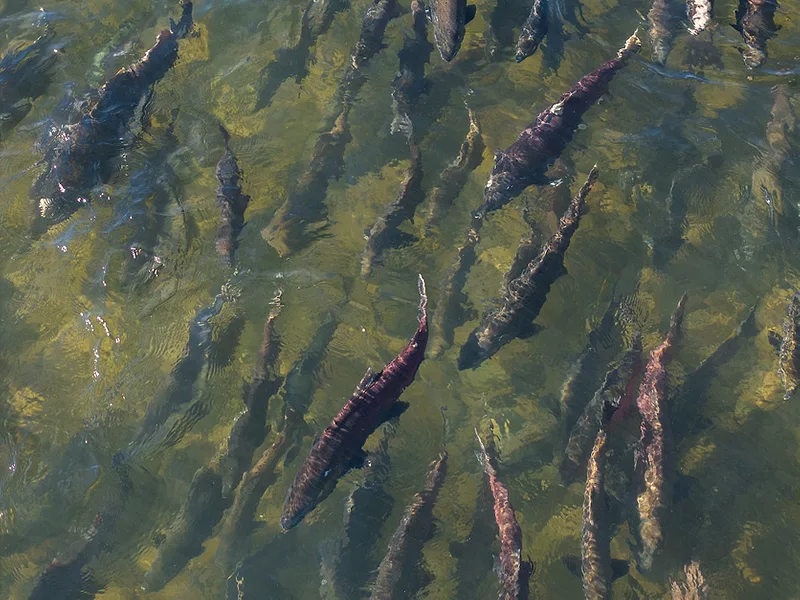
For Shasta operations, the panel backed the current three-pronged strategy: better temperature management below Keswick Dam, hatchery support, and reintroducing winter-run salmon to historical spawning grounds upstream. It recommended expanding temperature monitoring in the river and reservoir to better manage the shrinking cold-water pool as climate warming reduces snowpack and runoff timing.
On Delta pumping, the committee questioned whether existing trigger thresholds for curtailing exports are sufficiently grounded in science and urged greater transparency and improved modeling to understand population-level effects on fish, including zones of influence during pumping periods.
It’s easy to be “in the know” about what’s happening in Washington, D.C. Sign up for a FREE month of Agri-Pulse news! Simply click here
For Delta smelt, the report supported continued ecosystem-based management, including fall outflow actions and operation of salinity control gates in Suisun Marsh. It calls for multiyear study periods, targeted food web research, and development of a spatially explicit lifecycle model to better determine flow needs and timing.
It calls for an interagency science hub, a collaborative modeling and monitoring effort to accelerate research and standardize climate change planning. The panel suggested agencies pursue finer-scale hydrologic and ecological models, noting that management decisions often hinge on conditions that shift in days or weeks, not monthly averages.
While the three actions alone “are necessary, but alone are insufficient” to recover listed species, the committee expressed optimism that coordinated science, habitat investments and adaptive management can balance ecological needs and water deliveries.

