
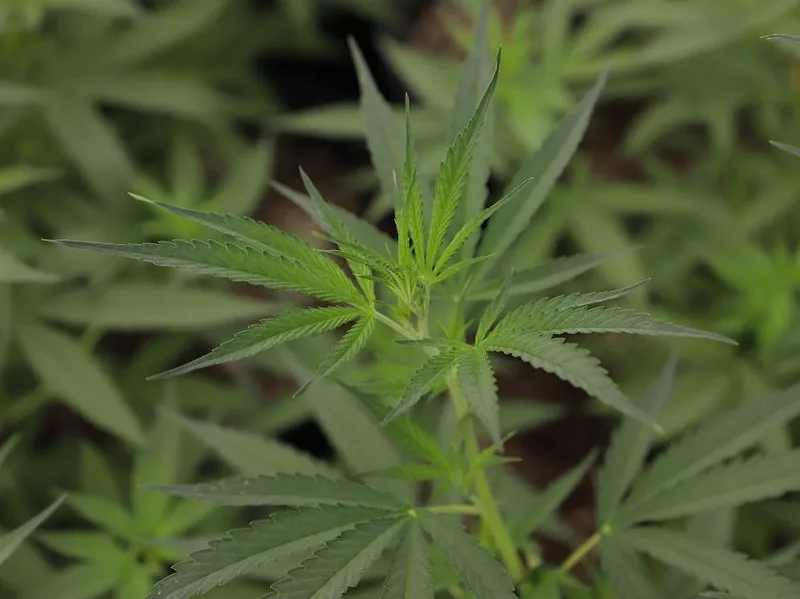
Hemp, a versatile crop that looked to finally be fulfilling its potential as an alternative for farmers hammered by low commodity prices, is in trouble.
A section in the fiscal 2026 Agriculture appropriations bill intended to get intoxicating CBD products off the shelves will end up removing about 95% of products made with hemp extract. The language in the bill, which easily survived a Senate vote last week as pressure built to end the government shutdown, would prohibit the sale of such products if they contain more than 0.4mg total THC, a limit that would capture all but a fraction of products on the market.
The law includes a one-year delay before it goes into effect but already has hemp buyers running scared, says Brian Furnish, a hemp grower who also serves on the U.S. Hemp Roundtable’s Farmer Advisory Council.
“I know it doesn't go in effect for a year, but our buyers have already gotten nervous and are talking about lowering the prices and may not even take our 2025 crop,” says Furnish, an 8th-generation tobacco grower who advocated for legalization. “They don't know if they can sell this finished product, because they're always a little bit behind.”
Furnish also grows corn, soybeans, wheat, canola and hay, but prices for row crops have been depressed, and hemp “is really the only crop right now we’re making money on.”
“We agree that there should be regulation and there should be maximum amounts of THC, but the way the bill’s written, [the THC limit] is way too low even to sell what's naturally occurring in the plant.”
CBD stands for cannabidiol, a non-psychoactive compound that is extracted from hemp. THC – or tetrahydrocannabinol – is the psychoactive ingredient that produces the “high” sought by marijuana users.
The 2018 farm bill legalized hemp so long as it doesn’t contain more than 0.3% delta-9 THC by dry weight. But Sen. Mitch McConnell, R-Ky., who pushed hard for hemp legalization in the 2018 farm bill, said manufacturers had “exploited a loophole” in that bill by using other types of THC, such as delta-8, which is psychoactive, to make products such as gummies and beverages.
It’s easy to be “in the know” about what’s happening in Washington, D.C. Sign up for a FREE month of Agri-Pulse news! Simply click here
McConnell pushed for the THC limit because he said he’s worried about “unregulated, intoxicating THC products nationwide.”
On the Senate floor before the vote on the appropriations bill, he said manufacturers had exploited the definition of hemp “by taking legal amounts of THC from hemp and turning it into intoxicating substances and then marketing it to children in candylike packaging and selling it in easily accessible places like gas stations and convenience stores all across our country.”
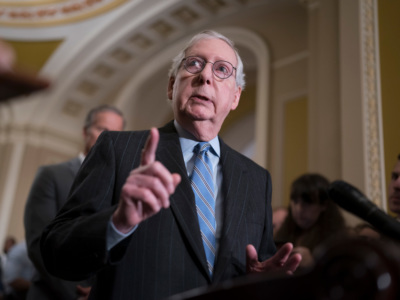 Sen. Mitch McConnell (AP photo)
But Jonathan Miller, head of the U.S. Hemp Roundtable trade group, said in a statement that “the large majority of non-intoxicating CBD products on the marketplace feature more than 0.4 mg of THC per container.” Most CBD gummies, however, exceed that limit per serving.
With the industrial hemp sector of the industry growing slowly – Miller said it represents about 20% of the overall hemp market – “you are taking 95% out of the biggest chunk of the industry” with the legislation, Miller told Agri-Pulse.
The Roundtable estimates 300,000 jobs could be lost, and Miller’s worried about the long-term impacts for the industry overall.
“My fear is that banning the extracts is just going to get people to turn away from hemp altogether,” he said.
In 2024, the value of hemp production in the U.S. totaled $445 million, up 40% from 2023, according to the National Agricultural Statistics Service. Some 45,294 acres were planted to hemp last year, up 64% from 2023. Whitney Economics, which follows the hemp industry, estimates the value of the overall industry at about $28 billion.
Ironically, the biggest critic of the measure was McConnell’s fellow Republican and Kentucky Sen. Rand Paul.
Also on the floor, Paul railed against the new definition. “The bill as it now stands overrides the regulatory frameworks of several states, cancels the collective decisions of hemp consumers, and destroys the livelihoods of hemp farmers. And it couldn't come at a worse time for America farmers.”
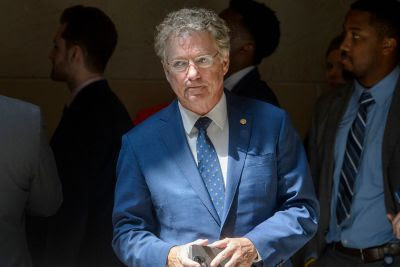 Sen. Rand Paul (AP photo)
 Specifically, Paul noted that the limit, which applies to each container – which could contain multiple CBD gummies – must not exceed the 0.4mg total THC limit.
“Currently, Maine limits THC to 3 milligrams per serving; that will be overruled,” he said. “My home state limits THC to 5 milligrams in beverages; that will be overruled. Minnesota, Utah, and Louisiana also have 5 milligrams per serving. Alabama and Georgia have 10 milligrams. Tennessee has 15 milligrams. The bill before us nullifies all these sate laws and makes the hemp industry kaput.”
Furnish says he welcomes government oversight. “You don't normally hear this from a farmer, but we need regulation,” he says, citing his own family’s history with tobacco.
He also says if the prohibition goes into effect, he’ll have to find another source for the cannabis oil he uses “if I want to keep sleeping well and not having back pain.”
The debate over the language pit parts of the alcohol industry against each other. Trade groups representing beer, wine and distilled spirits all backed McConnell.
“The ambiguous language contained in the 2018 Farm Bill has been manipulated and exploited by certain actors, fueling the rapid growth of a largely unregulated market that is knowingly and willfully ignoring the [Food and] Drug Administration’s position that the addition of intoxicating cannabinoids (like delta-8 THC and delta-9 THC) to food is illegal,” said a Nov. 4 letter to House and Senate leaders from the American Distilled Spirits Alliance, Beer Institute, Distilled Spirits Council of the U.S, Wine America and Wine Institute.
But a group of about 50 beer, wine and spirits wholesalers had a different take. In their own letter to Republican and Democratic House and Senate leaders, they said that after the 2018 farm bill passed, “a significant amount of American ingenuity led to the creation of many of the consumable hemp products on the market today. As a result, states have risen to the occasion to regulate and protect their citizens. As of this writing, all 50 states have implemented laws related to hemp. Additionally, 40 States have established a regulatory framework for consumable hemp products, with others planning debates in their next session.”
They likened the debate on hemp “to the debate our forefathers endured at the beginning of the 20th Century. The 18th Amendment banned alcohol in 1919, but the ensuing 14 years of prohibition only created a thriving illicit market and a significant number of bad actors.” Instead, they urged adoption of a “robust regulatory framework.”
Miller said the industry will be pushing over the next year for legislation to overturn the 0.4mg THC limit. Rep. Morgan Griffith, D-Va., has been circulating a draft bill since August to regulate hemp consumables, and Sens. Ron Wyden and Jeff Merkley, both Oregon Democrats, are poised to reintroduce their Cannabinoid Safety and Regulation Act, Miller says.
The bill would “establish national standards to protect public health and safety and keep cannabis products out of the hands of children,” according to a press release from Wyden’s office.

