
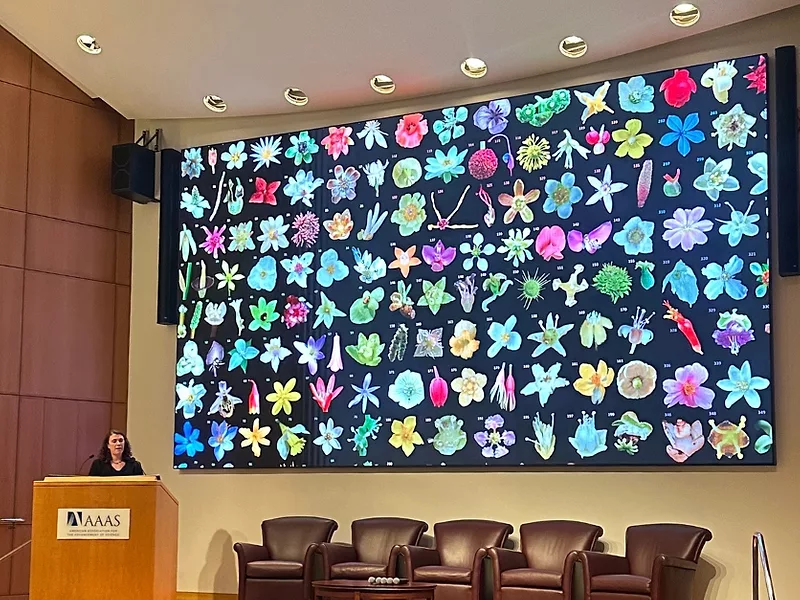
Restoring pollinator populations will require developing decision-support tools to assist beekeepers, growers, plant breeders and landscape architects, according to the 16th annual Charles Valentine Riley Memorial Lecture, hosted by the American Association for the Advancement of Science.
“We need to be able to give them information they can use in real time, at their locations, to develop better management systems and better landscape design systems to support our pollinators,” said Christina Grozinger, founding director of the Center for Pollinator Research and the Insect Biodiversity Institute at Pennsylvania State University.
Don’t miss a beat! It’s easy to sign up for a FREE month of Agri-Pulse news! For the latest on what’s happening in Washington, D.C. and around the country in agriculture, just click here.
Presented in collaboration with AAAS, the Charles Valentine Riley Memorial Foundation and the World Food Prize Foundation, the lecture series explores how agricultural innovation can help address environmental and societal challenges.
Grozinger said pollinators, including bees, flies, bats, butterflies and hummingbirds, contribute an estimated $200 billion to $400 billion annually to global agriculture and about $34 billion to U.S. agriculture.
Pollinators are vital to food production, with about 75% of major crops depending on them, Grozinger said. These crops include watermelon, almonds, coffee beans, alfalfa, cotton, timber and others.
“In the U.S., 30% to 50% of managed honeybee colonies die every winter, and this past year we had the highest rate on record at 62%,” Grozinger said. She attributed the increase to a parasitic mite that has developed resistance to previously effective pesticides.
In addition to parasites and pathogens, pollinator populations also face threats from reduced abundance and diversity of flowering plants, loss of nesting habitat, pesticide exposure and climate and weather extremes.

