
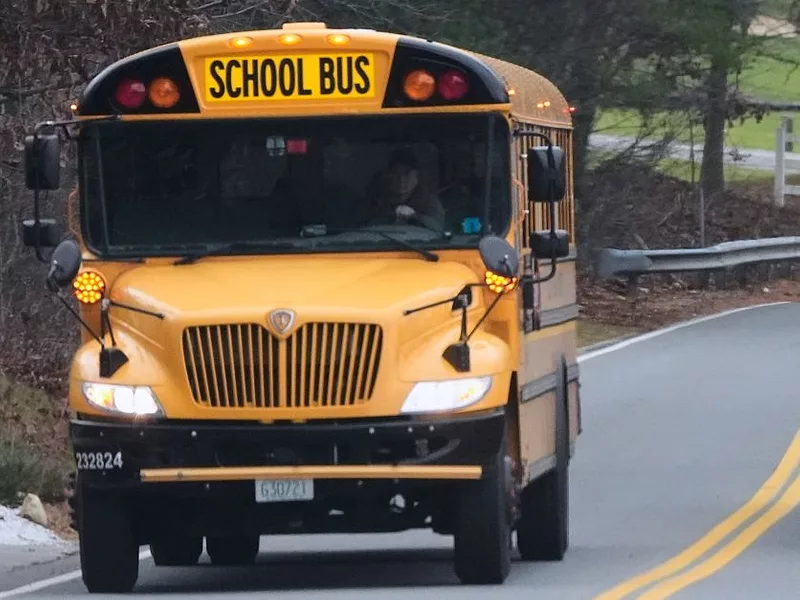
A Washington middle school has closed its doors. Commissioners in one Oregon County are looking at funding fewer sheriff patrols. And in a large Utah county, officials are struggling to determine how they are going to maintain hundreds of miles of dirt roads often traversed by tourists.
These are among the tough decisions that officials in counties dominated by federal forestland have been navigating as they struggled to craft their budgets after the expiration of the Secure Rural Schools Act (SRS), a law that provides local governments with funding to compensate for their inability to levy taxes on federal lands.
The measure expired at the end of fiscal 2023, and final payments were issued last April. Since then, rural counties and school districts across the U.S. had been forced to make difficult choices without knowing whether the law would be reauthorized.
The Senate in June approved a bill to reauthorize SRS through 2026 and provide lapsed payments for 2024 and 2025 by voice vote. On Tuesday, this bill cleared the House with a 399-5 vote, sending it to President Donald Trump's desk.
However, the bill approved by Congress only provides only short-term relief for schools and counties, since it only extends the program through fiscal 2026.
An analysis by the Center for American Progress, a progressive think tank, found that the law's expiration eliminated $207 million in revenue for county governments and school districts. Of that amount, $159 million was in non-metro counties and $86 million was “in the most rural and isolated counties in the United States,” according to a summary of their analysis.
School superintendents who spoke with Agri-Pulse worried the loss of funding would force them to cut staff and reduce classes and programming, including agriculture classes and National FFA Organization chapters. County officials said the loss of funding could result in fewer road repairs and the loss of community services.
For some, the lapse in funding has already taken a toll.
A few years ago, Stevenson-Carson School District in western Washington had four schools, but budget and enrollment challenges have cut that total in half. First came the merger of the district’s two elementaries. Then, just this year, administrators made the call to shutter the district’s middle school.
“I don’t have any more schools to consolidate,” Stevenson-Carson superintendent Ingrid Colvard said of her district’s future cost-saving options. She said the district has already cut student assistance professionals, its staff therapist, and its behavior support teacher as a result of funding constraints, and may also need to begin looking at eliminating classes if SRS dollars do not come in.
“It’s pretty disheartening,” she said.
Program's history tied to Forest Service
The National Forest System covers approximately 196 million acres in the U.S., spanning from the West to the northern Midwest to the Appalachian Mountains. Its roots lie in Congress’ 1891 decision to grant the president power to create “forest reserves” to protect forestland, influence the flow of water and have a “continual supply” of timber for the U.S. population.
However, federal claims over these lands also created a tax-generation challenge for counties and school districts, particularly those with large swaths of Forest Service territory. Though there are nuances, constitutional separation of powers generally prevents local governments from levying taxes on federal lands, a limitation that challenges forested counties’ abilities to support schools, roads and other services for their often-rural populations.
Interested in more news on farm programs, trade and rural issues? Sign up for a four-week free trial to Agri-Pulse. You’ll receive our content - absolutely free - during the trial period.
In 1908, Congress sought to address the issue by allowing counties to access a share of federal timber sale proceeds. For many years, this funding source worked, though varying program allocations each year did challenge county officials’ efforts to determine future budgets.
Recognizing challenges with inconsistent payments, lawmakers established the Payment in Lieu of Taxes (PILT) program in 1986, which provides counties a base level of funding based on the federal land acreage within their borders. But while PILT helped offset the volatility of the revenue-sharing payments, population-based payment caps limited how far the funding went in addressing rural counties’ budget problems, said Mark Haggerty, a senior energy and environment fellow for the Center for American Progress.
In the late 1980s and ‘90s, the funding counties received under timber revenue-sharing declined after most national forests scaled back grazing, timber management and mining activities on their lands for environmental reasons. Some counties saw steep losses, particularly in the Pacific Northwest, and those with small populations faced limits in how much could be offset by PILT.
With these counties in mind, lawmakers approved the Secure Rural Schools Act in 2000, providing funding to counties based on the average of their three highest payments within a certain period of time. Initially it was temporary but has been kept alive through reauthorizations attached to larger bills. Still, its temporary nature has left it at risk of lapsing, which occurred for one year following FY15 and, more recently, since FY23.
“It’s always been a rollercoaster,” Sen. Ron Wyden, D-Ore., told Agri-Pulse.
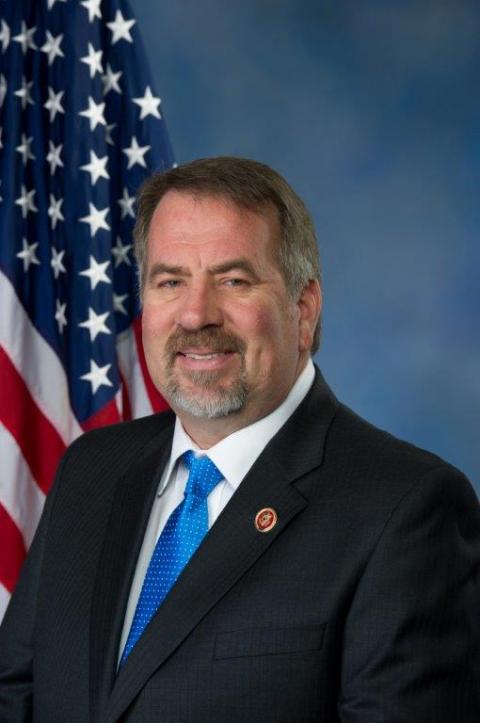 Doug Lamalfa (LaMalfa office photo)
Rep. Doug LaMalfa, R-Calif., told Agri-Pulse that circumstances are “getting dire” for communities in his district due to the funding lapse.
“They’re tired of waiting, and I’m tired of having them wait,” he said. “They’re having to be pretty frugal about what they do in order to just keep rolling along.”
Wyden, ranking member of the Senate Finance Committee, said he and committee Chair Mike Crapo, R-Idaho, want to make the program permanent and have been exploring possibilities for getting a “longer-term” version enacted. LaMalfa said more attention needs to be paid to declining timber sales from federal lands.
“I don’t think anybody likes having to come to town with their hat in their hand to beg for this fund,” he said. “Let’s instead get the timber opportunities back up to where they need to be for a country that still needs timber.”
Funding lapse tightens budgets for schools, counties
Secure Rural Schools funds are often directed to schools, but also can go to road and bridge projects, fire district functions and public health services. A total of $232.4 million in program funds were distributed by the U.S. Forest Service for the 2023 fiscal year.
Glen Syzmoniak, superintendent of the Klamath County School District in Klamath County, Ore., said when authorized, SRS funding typically provides the school district with between about $800,000 and $1 million per year.
The district contains 21 schools, covers around 65,000 square miles and collectively has around 7,000 students, he said. A portion of that funding goes to hire teachers to teach electives like agriculture at some of the district’s smaller schools, some of which only have 200 students, he said.
When asked about the future of those elective programs should the lapse in funding continue, Syzmoniak said he believes the district will have to find a way to maintain them "because they’re way too important to just cut.”
Still, he noted that losing the funding means “a million dollars we’re not going to be able to spend somewhere.”
Syzmoniak said the school has also used SRS funding for major purchases like LED lighting and scrubbing machines for custodians to use on floors.
In a normal year, the School District of Crandon in Forest County, Wis., typically receives between $80,000 and $100,000 in SRS funding, said middle school and high school principal Joshua Jaeger. He said the loss of SRS funding comes on top of declines in other types of federal and state assistance and added that the overall budgetary situation the school district is currently facing may result in future staffing cuts.
Jaeger has travelled to Washington to advocate for SRS funding, and said he’s been frustrated in the past after hearing lawmakers refer to SRS funding as “dust” in the grand scheme of federal budgeting.
“That's … where they are disconnected with the people they're representing, if they refer to that amount of money as dust,” Jaeger said. “In a lot of small, rural schools that amount of money is life-changing.”
 Derrick DeGroot (Klamath County photo) Derrick DeGroot, a county commissioner in Klamath County, Ore., said a continued lapse in SRS funding would result in the commission having to cut its budget for law enforcement, likely leaving only enough to support two deputies to cover the 6,100-square-mile county. SRS funding has historically been used by the county to support patrols on roads going to and from the nearby national forest.
“We already have a high crime rate due to the lack of law enforcement from the reduced funding,” he said, referring to declining SRS payments over the years. “If we were to receive no funding and have no law enforcement presence, I can’t imagine what the crime rate would look like in our community.”
Jerry Taylor, a county commissioner in Garfield County, Utah, said roughly 93% of the 3.3 million acres of land in his county is owned by the federal government. He said the county’s most recent SRS payment totaled around $41,000.
He said Garfield County has hundreds of miles of dirt road that must be maintained, and the county government previously used SRS dollars to provide that service. He added that SRS is especially important for these purposes since 83% of the property taxes the county does collect go to the school district.
“We live in the most beautiful area in the world,” he said of the surrounding forest. “But sometimes it's hard when it’s all federally owned.”

