
A major Trump administration decision to expand water deliveries to farms and cities is clashing with Gov. Gavin Newsom’s water supply approach favoring multi-benefit projects — once again pulling California’s water managers in two directions.
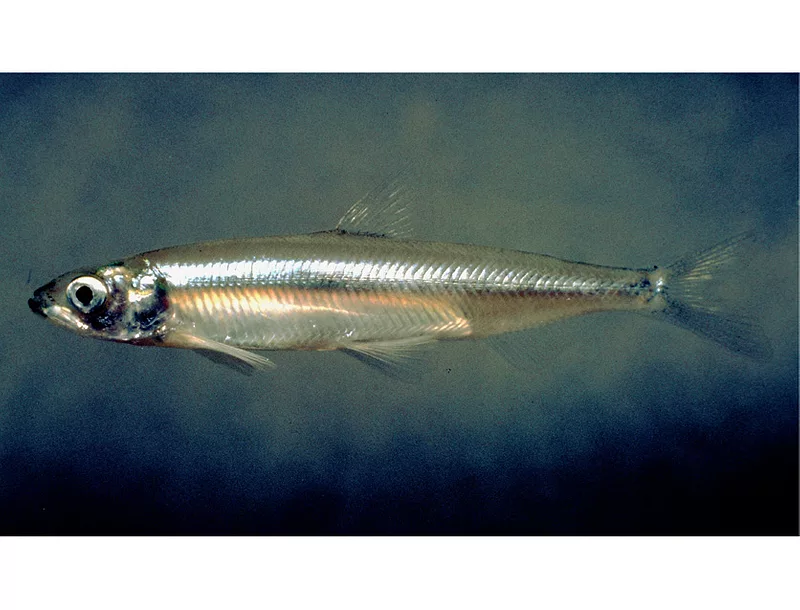
At the federal level, the Bureau of Reclamation has finalized new operating rules for the Central Valley Project, known as Action 5, designed to increase pumping during high-flow windows and boost supplies for agricultural and urban contractors. The update replaces fixed operational requirements tied to endangered species triggers with a more flexible, real-time management approach. It modifies rules governing flows and eliminates the Delta smelt summer-fall habitat action.
Interior Secretary Doug Burgum said the new plan “reflects our commitment to using the best available science to increase water deliveries while safeguarding the environment.”
By contrast, the Newsom administration released a comprehensive watershed-scale strategy focused on groundwater recharge, flood management and distributed storage. The plan — the San Joaquin Basin Flood-Managed Aquifer Recharge (Flood-MAR) Watershed Studies — outlines how water could be stored upstream in fields, floodplains and recharge basins rather than relying solely on exporting water through the Sacramento-San Joaquin Delta.
Both actions follow up on dueling executive orders from the two administrations last winter to expand water supplies and deliveries.
Action 5 aims to increase export pumping during storms
Under Reclamation’s modeling, Action 5 could increase annual supplies by up to 85,000 acre-feet for CVP users and up to 129,000 acre-feet under coordinated operations with the State Water Project. The San Luis & Delta-Mendota Water Authority estimated potential export gains of up to 400,000 acre-feet in wetter years, depending on storm conditions and operational capacity, which will benefit growers facing pumping cutbacks under the Sustainable Groundwater Management Act.
“Water ratepayers have invested tens of millions of dollars over the last decade to expand the scientific body of knowledge that supports operations of the CVP and SWP, with the goal of advancing scientifically based adaptive management of project operations,” said Executive Director Federico Barajas. “The execution of this Record of Decision brings that future into the present.”
Westlands Water District called the move long overdue, with General Manager Allison Febbo saying the changes “will help ensure that our growers have the water they need to support local communities and the nation’s food supply, while also protecting California’s wildlife.” Friant Water Authority also supported the direction, stating the update provides “a more modern and practical” approach and aligns operations with real-time hydrologic and biological conditions rather than fixed triggers.
 Interior's Doug Burgum (DOI photo)
Western Growers CEO Dave Puglia applauded the change as well, describing it as a shift toward practical operations after decades of allocations averaging just 45% of contract amounts.
“This modest potential rebalancing represents a welcome return of common sense,” said Puglia.
Another Action 5 provision that raised eyebrows was the elimination of export-reduction measures tied to the Healthy Rivers and Landscapes framework due to the State Water Resources Control Board’s continuing work to finalize an update to its Bay-Delta Water Quality Control Plan that is likely to incorporate the voluntary agreements approach.
In a letter to Reclamation, Diane Riddle, an assistant deputy director at the water board, warned about disrupting the sensitive negotiations with irrigation districts, arguing the changes “would impact the accounting for the [voluntary agreements] in ways that have not been contemplated that would create significant complications.”
In a statement to Agri-Pulse, the State Water Contractors explained that the organization did not interpret the exclusion as a lack of support for the approach.
“The State Water Project is the only Healthy Rivers and Landscapes party currently implementing early flow actions for the HRL, and that is because it is a requirement of our current permit from the California Department of Fish and Wildlife,” said General Manager Jennifer Pierre. “The Bureau of Reclamation’s exclusion of any early actions from its 2026 operations plan reflects the reality that the HRL will not be adopted for this season.”
Interested in more news on farm programs, trade and rural issues? Sign up for a four-week free trial to Agri-Pulse. You’ll receive our content - absolutely free - during the trial period.
The intent behind the Trump and Newsom executive orders was to take advantage of wet conditions and maximize water deliveries, and the group urged Reclamation and the California Department of Water Resources to coordinate closely on that effort to avoid unintended consequences. The group opposes “any actions, whether they are caused by the Bureau of Reclamation’s operations or by scientifically unsupported permit terms, that impact State Water Project deliveries.”
The Modesto Irrigation District, which does not rely on state or federal water deliveries but is a central partner in the HRL program, told Agri-Pulse it remains committed to advocating for advancing the agreements toward implementation.
State and environmental groups warn of ecological harm and legal risk
The Newsom administration has strongly objected to the plan. During the review period, the water board cited modeling showing Action 5 would reduce Delta outflow by 289,000 acre-feet per year and increase juvenile winter-run Chinook salmon mortality by up to 32%, depending on the water year.
DWR warned the update assumes the SWP can adopt identical rules, which it legally cannot due to separate endangered species permits, and said that mismatch could reduce SWP deliveries.
“Close coordination between California’s two main water systems…is crucial to protecting water supply, fish and wildlife, and water quality,” said DWR Director Karla Nemeth in a statement. “As Reclamation changes Central Valley Project operations, DWR will do its best to make sure both projects are operating in concert to the benefit of all of California.”
CDFW Director Chuck Bonham said in a statement that the plan “provides less protection for species than previous Reclamation proposals supported by both Republican and Democratic administrations.” He called the measures “vague, unclear, impossible to implement, or not based in best available science” and warned the proposal would harm efforts to support “healthy populations of Chinook salmon — harming the California communities that rely on salmon for their livelihood.”
The governor’s office had a sharper critique of the plan, which was released while Newsom was in Washington requesting more federal aid for wildfire relief in Los Angeles — the January disaster that sparked a water feud between the governor and the president.
“The Trump administration is putting politics over people — catering to big donors instead of doing what’s right for Californians,” said Tara Gallegos, deputy director of communications. “As per usual, the emperor is left with no clothes, pushing for an outcome that disregards science and undermines our ability to protect the water supply for people, farms and the environment.”
California Attorney General Rob Bonta also weighed in, calling the decision politically motivated and warning it “creates new risks for water availability, especially for Southern California cities, and the health of California’s waterways, fish and wildlife.” He said his office is “looking at all available options to respond,” but he and the governor’s office did not commit to taking legal action.
 Chuck Bonham (Nature Conservancy photo)
In 2019 Newsom led a lawsuit against the first Trump administration’s biological opinions for Delta fish, which took an adaptive management approach. Water contractors hailed the plan as a win for science-based policy, but it soon stalled in court and was later reversed under the Biden administration.
Environmental advocates and sportfishing groups have been urging California to sue. Restore the Delta said local communities would “again pay the price as water is moved elsewhere.”
Newsom pivots to groundwater strategy
While the federal plan focuses on moving more water through Delta pumps, the Newsom administration’s water supply strategy has focused on projects like floodplain restoration and capturing excess flows for groundwater recharge, which promise benefits to the environment, farms and communities but have so far demonstrated only modest supply increases.
Ahead of the Reclamation announcement, DWR released its long-awaited San Joaquin Basin Flood-MAR Watershed Studies, outlining how five river basins could manage flows using recharge basins, fields, flood bypasses and forecast-informed reservoir operations.
The studies conclude that groundwater now provides up to 80% of supply during dry years and that without expanded recharge, overdraft in some basins could deepen by more than 100 feet.
Nemeth said in a statement that the studies reflect a necessary shift to plan for flood and drought simultaneously, not sequentially. Paul Gosselin, DWR’s deputy director of sustainable groundwater management, said the science now available offers a roadmap for SGMA compliance and “identifies opportunities that could greatly replenish groundwater basins.”
The State Water Contractors supported the report’s direction and said maximizing recharge during extreme storms is “one of the surest ways to address climate change and prevent costly floods.”
Common ground amid a widening policy divide
Despite sharp disagreement over export rules, both administrations have aligned around one major shared water supply priority: the Sites Reservoir Project. The off-stream storage proposal northwest of Sacramento — capable of holding up to 1.5 million acre-feet — has become one of the few water initiatives viewed as compatible with both the export-focused approach of the federal government and the multi-benefit strategy advanced by California.
For the Trump administration, Sites fits into a broader effort to increase statewide water storage capacity and move more water south when available. During Trump’s first tenure, Reclamation released a final feasibility report on the reservoir, formally advancing the project, and allocated $6 million to Sites under a bipartisan spending bill.
This year the administration released $316 million for state water storage projects, with $200 million allocated to Sites. Despite a pause during the government shutdown, Reclamation continues to negotiate a partnership agreement with the Sites Project Authority.
For the Newsom administration, Sites represents a major infrastructure project that can store more water for the environment and for groundwater recharge and aligns with the state’s climate resilience strategy.
“We can’t wait to protect our state from water shortages – there are 40 million Californians depending on us,” Newsom said in August. “Each day that we delay these projects costs our state more money.”

