
As she announced a new aid package this week, Agriculture Secretary Brooke Rollins reiterated that the administration’s long-term project is to end farmers’ reliance on government support.
The latest assistance would help producers until the Trump administration can usher in a “new golden age for farmers,” she said. “Where, instead of farming for government checks, they can farm to feed their family and sell their products.”
But GOP senators are skeptical the U.S. is on the cusp of farm profitability unless the Trump administration walks away from another core goal of keeping food costs down.
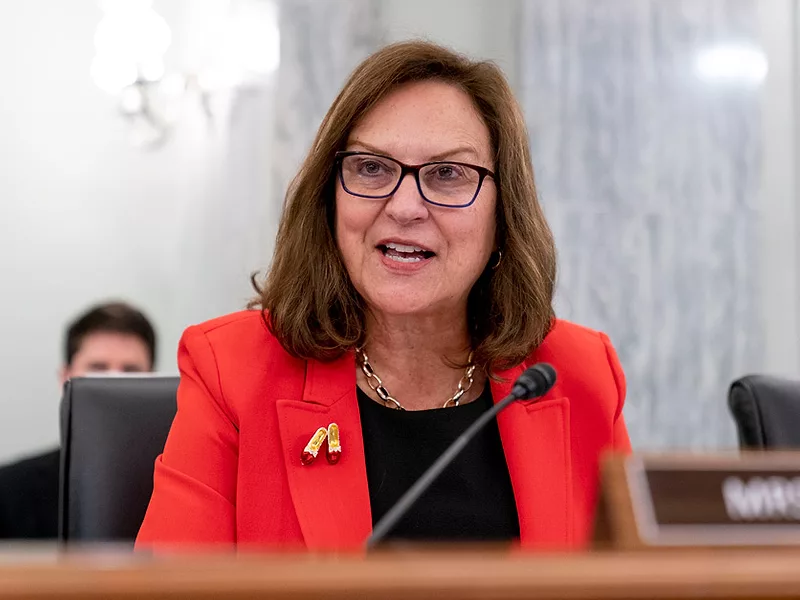
“You're always going to see the federal government involved in farming because of the policy that our country has – as most other countries in the world – to have cheap food,” Sen. Deb Fischer, R-Neb., said. “It's recognizing the policies that we have as a country and what's needed.”
Iowa GOP Sen. Chuck Grassley said that the only way that governments will be able to end support to farmers is if corn and soybean prices rise substantially. An unexpected shock that drives prices skyward, he said, is likely to be a bigger factor in profitability than policy levers.
“A drought in China or India or Brazil or Argentina is going to play a bigger role than the secretary of agriculture, the president of the United States can play in getting prices up so it's profitable,” he said.
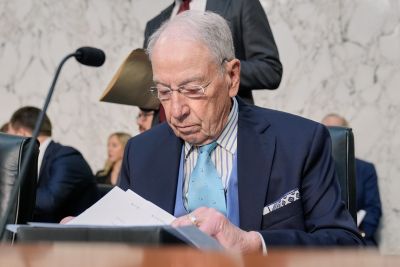 Sen. Chuck Grassley, R-Iowa (AP photo)
House votes to reauthorize Secure Rural Schools program
A bill to reauthorize the Secure Rural Schools Act cleared the House on Tuesday, providing relief to school districts and county governments unable to derive tax revenue from federal forests in their borders.
With a 399-5 vote, the House approved a Senate bill to reauthorize the program until through fiscal year 2026 and provide retroactive assistance for FY2024 and FY2025. It has been expired since FY2023.
It now heads to the president’s desk.
SAF legislation includes increased tax credit
U.S. lawmakers are seeking to sweeten a financial incentive for producing lower-carbon jet fuel, part of new legislation aimed at reviving investor interest in the nascent market.
The bipartisan bill, dubbed the Securing America’s Fuels (SAF) Act, would allow qualifying producers of sustainable aviation fuel to receive 35 cents to $1.75 a gallon in a “bonus credit,” according to a statement led by U.S. Rep. Mike Flood, R-Neb, a sponsor of the measure.
Interested in more news on farm programs, trade and rural issues? Sign up for a four-week free trial to Agri-Pulse. You’ll receive our content - absolutely free - during the trial period.
The legislation is in response to the so-called 45Z clean fuel production tax credit for SAF being cut from a maximum value of $1.75 a gallon to $1 a gallon in the recently enacted tax law championed by President Donald Trump. The reduction put the SAF credit value at the same level given to makers of biomass-based diesel.
“America is on the cusp of the next great biofuels revolution,” Flood said. "Sustainable aviation fuel will help lower emissions while expanding domestic markets for our nation’s farmers."
The bill also would extend 45Z through 2033 for all clean fuels. The credit is currently set to expire at the end of 2029.
The co-sponsoring lawmakers, including Reps. Troy Carter, D-La., Sharice Davids, D-Kan. and Tracey Mann, R-Kan., called SAF a “game-changer," citing the potential for tens of thousands of new jobs and as much as an 80% reduction in lifecycle greenhouse-gas emissions.
Christmas corn rally?
The typically sleepy December USDA crop report had some “silver linings” for corn farmers on Tuesday, according to Oliver Sloup, co-founder of Blue Line Futures in Chicago.
The closely watched World Agricultural Supply and Demand Estimates trimmed 2025-26 U.S. ending corn stocks from last month’s report by 125 million to 2 billion bushels, the second biggest such reduction in a December WASDE in about two decades, Sloup said in a website post.
The cut in the supply outlook came as USDA lifted its forecast for U.S. corn exports to 3.2 billion bushels, a record if realized. March corn in Chicago ended the day 4.25 cents higher at $4.48 a bushel. The futures mostly have been trading between $4.40 and $4.50 a bushel.
“This report, coupled with other factors, may be enough to help aid a breakout above the top end of the range and give us a bit of a Santa Claus rally,” Sloup said.
Soybeans fell with no bullish signals in the crop report to allay concerns over U.S. exports.
For domestic rice, USDA cut its long-grain export outlook 2 million hundredweight to 62 million on lackluster sales and shipments of rough rice to Mexico and other Latin American markets. It also lowered the 2025-26 all rice season-average farm price (SAFP) forecast by $1.10 per hundredweight to $11.60 on reductions for the long-grain and medium- and short-grain SAFPs.
Chesapeake dead zone showed little signs of reversal in 2025, report finds
The Chesapeake Bay’s dead zone stayed around the same size in 2025 as in past years, according to an annual report that tracks the state of bay restoration efforts.
That metric represents the greatest volume of the bay’s water experiencing hypoxic conditions on any day of the year.
Hypoxic conditions are characterized by low dissolved oxygen and are often caused by runoff of excess nutrients from developed areas and farmland.
Major MAHA announcement promised
Brooke Rollins and Robert F. Kennedy Jr. will make a “major announcement” at USDA Wednesday as part of the administration’s “ongoing commitment to the Make America Healthy Initiative,” according to a department media advisory.
Joining the agriculture secretary and the Health and Human Services secretary will be Mehmet Oz, director of the Centers for Medicare & Medicaid Services.
The event is scheduled for 10 a.m. today. Look for coverage on Agri-Pulse.com.
Final word
“If he wants to help the farmers…. [the president should] get the tariffs off of farm machinery. And I weighed in with the White House on that very subject within the last 24 or 48 hours.” – Sen. Chuck Grassley, R-Iowa, during a weekly call with reporters on Tuesday
Editor’s note: We got ahead of ourselves yesterday and promoted an item on Chinese drones that didn’t appear in Daybreak. That news can be found here.
Kim Chipman, Oliver Ward and Noah Wicks contributed to today’s Daybreak.
.webp?t=1762183428)


