
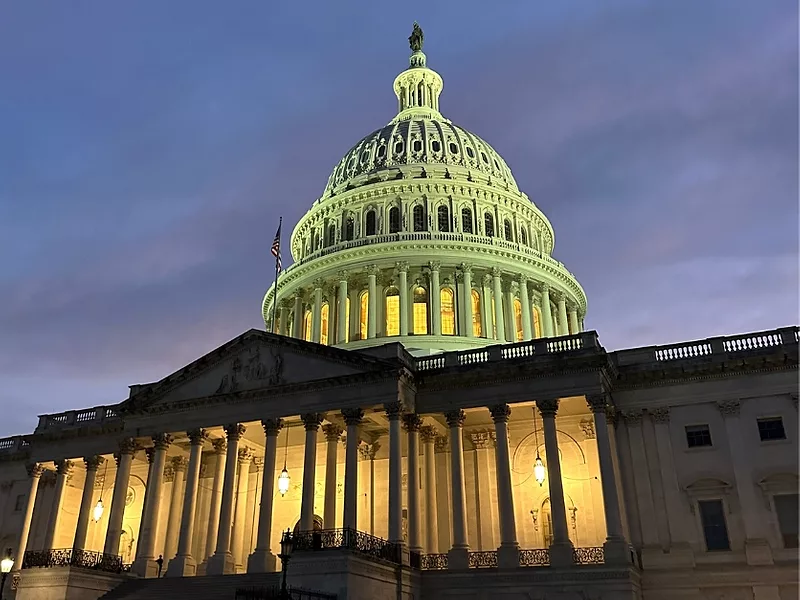
Congress is done for the year.
But before wrapping up Thursday evening, the Senate approved a series of President Donald Trump’s nominees who will be important to agriculture and food policy. They include Julie Callahan to be chief ag trade negotiator in the Office of the U.S. Trade Representative.
Callahan, who has been at USTR since 2016, “brings an unparalleled level of knowledge, experience and dedication to this position.” U.S. Meat Export Federation President and CEO Dan Halmstrom said in a statement.
Mindy Brashears was confirmed to be undersecretary for food safety at USDA. She was one of three USDA nominees to get the OK.
Also confirmed: Jeffrey Hall to be EPA’s assistant administrator for the Office of Enforcement and Compliance Assurance, and Michael Selig to chair the Commodity Futures Trading Commission.
Those were among nearly 100 nominees approved as a package as senators were wrapping up their work for the year.
Boozman open to moving individual pieces of the farm bill
Senate Ag Committee Chairman John Boozman still wants to move a farm bill in 2026, but he knows that Democrats will likely insist on using the legislation to restore cuts to SNAP that Republicans made this year.
So, in this week’s Agri-Pulse Newsmakers anchor Lydia Johnson asks Boozman if he would consider moving pieces of the farm bill separately, if he can’t get the full legislation passed. Boozman indicates he’s open to that idea.
“What we've got to do is think outside the box to get these things accomplished. So, I'm quite willing to look at individual bills. We've got a lot of bills out there that address these things that members have submitted. They're good bills,” says Boozman, R-Ark.
Keep in mind: Much of the farm bill is already included in the One Big Beautiful Bill Act passed in July, including increases in commodity and conservation program funding. Some of the outstanding items include increases in USDA loan limits.
Newsmakers will be available today at Agri-Pulse.com.
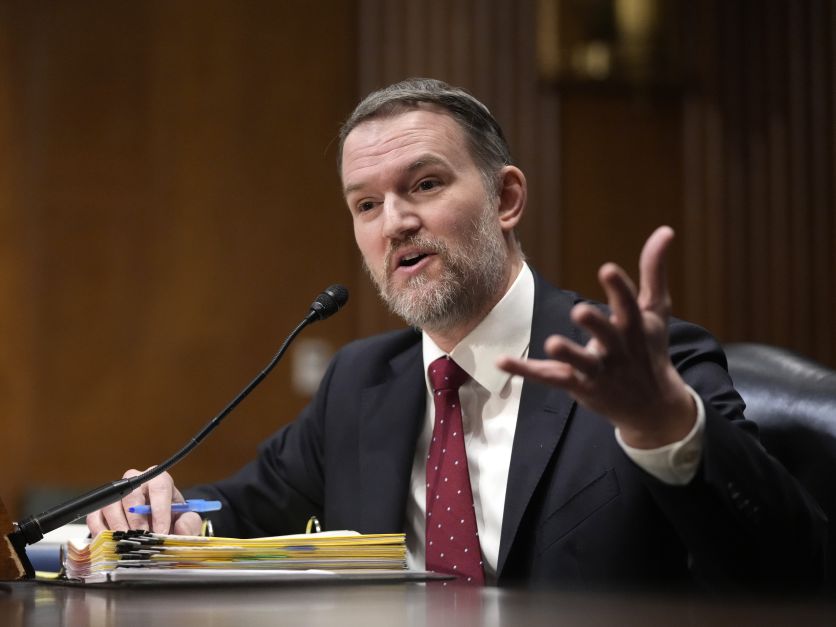 Jamieson Greer (AP photo)
Greer hopes to have a sense of how USMCA talks will go early next year
U.S. Trade Representative Jamieson Greer expects to have an idea early next year of how a review of a North American trade pact is likely to go.
The U.S.-Mexico-Canada Agreement review is set for July. But Greer said Thursday in an interview with Scripps News that he expects to meet with both sides individually early in 2026 to get a sense of how talks will go.
Take note: Greer outlined his priorities for the review to lawmakers on the Senate Finance and House Ways and Means committees earlier this year, which included a slate of ag issues.
Peter Harrell, a trade lawyer and former Biden trade official, noted on Twitter Thursday that the list is ambitious and would make the talks closer to a renegotiation than a review.
Interested in more news on farm programs, trade and rural issues? Sign up for a four-week free trial to Agri-Pulse. You’ll receive our content - absolutely free - during the trial period.
“But getting the stated priorities across the finish line would be a big win for the U.S.,” he added.
How the Hill heard it: Multiple lawmakers who attended the meeting told Agri-Pulse they were satisfied with the priorities. Rep. Adrian Smith, R-Neb., said there was nothing unexpected in Greer’s roadmap. Sen. Catherine Cortez Masto, D-Nev., said she appreciated that the administration is “working within the confines and the structure” of the deal.
Rep. Nicole Malliotakis, R-N.Y., said she had pressed Greer and Commerce Secretary Howard Lutnick in a separate meeting this week to get Canadian provinces to end their boycott of U.S. wine and spirits as part of negotiations.
Clean fuels guidance under final White House review
“They've lost about two thirds of their business in Canada because of this boycott,” she said. “Their national government can play a big role in in putting pressure on the provinces.”
The biofuel industry is officially on the lookout for Trump administration guidance on a tax credit overhauling longtime policy for crop-based fuels.
The Treasury Department sent its proposal to the White House this week for review. Public release of guidance for the Clean Fuel Production Tax Credit is widely expected to come before the end of the year.
The 45Z credit replaced a $1-a-gallon blending credit with one valued based on the carbon footprint of a fuel's production.
What’s at issue: One question is whether Renewable Energy Certificates (RECs) will be preserved. RECs allow producers to offset electricity emissions with wind, solar or hydropower. A recent rumor that they were removed caused an uproar, said Danielle Anderson, senior government policy and advocacy manager at Christianson CPAs and Consultants.
“We're seeing ethanol plants being able to offset 100% of their electricity emissions," Anderson said. "So, companies that weren’t in the money suddenly can be."
Lawmakers push idea for specialty crop aid
More than 100 House members are calling on congressional leaders to get economic assistance to specialty crop producers quickly and equitably.
Specialty crop producers are in line to get $1 billion of the $12 billion in economic assistance the administration unveiled last week. To streamline payments, officials should stand up a “familiar and proven” program, the lawmakers wrote in a letter Thursday.
The lawmakers say the Marketing Assistance for Specialty Crops and the second round of the Coronavirus Food Assistance Program could serve as effective models.
House passes bill to delist gray wolf
The House has passed a bill to delist gray wolves in the lower 48 states under the Endangered Species Act.
The Pet and Livestock Protection Act, which passed 211-204 vote Thursday, now heads to the Senate, which historically has been unwilling to meddle in the Fish and Wildlife Service’s listing process.
The bill would revive a delisting rule enacted in 2020 by the first Trump administration, but was struck down by a federal judge. The new delisting rule would not be subject to judicial review, the bill says.
Final word
“A streamlined process to avoid unnecessary administrative delays is another key reason for structuring a program that is familiar and proven to specialty crop growers across the United States. This familiar process will ensure the USDA-Farm Service Agency (FSA) state and local offices have the personnel and resources in place to fully execute any program designed to assist specialty crop growers.” – From a letter sent by House lawmakers to congressional ag leaders seeking swift disbursement of the $1 billion in farm aid for specialty crops.
Philip Brasher, Oliver Ward and Noah Wicks contributed to today’s Daybreak


