

Justin Benavidez has been tapped to be USDA’s chief economist, succeeding Seth Meyer. Benavidez has been chief economist for the House Agriculture Committee’s GOP staff the last three years. USDA hadn’t announced the appointment as of Monday, but Agri-Pulse confirmed he’s started work there.
Read Lydia Johnson’s report here.
Another House Ag departure: Ben Goldey, communications director for the committee's Republican staff, is joining public affairs firm LSG as a vice president. Goldey was press secretary at the Department of Interior during the first Trump administration.
Making schools meals healthier
A major goal of the Make America Healthy Again movement is getting something of a boost from one of the nation’s leading voices for school nutrition programs. The School Nutrition Association’s 2026 Position Paper calls on Congress to provide funding to reduce ultra-processed foods in school meals.
MAHA advocates want to reduce UPFs in children's diets, promoting whole foods and improving school meals to combat childhood chronic diseases. A new School Nutrition Association report outlines challenges for school meal programs faced with reducing UPFs. This comes as the Trump administration’s soon to be updated Dietary Guidelines for Americans are expected to recommend reduced UPF consumption.
“School nutrition professionals are at the frontlines, instilling principles for lifelong healthy eating among America’s children - schools are the only place required to serve meals based on the Dietary Guidelines for Americans,” says SNA President Stephanie Dillard. “Congress must step up to ensure schools have the funding and resources to build on their successes and effectively implement changes to school nutrition standards.”
SNA also wants Congress to increase school meal program funding for scratch cooking, which is preparing meals from basic, whole ingredients rather than using pre-packaged, processed or heat-and-serve components.
Pesticide provision stripped from appropriations bill
Liability shield language that would protect pesticide makers from lawsuits in state courts has been dropped from a fiscal 2026 spending bill. The House Appropriations Committee’s Interior-Environment appropriations bill previously had the language, but the final version of the bill negotiated with the Senate does not.
The MAHA movement is claiming victory. “This outcome proves the strength of the bipartisan movement this administration calls MAHA, when it works across the aisle,” said Elizabeth Kucinich, a former policy director at the Center for Food Safety and “founder of the Kennedy for President campaign, a precursor to the MAHA movement,” a news release from MAHA advocates said.
But, but, but: A controversial policy rider such as this one was unlikely to survive bipartisan negotiations with the Senate.
Industry reaction: The Modern Ag Alliance, which includes Bayer and dozens of ag groups, argues the provision wouldn’t have directly affected current or future litigation.
A statement from Bayer said “we agree that no company should have blanket immunity” but that the shield language “would not prevent anyone from suing pesticide manufacturers. We have seen many inaccurate and misleading claims made online about the intent of this legislation, and anything to assert otherwise is a distortion of reality.
“We support state and federal legislation alongside more than 360 agricultural organizations because the future of American farming depends on reliable science-based regulation of important crop protection products – determined safe for use by the EPA,” the statement said.
ITC to probe Mexican strawberry imports
The U.S. International Trade Commission will study whether U.S. strawberry producers are being hurt by Mexican imports. If so, this could ultimately lead to tariffs on Mexican strawberries.
Florida-based strawberry growers petitioned the ITC last month to conduct an anti-dumping probe. The Florida Department of Agriculture and Consumer Services and the state’s strawberry growers’ association are among the petitioners, according to a Federal Register notice today.
The coalition says Mexican strawberries arriving annually between October and March are being sold at unfairly low prices.
The ITC has until Feb. 17 to determine whether U.S. producers have been hurt. If so, then the Commerce Department will investigate.
But, but, but: There might not be a quick fix. A final anti-dumping order would not likely land before 2027.
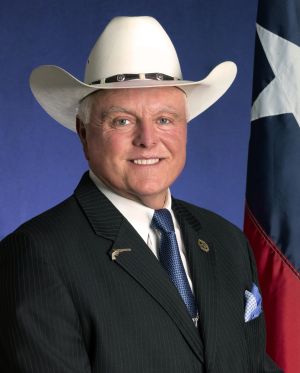 Texas Ag Commissioner Sid Miller (Official photo)
Texas residents get more mystery seeds
Texas residents have gotten more than a thousand packs of seeds they didn’t order since last February. And some of those packs came from China.
The Texas Department of Agriculture says 1,101 packs of unsolicited seed shipments were delivered to Texas residents.
Officials with the department have collected seed deliveries at 109 locations since the first shipment arrived at a residence in Clute, Texas, last year. In a press release Monday, Texas Ag Commissioner Sid Miller said people who receive such packages should keep all contents sealed and report it to the Texas Department of Agriculture.
The press release noted that other shipments have been reported in Ohio, New Mexico, and Alabama.
Take note: The press release noted the shipments could be a possible “brushing scam,” in which sellers "send unsolicited, low-value items to random people, who then post fake verified reviews to boost online sales.” A similar wave of shipments was reported in 2020.
Lawmakers want new tractor rollover protection program at USDA
A new bill in Congress would help farmers pay for rollover protection structures on their tractors to help prevent a leading cause of farm deaths. The bill would create a USDA cost-share program.
The Roll-Over Prevention and Safety Act would provide farmers or eligible schools with grants that cover up to 70% of the cost of purchasing, transporting and installing an approved ROPS. There would be a $500 out-of-pocket cap for the farmer. The bill would require USDA to create a website and phone hotline to help with installation instructions.
The bill was introduced in the House Monday by Reps. Randy Feenstra, R-Iowa, Josh Riley, D-N.Y., Brad Finstad, R-Minn., and Don Davis, D-N.C. A companion Senate bill is being introduced by Cindy Hyde-Smith, R-Miss., Michael Bennet, D-Colo., Jim Justice, R-W.V., and Rephael Warnock, D-Ga.
Take note: The program is meant to bolster the National ROPS Rebate Program, administered by the Northeast Center for Occupational Health and Safety using funds from the National Institution of Occupational Safety and Health.
Final Word:
“At a glance, this might seem like a small problem, but this is serious business. The possible introduction of an invasive species to the state via these seeds poses real risks to Texas families and the agriculture industry. We need everyone to report these packages when they arrive so the contents may be gathered and disposed of properly.” – Texas Agriculture Commissioner Sid Miller on mystery seed shipments to Texas residents
Steve Davies, Oliver Ward, Noah Wicks, and Bob Ellison contributed to today’s Daybreak.


