
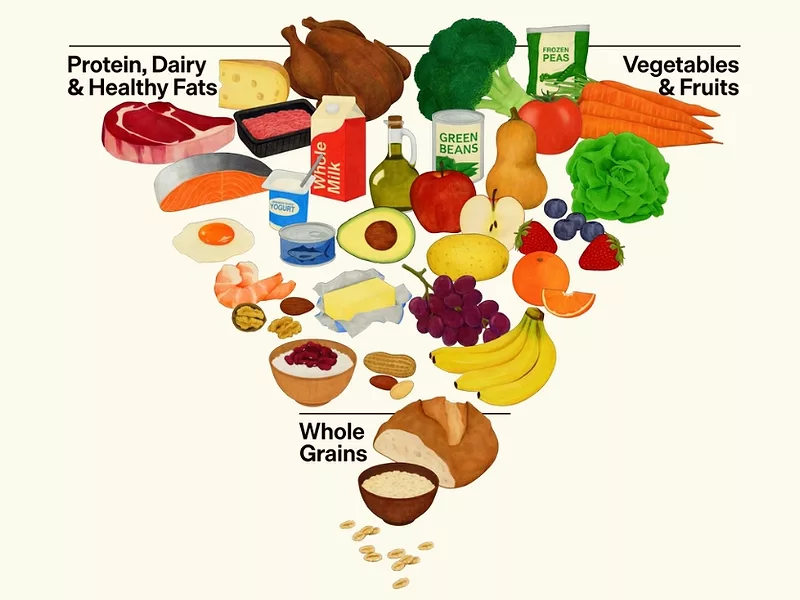
The Trump administration released its new Dietary Guidelines for Americans on Wednesday, emphasizing consumption of whole grains over refined grains and recommending that Americans avoid added sugars and “highly processed foods.”
“Whole grains outperform refined carbohydrates,” Health and Human Services Secretary Robert F. Kennedy Jr. said at the event at the White House. “Added sugars, especially sugar- sweetened beverages, drive metabolic disease, and today, our government declares war on added sugar.”
Kennedy also said the government was “ending the war on saturated fats.”
Agriculture Secretary Brooke Rollins said the guidelines advise Americans to eat "real food."
“For decades, we've been fed a corrupt food pyramid has had a myopic focus on demonizing natural, healthy saturated fats, telling you not to eat eggs and steak,” Food and Drug Administration Commissioner Marty Makary said.
The new guidelines, however, maintain the recommendation that Americans only obtain 10% of the calories in their diets from saturated fats while emphasizing the consumption of “healthy fats.”
“The guidance calls for receiving the bulk of fat from whole food sources, such as meats, poultry, eggs, omega 3–rich seafood, nuts, seeds, full-fat dairy, olives, and avocados,” a press release announcing the new guidelines says.
Although the guidelines do not specifically discourage the use of seed oils, they say, “When cooking with or adding fats to meals, the guidelines call for using the most nutrient-dense natural options with essential fatty acids, such as olive oil.”
The guidelines also call on Americans to “avoid highly processed packaged, prepared, ready-to-eat, or other foods that are salty or sweet” and “avoid sugar-sweetened beverages, such as soda, fruit drinks, and energy drinks.” The scientific report prepared by the Dietary Guidelines Advisory Committee punted on the issue of processed foods after determining there was not enough evidence to make any recommendations,
“Protein and healthy fats are essential” and have been “wrongly discouraged,” Kennedy said.
“Federal policy promoted and subsidized highly processed foods and refined carbohydrates and turned a blind eye to the disastrous consequences,” Kennedy said, adding that the news guidelines “replace corporate-driven assumptions with common-sense goals and gold standard scientific integrity.”
Use of the guidelines to drive dietary choices “means more protein, more dairy, more healthy fats, more whole grains, more fruits and vegetables, whether they are fresh, frozen, canned or dry,” Rollins said.
Meat and dairy consumption are both emphasized in the new guidelines, which recommend eating “a variety of protein foods from animal sources, including eggs, poultry, seafood, and red meat, as well as a variety of plant-sourced protein foods, including beans, peas, lentils, legumes, nuts, seeds, and soy.”
They also encourage drinking “full-fat dairy with no added sugars. Dairy is an excellent source of protein, healthy fats, vitamins, and minerals.”
More highlights from the report:
- “Limit foods and beverages that include artificial flavors, petroleum-based dyes, artificial preservatives, and low-calorie non-nutritive sweeteners.”
- “While no amount of added sugars or non-nutritive sweeteners is recommended or considered part of a healthy or nutritious diet, one meal should contain no more than 10 grams of added sugars.”
- “Consume less alcohol for better overall health: People who should completely avoid alcohol include pregnant women, people who are recovering from alcohol use disorder or are unable to control the amount they drink, and people taking medications or with medical conditions that can interact with alcohol. For those with a family history of alcoholism, be mindful of alcohol consumption and associated addictive behaviors.”
- “Sodium and electrolytes are essential for hydration. The general population, ages 14 and above, should consume less than 2,300 mg per day of sodium. Highly active individuals may benefit from increased sodium intake to offset sweat losses.”
For more news, go to Agri-Pulse.com.

