

Lawmakers were laboring late Tuesday night to try to salvage ethanol legislation after language allowing year-round, nationwide sales of E15 was left out of a suite of spending bills released Tuesday.
The omission came “just days after ag and biofuel groups reached a fresh agreement with the American Petroleum Institute on a way forward with the proposed biofuel measure,” we reported last night.
As of Tuesday evening, House members were busy looking for a pathway for E15, which refers to 15% blends of ethanol with motor gasoline, up from the standard 10%. Meanwhile, the corn lobby called on allies in Congress to make sure that this latest E15 attempt doesn’t fall apart at the last minute as it did in late 2024. Ethanol groups blamed that failure to pass the legislation on opposition from Tesla CEO Elon Musk.
Read more in our coverage at www.Agri-Pulse.com.
Trump heads to Davos as Bessent says partners should stick to deals
President Donald Trump isn’t expecting a warm reception when he addresses the World Economic Forum in Davos, Switzerland, today.
In the last few days, he has threatened eight European countries with tariffs unless Denmark sells Greenland to the U.S. He has also suggested French wine and cheese could face new 200% duties.
“We'll be, I'm sure, very happily awaited,” Trump joked with reporters on Tuesday.
Even the president’s allies are balking at his latest tariff threats, which come after the U.S. and EU spent months negotiating a tariff deal last year.
Nigel Farage, leader of the United Kingdom’s populist right-wing Reform UK Party and one of the president’s strongest UK supporters, says Greenland frictions could trigger the “biggest fracture” in transatlantic relations since the Suez crisis.
But, but, but: The president’s top trade officials are trying to stem the fallout. Treasury Secretary Scott Bessent and U.S. Trade Representative Jamieson Greer urged UK and EU officials to preserve recent trade pacts struck with the U.S.
“I would urge all countries to stick with their trade deals,” Bessent told reporters during a press briefing. “What I’m urging everyone here to do is sit back, take a deep breath, and let things play out.”
During a Q&A, Greer said he would be in favor of keeping the trade deal separate from Greenland discussions.
Supreme Court still weighing tariff case amid renewed threats
The Supreme Court has still not weighed in on Trump’s emergency tariffs. The court issued decisions in three other cases on Wednesday, as the president continues to issue fresh tariff threats.
It’s easy to be “in the know” about what’s happening in Washington, D.C. Sign up for a FREE month of Agri-Pulse news! Simply click here
The president’s latest tariff salvo “makes the ‘hurry up and get the decision out there’ part just that much stronger,” attorney and former Justice Department Spokesperson Sarah Isgur said on SCOTUSblog.
Isgur says the administration’s tariff message has shifted in recent days. Officials have previously insisted, including in the courts, that tariffs are necessary to deal with pressing national emergencies. But on NBC’s Meet the Press on Sunday, Treasury Secretary Bessent said that the national emergency that would justify new Greenland tariffs is “avoiding” a future crisis.
“Normally, a party doesn’t want to prove the other side's slippery slope arguments correct before a decision comes out,” Isgur wrote.
Take note: The court is supposed to take a four-week recess at the end of this week, which would push the next decision day into February unless justices schedule another in the coming days.
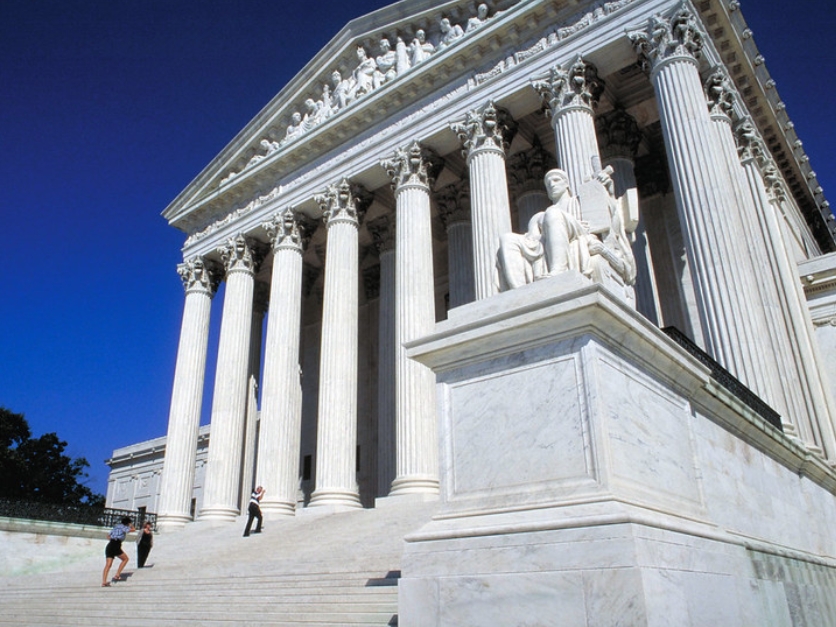 The Supreme Court in Washington, D.C. (USDA Photo)
Packaging study shows costs of switching from plastic
Moving away from plastic produce packaging would raise consumer costs significantly, a new study from Canadian government agencies concludes.
The Canadian Produce Marketing Association highlighted the report from Environment and Climate Change Canada and Agriculture and Agri-Food Canada. CPMA says the findings “strongly validate the principles behind the joint Sustainable Produce Packaging Alignment,” an initiative co-led by CPMA and Western Growers.
Among the conclusions, according to CPMA:
- Selling loose produce can cost significantly more than pre-packaged options, “largely due to operational inefficiencies and increased shrink,” CPMA says in a news release.
- “Transitioning from a low-cost plastic bag for apples to a cardboard box could result in a retail price increase of approximately 42%. A simpler transition for tomatoes from a plastic clamshell to a fiber tray with a plastic lid could still increase the retail price by 11%.”
- Consumers don’t like non-transparent packaging: Sales trials “have led to significant drops in sales, even without a price increase, because consumers value the ability to visually inspect produce for freshness and quality,” CPMA says.
CPMA President Ron Lemaire said the data “proves what we have been saying all along: if packaging policy is driven by a narrow focus on materials, it will be Canadians who pay the price at the checkout, all while risking an increase in food waste.”
Clean fuels industry wants clarity
What a difference a year makes.
That was the tone at a Clean Fuels America Alliance gathering in Orlando, Florida, on Tuesday, where the biggest topic was frustration with lack of clarity on government policy.
“When I spoke to you at last year's conference, we were coming off one of our best years ever. This past year was the opposite,” Clean Fuels CEO Donnell Rehagen said in opening remarks.
The buzz in recent years has been about the growing alliance between agriculture and Big Oil. The two had typically been in fierce lobbying battles over biofuel regulations. But now new factions are forming in the biofuel world as rules and proposed regulations dealing with foreign feedstocks, blending mandate exemptions and tax credit values divide the industry.
Rehagen said there is strength in unity and urged members to “stay with us.”
“We face our own uncertainty about the road ahead. But we know our cause is worth it,” he said. “Clean fuels aren't fringe. They're essential to America's energy security, our rural prosperity and our leadership in innovation.”
Final Word
“We're in the [U.S.-Mexico-Canada Agreement] review period. Our own view is any trade with Canada needs to be in the American interest, and if they enter into agreements or negotiations with other countries that are against our interests, we will account for that. So far, the content of this particular deal: we're watching it cautiously,” – USTR Jamieson Greer speaking at an event on the sidelines of the World Economic Forum on Canada’s recent trade deal with China.
Kim Chipman, Steve Davies, and Oliver Ward contributed to today’s Daybreak.
.webp?t=1762183428)


