
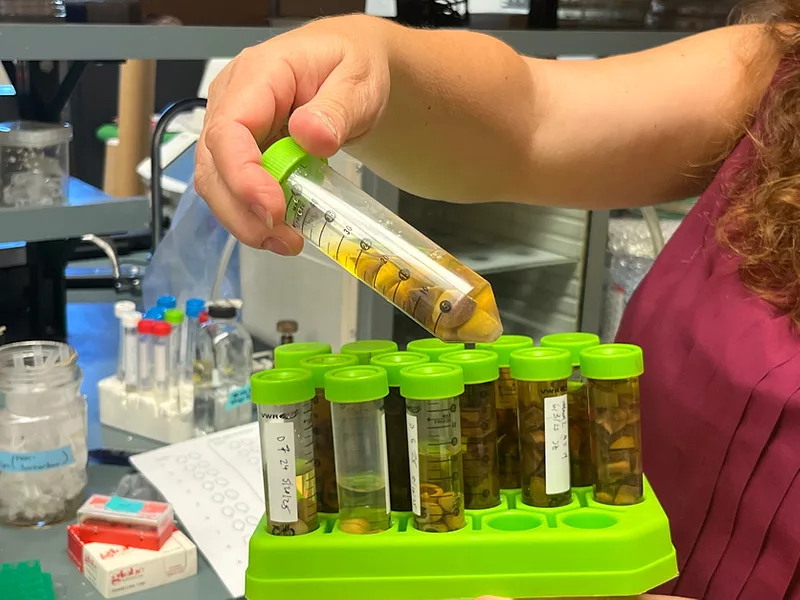
Agricultural scientists at the University of California, Davis have reported important new findings that could help protect California’s $2 billion pistachio industry from losses tied to premature hull split, a costly problem for growers statewide.
Pistachio hull split occurs when the green outer hull of the nut cracks or separates before harvest. That early break allows insects, fungi and other pests to enter the nut, increasing contamination risk and reducing quality. While about 4% of the statewide crop can be affected under normal conditions, certain varieties have recorded hull split rates as high as 40% in stressful seasons.
The new research from UC Davis is the first to examine hull split at the anatomical, cellular and genetic levels, according to lead scientist Shuxiao Zhang, who recently got a doctorate in the plant sciences department. Her work, conducted with professor Georgia Drakakaki and others, provides a detailed picture of how pistachio hulls are constructed and what causes them to break down as they ripen.
Central to the team’s discovery is pectin, a key compound in plant cell walls that helps cells stick together. As pistachio hulls mature, changes in the amount and structure of pectin weaken the bonds between cells, leading to cracks and tears that precede hull split. By analyzing gene expression in hull tissue at different development stages, researchers identified specific genes and molecular mechanisms involved in this process.
Interested in more news on California agriculture, labor, water and rural issues? Sign up for a four-week free trial to Agri-Pulse West. You’ll receive our content - absolutely free - during the trial period.
“This is the first time anyone has studied the pistachio hull at this level while also integrating gene expression and physiology,” said Drakakaki in a news release, noting that cells from different layers of the hull respond differently during ripening, which contributes to varied patterns of breakage.
The discoveries could help breeders develop new pistachio cultivars with hulls less prone to premature splitting, potentially reducing crop losses and lowering pest and disease pressure. Growers and researchers have long sought tools to manage hull split because it not only reduces yields but also increases the risk of contamination by insect-associated fungi such as those that produce aflatoxin.
The project was funded primarily by the California Pistachio Board with additional support from USDA’s National Institute of Food and Agriculture and UC Agriculture and Natural Resources.
Researchers say the findings may also have broader applications for understanding similar split-related issues in other fruit crops, offering new avenues for improving crop resilience in a changing climate.

