
|
Water agencies and contractors are spotlighting early results from the Healthy Rivers and Landscapes program to argue the collaborative approach is already delivering measurable ecological benefits as California weighs its next steps for the Bay-Delta Water Quality Control Plan.
During a three-day workshop last week hosted by the State Water Resources Control Board, water managers, state agencies and local officials described the voluntary agreement approach in the HRL program as a science-based alternative to prescriptive flow regulation, pairing strategically timed river flows with habitat restoration, monitoring and adaptive management.
Supporters framed it as a way to advance salmon recovery while maintaining water supply reliability for cities, farms and communities across the Bay-Delta watershed, positioning early project outcomes as evidence the approach can work at scale.
 David Guy (NCWA photo)
Dozens of projects already underway
The state and local agencies have already completed or are in the process of completing 58 HRL early-implementation projects across the American, Feather, Mokelumne, Sacramento and Yuba rivers.
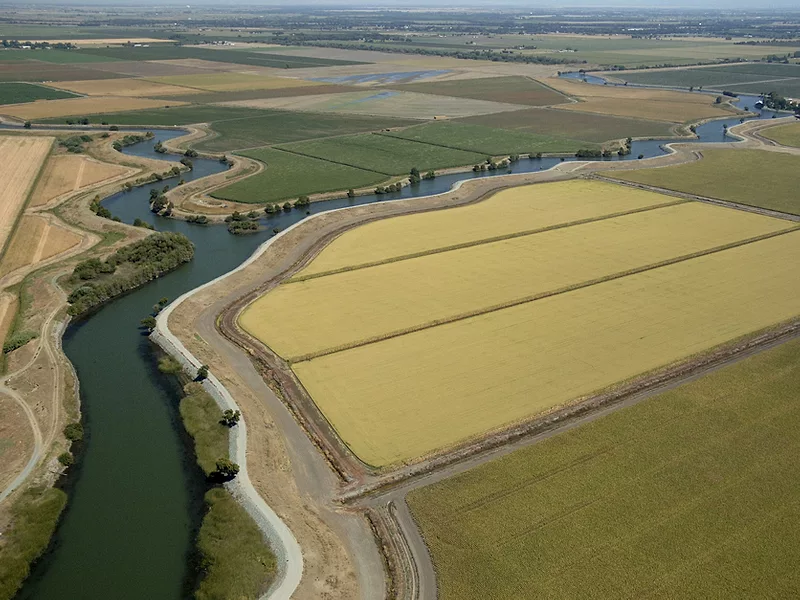
The projects include floodplain reconnection, habitat restoration, gravel placement and flow coordination efforts designed to improve spawning, rearing and migration conditions for Chinook salmon and other native species.
Proponents emphasized that the projects were developed through collaboration among water agencies, landowners, conservation groups and fishing interests, with ongoing monitoring used to guide adaptive management decisions.
Jennifer Pierre, general manager of the State Water Contractors, said the program reflects a balance between environmental objectives and water supply needs.
“The Healthy Rivers and Landscapes program combines two priorities that Californians care deeply about: environmental health and a reliable, affordable water supply,” said Pierre in a statement on the workshop.
She pointed to the geographic breadth of the early projects as evidence that collaboration can produce results faster than litigation-driven regulatory approaches.
“These projects prove that when water managers, state and federal agencies, and communities work together collaboratively, the needs of fish and people can be effectively balanced,” she said, adding that the State Water Contractors supports advancing HRL as part of the Bay-Delta Plan update.
The State Water Contractors represents 27 public agencies that deliver State Water Project supplies to more than 27 million Californians and approximately 750,000 acres of agricultural land.
Two projects featured prominently in the hearings were cited as indicators of HRL’s potential.
On Putah Creek, coordinated habitat restoration, gravel placement and adaptive flow management contributed to a record return of 2,150 spawning Chinook salmon in 2025, according to the Solano County Water Agency and biologists at the University of California, Davis.
Water managers emphasized that the outcome was not the result of any single action, but rather the combined effect of habitat improvements, flow management and long-term coordination among regional partners.
On the Mokelumne River, targeted habitat restoration and carefully timed flow releases were credited with improving spawning capacity, increasing adult salmon returns and boosting contributions to the ocean salmon fishery. Additional restoration sites are planned through 2026, with water agencies reporting growing participation from private landowners along the lower river.
 Jennifer Pierre (SWC photo)
Emphasis on science and accountability
Backers of the HRL approach repeatedly stressed throughout the workshop that the program relies on monitoring and science-based decision-making rather than fixed prescriptions.
Panelists from the Northern California Water Association, the California Department of Water Resources, East Bay Municipal Utility District and the Solano County Water Agency described how data from early projects is being used to refine habitat design, adjust flow timing and prioritize investments.
David Guy, president of the Northern California Water Association, said HRL reflects a shift toward integrated water and landscape management.
“With our statewide commitment to more strategic flows, accelerated habitat restoration on our landscapes, and accountability, we can work together to meet the needs of our environment and local communities throughout California,” said Guy.
NCWA represents water agencies and irrigation districts across the Sacramento Valley.
The HRL program is being considered as part of the board’s update to the Bay-Delta Water Quality Control Plan, a process that has been underway for years and has drawn sharp disagreement among environmental groups, fishing organizations, tribes and water users.
Tribes, sportfishing groups, environmental justice advocates, Delta farmers and other critics argue the voluntary agreements framework underlying HRL lack enforceability. Water contractors and other supporters counter that incorporating HRL into the Bay-Delta Plan would make its commitments binding while avoiding years of legal challenges that could delay ecological improvements.
Water managers presenting at the hearings emphasized that HRL is intended to complement, not replace, regulatory standards, and that the approach is designed to adapt to changing hydrologic conditions driven by climate change.
Looking ahead
The board is expected to consider next steps on the Bay-Delta Plan update later this year after reviewing public comments and staff analysis.
As the Bay-Delta debate continues, HRL supporters say the question before regulators is whether to build on that early momentum or return to approaches they argue have produced conflict without recovery.

