
|
The fight for E15 is redrawing battle lines between ag and fossil fuels, with the chairman of the Senate Agriculture Committee caught in the crosshairs.
In the recent collapse of a deal aimed at getting an E15 over the legislative finish line and signed into law by President Donald Trump, one farm group, the National Corn Growers Association, blamed Congress for "choosing to leave America’s 500,000 corn farmers behind in favor of a handful of refineries.”
Behind the scenes, sources claim some lawmakers helped scuttle the bill to allow year-round U.S. sales of higher ethanol blends, known as E15, after hearing concerns from oil refineries in their districts or states.
Senate Ag Chairman John Boozman, R-Ark., heard from Delek U.S. Holdings, which has operations in his state of Arkansas as well as Louisiana and Texas, according to people familiar with the matter.
An aide to Boozman told Agri-Pulse the senator had concerns about the refinery issue after hearing from Arkansas stakeholders. Boozman, in a statement to Agri-Pulse, reaffirmed his backing of E15 while stressing the need for the right approach.
"I understand the frustration with the pace of progress, but the good news is that momentum is building and President Trump made it clear he would sign legislation that works for farmers, consumers and small and mid-sized refiners,” Boozman said.
“Congress must strike the right balance to ensure that year-round E15 can be implemented without causing unintended harm to refineries that support economic growth and businesses across the country. I remain committed to finding a path forward that works for agriculture, energy producers and Arkansans.”
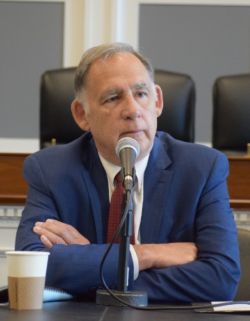 John Boozman (Agri-Pulse photo)
Boozman's committee doesn't have jurisdiction over the issue, so he's not necessarily directly involved in shaping related legislation. Biofuel regulations are under the purview of the Senate Environment and Public Works Committee and the House Energy and Commerce Committee.
"They’ve spread misleading stories and half-truths all over Capitol Hill," Cooper said. "They’re telling members of Congress that they’ll shut down and lay off workers if they don’t get exemptions. But the facts tell a totally different story. They didn’t get any exemptions for several years during the Biden administration and they all did just fine. Members of Congress don’t like being lied to, and the truth is going to catch up with these refiners at some point very soon.”
Delek representatives didn't respond to a request for comment.
The latest chapter in the drama of the Renewable Fuel Standard was a blow to producers of ethanol and the growers of the corn used to make the gasoline additive. The sticking point was a provision to slash the number of smaller and medium-sized refineries eligible for exemption from the RFS, the 21-year-old federal law that establishes the government mandate for a certain amount of biofuels to be mixed each year into the country's petroleum-based fuel supplies.
The measure's derailment surprised some biofuel watchers given that the American Petroleum Institute, which represents large refiners, was on board with the plan to overhaul small refinery exemptions, or SREs. API has said the current waiver process for oil firms claiming economic hardship due to RFS rules is opaque and causes market distortions. Independent refinery groups argue that the powerful oil and gas lobbying group seeks to put smaller rivals at a disadvantage.
"Year-round E15 is not about expanding consumer choice — it’s about using government mandates to drive unachievable ethanol mandates even higher, harming consumers at the pump and threatening American energy jobs in the process," the Fueling American Jobs Coalition said last month on the E15 push in Congress. The group is made up of union workers and independent oil refiners opposed to a "flawed" RFS.
API's alliance with ag on E15 would have been unthinkable not long ago. Both liquid fossil and renewable fuels are facing an existential threat from the rise of electric vehicles. More than a third of U.S. corn, the country's biggest cash crop, is used to make ethanol. The concern is that without E15, or 15% ethanol blends with gasoline, demand for the standard 10% blends, or E10, will start drying up before new markets can be developed that the industry is counting on to replace motor fuel consumption, including biofuels for aviation and marine.
Small refiners have list of complaints about RFS
Meanwhile, smaller refiners say the RFS isn't working in its current structure and that the Environmental Protection Agency sets biofuel-blending quotas too high, leaving them on the hook to buy costly biofuel credits to track RFS compliance, or Renewable Identification Numbers (RINs).
"Independent refiners have long warned that expanding E15 without meaningful action to rein in RIN costs would further destabilize domestic fuel manufacturing and put thousands of jobs at risk," according to FAJC.
On the other side, Nebraska Ethanol Board Chair Jan tenBensel, a fourth-generation corn farmer, posted on X that the “handful of refining companies trying to kill the year-round E15 bill” by claiming economic hardship make “more money than all of our nation’s farmers and ranchers combined!”
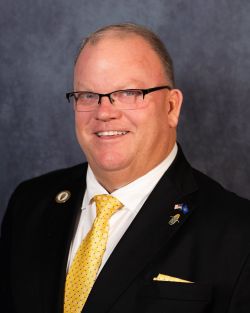 Jan tenBensel (NCGA photo)
The strong words on both sides underscore the steep climb House lawmakers have this week.
An E15 Rural Domestic Energy Council was created by House leaders late last month to come up with a workable E15 recommendation by Feb. 15 that can be considered in the chamber by Feb. 25.
A person from the refining industry said there's hope an E15 agreement can ultimately be reached, but only if smaller firms have a pathway to be relieved from RFS compliance costs.
The ag side got a dose of optimism late last month when Trump told Iowa farmers he’s counting on House Speaker Mike Johnson, R-La., and Senate Majority Leader John Thune, R-S.D., to act fast in finishing an E15 bill for him to sign. Ag leaders say they are hopeful the White House will continue to push.
“Year-round E15 represents the one shining light at the end of a very dark tunnel for farmers,” Iowa Renewable Fuels Association Executive Director Monte Shaw said last Thursday at his group’s annual summit. “Pushing it through would make President Trump the godfather of E15.”
The E15 council, though, has angered pro-ethanol Democrats over lack of representation. The study council is a "waste of time and undermines the deal that was already on the table," said Rep. Angie Craig, the top Democrat on the House Ag Committee who also is running for Senate in Minnesota. "Republicans need to grow a spine and just get this done."
.webp?t=1762183428)
