
|
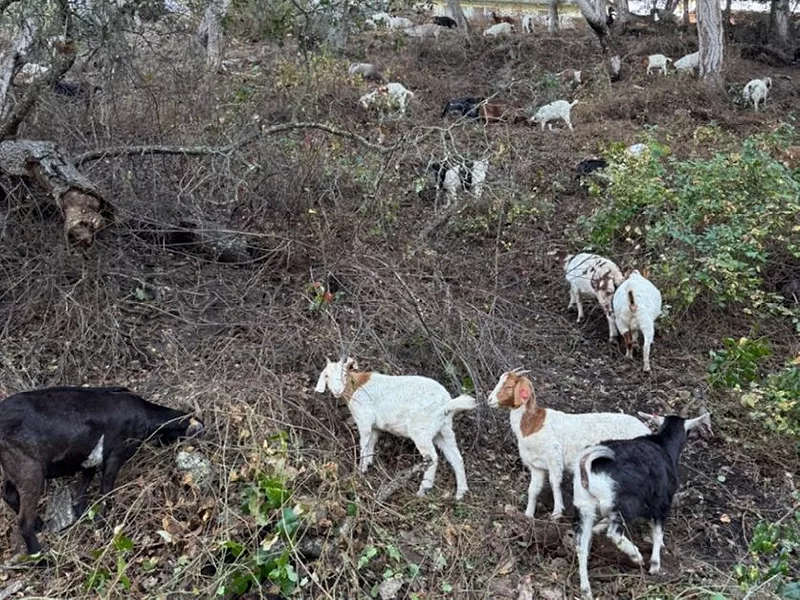
Last October, my neighborhood welcomed a few hundred extra residents. Every day, they were in a slightly different location, and they left in their wake landscapes that had been left free of much of its dense foliage, which in California doubles as wildfire fuel.
Who were these firefighting visitors? They were targeted grazers – in this case, a herd of goats accompanied by their trusty guard dogs and human herders.
Targeted grazing is the application of livestock in a specific manner to meet vegetation and landscape goals. While traditional ranchers focus their efforts on maximizing livestock production for meat or wool, in targeted grazing the primary goals are changes to vegetation and landscape.
Targeted grazing uses
Targeted grazing has found a foothold commercially in a variety of contexts, including use as a wildfire prevention tool through fuel reduction, weed control and soil health improvements in orchards and vineyards, and controlling vegetation around solar panels.
Because national annual wildfire acres burned from the last decade are over double what they were in the 1980s and 1990s, and utility-scale solar capacity has increased by roughly 600% since 2016, targeted grazing has ample potential for expansion.
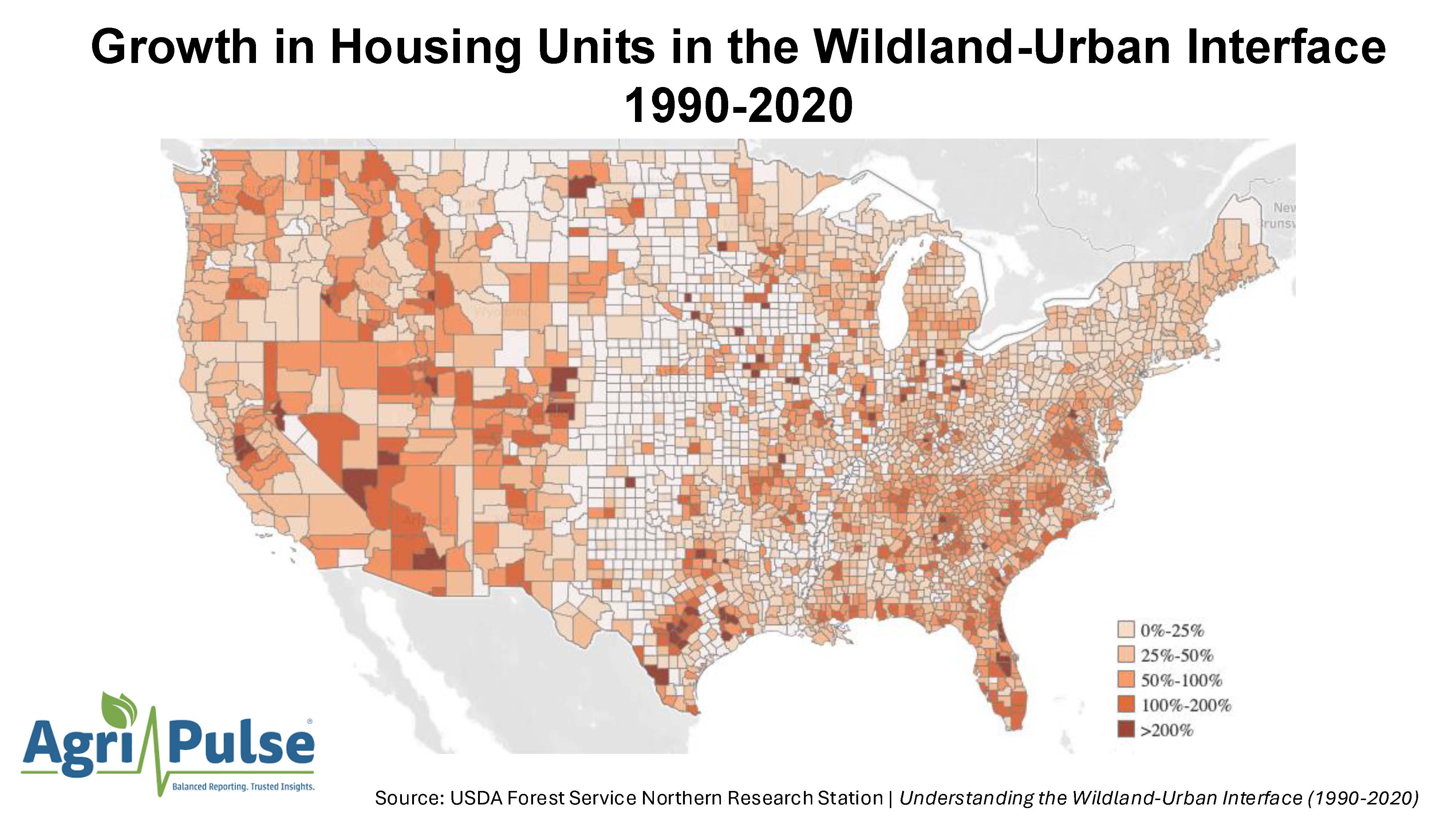
Targeted grazing for wildfire fuel prevention is particularly useful in the wildland-urban interface (WUI), where residential and commercial development intermingles with wildland vegetation.
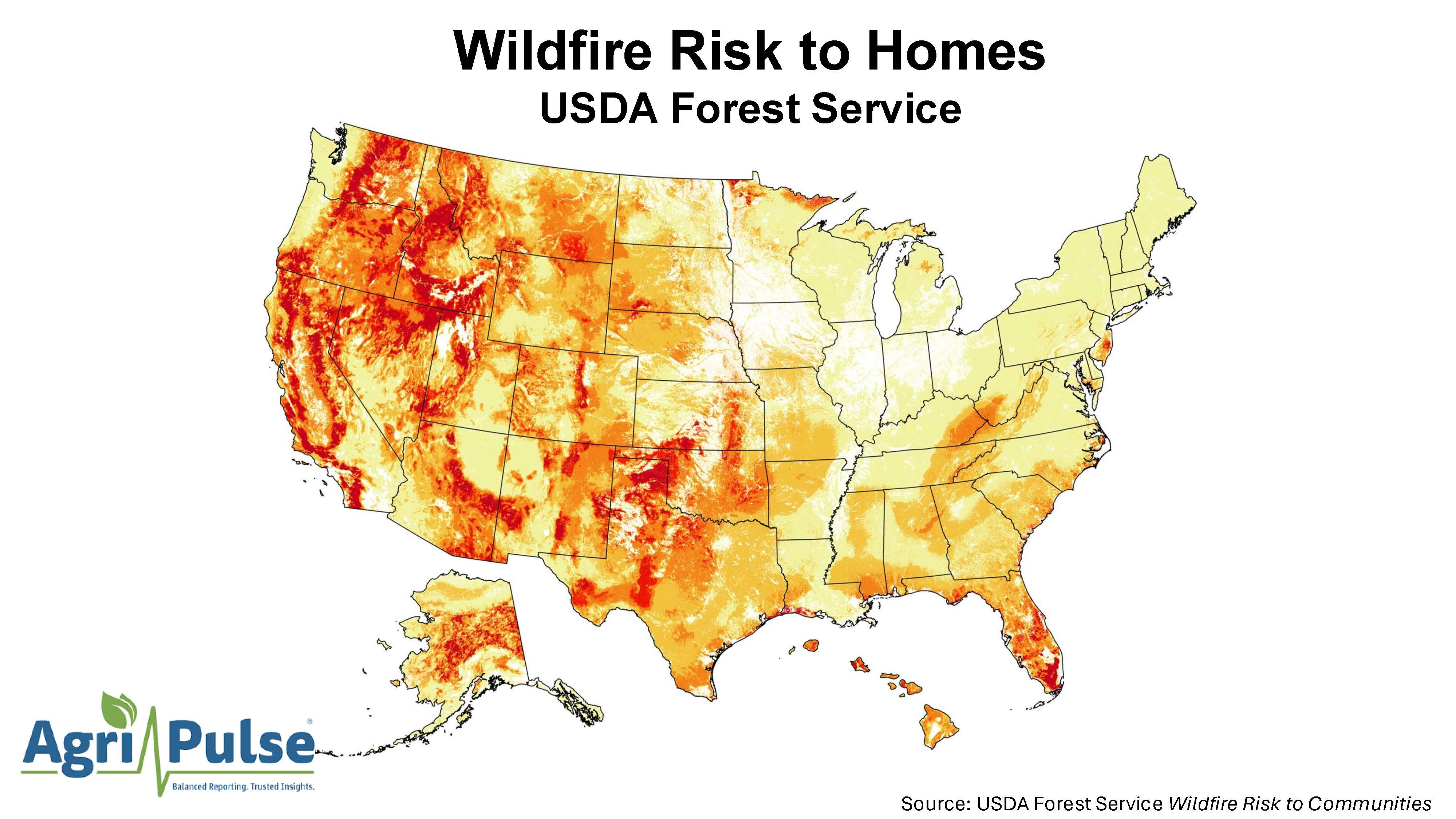
Around neighborhoods and urban areas, targeted grazing clears fuels in a relatively cost-effective manner without the inherent risk of a prescribed burn, noise nuisance of mechanical removal with chainsaws and heavy machinery, and restrictions facing herbicide use. This is especially relevant as the number homes in the WUI in the fire-prone West has grown between 40% (California) to 208% (Nevada) between 1990 and 2020.
Challenges for targeted grazers – labor policy
Like nearly all segments of the agricultural industry, labor availability and cost are top concerns for ranchers engaged in targeted grazing, because labor is typically their top expense.
Interested in more news on farm programs, trade and rural issues? Sign up for a four-week free trial to Agri-Pulse. You’ll receive our content - absolutely free - during the trial period.
Nearly all herders in the U.S. are H-2A workers. While the vast majority of H-2A workers are required to be seasonal, herding occupations are exempted and allowed to have year-round contracts. They also fall under a different Adverse Effect Wage Rate (AEWR), the minimum hourly wage required for H-2A workers, which is calculated on a national monthly rate determined by 208 hours set at the federal minimum wage, then increased annually by the Employer Cost Index (ECI).
Herding is a unique working structure in which herders are on call to take care of animals on a 24/7 basis, often in remote areas. As such, it has tended to be exempt from hourly minimum wage laws and overtime laws. Under California law enacted in 2016, herders are no longer exempted and must be paid for their 24/7 working schedule – including overtime. Thus, in 2026 while the national AEWR for herders is $2,132.41 per month, in California it is $4,938.21 – which includes nearly $2,000 in overtime pay. This represents a 126% increase in wages between 2019 and 2026. In addition to a minimum salary, H-2A employers are required to provide worker housing, transportation, and either meals or access to a kitchen.
The California minimum monthly herder compensation is more than $2,000 higher than the monthly rate for an H-2A field worker in 2026 working 40-hour weeks at 4.3 weeks per month.
Challenges for targeted grazers – end-market demand
While targeted grazing is an attractive revenue stream for both beginning ranchers and those seeking to diversify their income, it would be more viable if the markets for sheep and goat products were robust. Instead, markets, particularly for sheep products, have been in long-term decline. Between the 2012 and 2022 Census of Agriculture, the number of wool operations fell by 45% as compared to a 10% drop in overall farming operations over the same period.
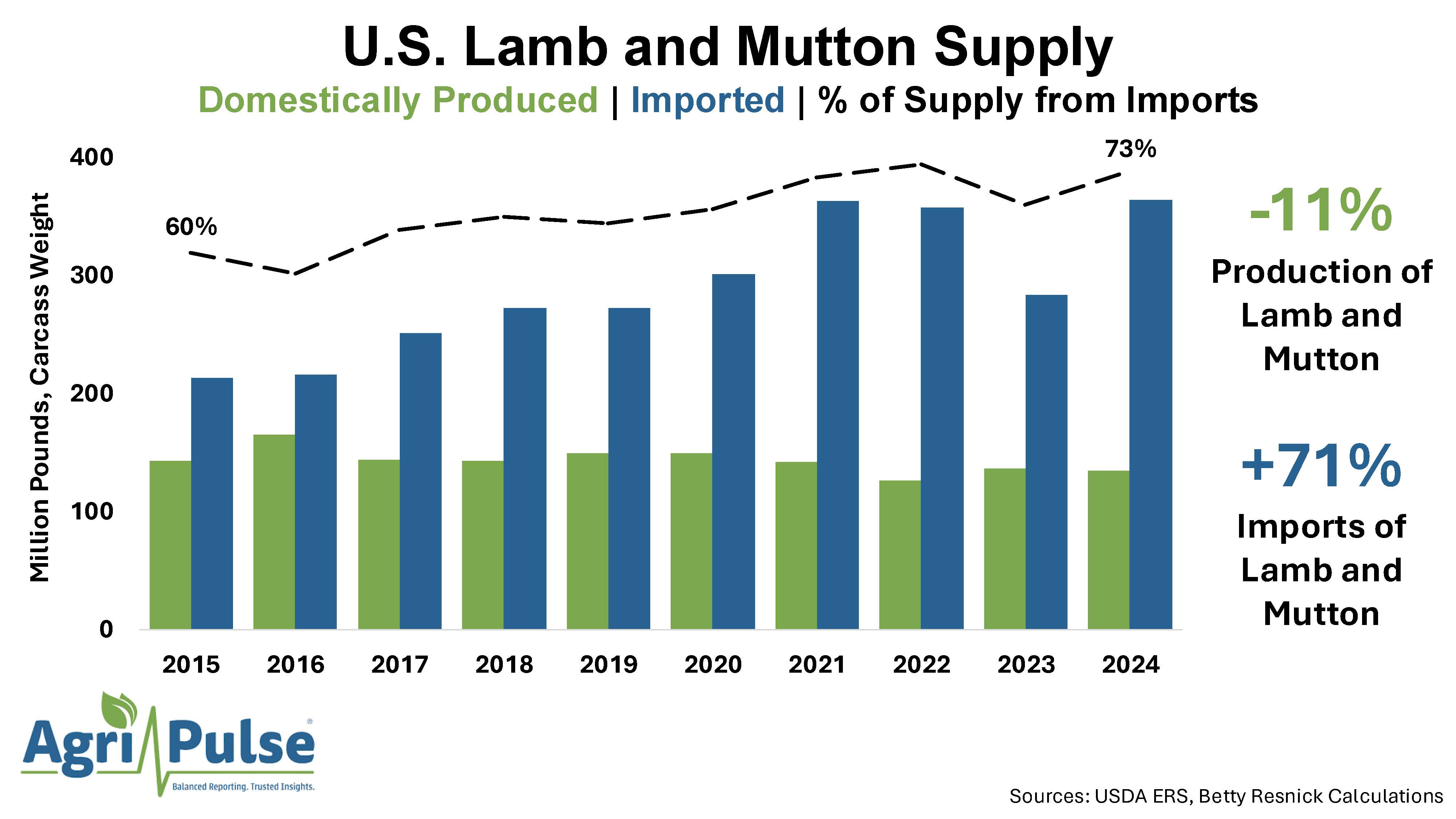
While the remaining sheep industry has become increasingly reliant on meat production over time, it is facing increasing competition from imports. Between 2015 and 2024, lamb and mutton production declined 11% while imports rose 71%. In October 2025, the American Sheep Industry Association formally asked the U.S. Trade Representative to initiate a global safeguard investigation into U.S. imports of lamb meat. Goat slaughter has remained steady, but goat meat is still a niche product purchased primarily by ethnic communities.
While it seems that potential markets for targeted grazing are increasing rapidly, particularly in western states where wildfires and large-scale solar power facilities are more prevalent, certain regulatory and structural obstacles face targeted grazing operations.
While other farms typically operate on land that they own or rent for substantial periods of time, targeted grazers are often trying to piecemeal short-term contracts together to keep their animals continuously grazing. Economies of scale significantly help targeted grazers if they can string together consistent contracts within reasonable geographic distances, as transportation is often cited as their second highest business expense.
Relatively short-term grazing contracts also face higher regulatory burden as they may have to go through the same permitting process for a two-week, 30-acre project as a longer-term project with hundreds of acres. At this time, targeted grazing for wildfire fuel reduction is typically deployed on government lands or funded through government dollars, which makes securing and executing contracts more complicated, and often comes with additional regulatory steps.
Despite efforts to streamline permitting, such as Gov. Gavin Newsom’s emergency proclamation to fast-track critical fuels reduction projects, targeted grazing providers and users I spoke with in California said that permitting requirements remain a costly and time-consuming process.
Opportunities and what to watch
With continued expansion of solar and wildfire fuel reduction activities expected for the foreseeable future, targeted grazing has plenty of room for potential expansion. While data related to targeted grazing is difficult to come by, in California, targeted grazing by state and federal agencies jumped from 78,000 acres in 2021 to more than 106,000 acres in 2024, an increase of 36%. This is an industry that is ripe for growth, but to maximize its potential, policymakers and ranchers both need to remain vigilant about the challenges they face.
Betty Resnick is an agricultural economist based in Monterey, California.
