

|
As Republicans fight to keep control of Congress, the agriculture powerhouse of Iowa is in the national spotlight.
The No. 1 U.S. producer of corn, eggs, pigs, ethanol and biodiesel is used to the attention. After all, for about a half century, the Hawkeye State has held the country’s first presidential nominating contests every four years.
In the high-stakes midterm elections of 2026, Iowa is home to at least two of the most competitive congressional races for Republican incumbents. Republicans control the House by a razor-thin majority, 217-214. There are three vacancies and one independent.
They are among a small number of major farm districts that are in play this year. Other districts with significant ag production that Democrats have a shot at winning include seats in California, North Carolina and Wisconsin. The vast majority of major ag districts remain solidly Republican.
While there’s no clear sign of any Democratic wave this year, in part due to redistricting and in part because Republican approval for President Donald Trump is at around 80%, the GOP’s chances of losing their House majority "are about as high as they could possibly be," according to Charlie Cook, founder of the nonpartisan ratings service, The Cook Political Report with Amy Walter.
Trump’s slumping job-approval numbers overall “ensure that he will be a serious liability in swing districts,” Cook said in an analysis. “Voters who simply wanted the Biden-Harris administration out of office in 2024 are getting far more than they bargained for, and not in a positive way.”
Thirty-three Republican-held seats and 29 Democratic ones are in play in this year's mid-term elections, according to another ratings service, Inside Elections with Nathan L. Gonzales, which rates eight Republican-held seats and two Democratic ones as toss-ups. These include Iowa's 1st District. Cook has 17 toss-ups, 13 Republican and four Democratic, including Iowa’s 1st and 3rd Districts.
A third group that analyzes congressional races, Larry Sabato’s Crystal Ball at the University of Virginia, rates 13 GOP-held seats and two Democratic seats as toss-ups. They also include Iowa's 1st and 3rd Districts.
Miller-Meeks' challenger stressing economic message
Iowa's 1st District covers the state's southeast quadrant, running from the Mississippi River to near Des Moines on the west. The district includes the university town of Iowa City and Davenport, an ag shipping hub. The 1st District ranked 16th in U.S. ag commodity sales with $6.5 billion in USDA's 2022 ag census, the most recent conducted. (The national rankings may have changed slightly since then because of mid-decade redistricting plans undertaken by a few states, including Texas, North Carolina and California.)
The 1st District is represented by GOP Rep. Mariannette Miller-Meeks, who won her seat by defeating Democrat Rita Hart by just six votes in 2020, that election cycle’s closest House race.  Christina Bohannan (University of Iowa photo)
Miller-Meeks, a physician and U.S. Army veteran, won re-election by a much more comfortable seven percentage points in 2022, but two years later, she claimed victory in the tightest race of any Republican in Congress. Donald Trump won the district by 8.5 points.
In 2024, Trump and other Republicans blasted Joe Biden and other rivals over inflation, including soaring egg costs amid a bird flu outbreak. Today, Democrats are hammering the GOP over rising costs, blaming Trump’s tariff wars.
It’s easy to be “in the know” about what’s happening in Washington, D.C. Sign up for a FREE month of Agri-Pulse news! Simply click here
The affordability issue has likely grown in significance as the U.S. war with Iran has caused fuel, fertilizer and transportstion costs to skyrocket. All three are critically important inputs for ag producers, who were already struggling with production costs well above slumping crop values.
“Everyone seems like they are just holding their breath because prices continue to go up on everything,” said Hart, now Iowa Democratic Party chair. “When it comes to farmers, they’re gearing up for spring planting and again their input prices are very high. Some of them are holding onto grain, hoping that prices will go up, with no guarantee that they will.”
After the state's June 2 primary, Miller-Meeks is likely to face a rematch with Democratic contender Christina Bohannan, a University of Iowa law professor who lost to Miller-Meeks two years ago by just a fifth of a percentage point.
“In 2024, thousands of Trump voters supported me because I went and talked to people in every corner of this district about what matters to them, and they know I will be an independent voice to put Iowa first," Bohannan said in a statement to Agri-Pulse.
"I'm from a town of 700 people. I know what our rural communities are going through. Tariffs and trade wars are driving up costs and taking away our farmers’ markets. Jobs are disappearing and schools are underfunded. The cost of healthcare has gone up, and our hospitals are closing. And every time Miller-Meeks has a chance to stand up for Iowans, she instead sides with the party bosses, corporate PACs and special interests who fund her campaign."
Miller-Meeks is a member of the powerful House Energy and Commerce Committee, which oversees energy, environmental and health care policy.
Rural voters critical for 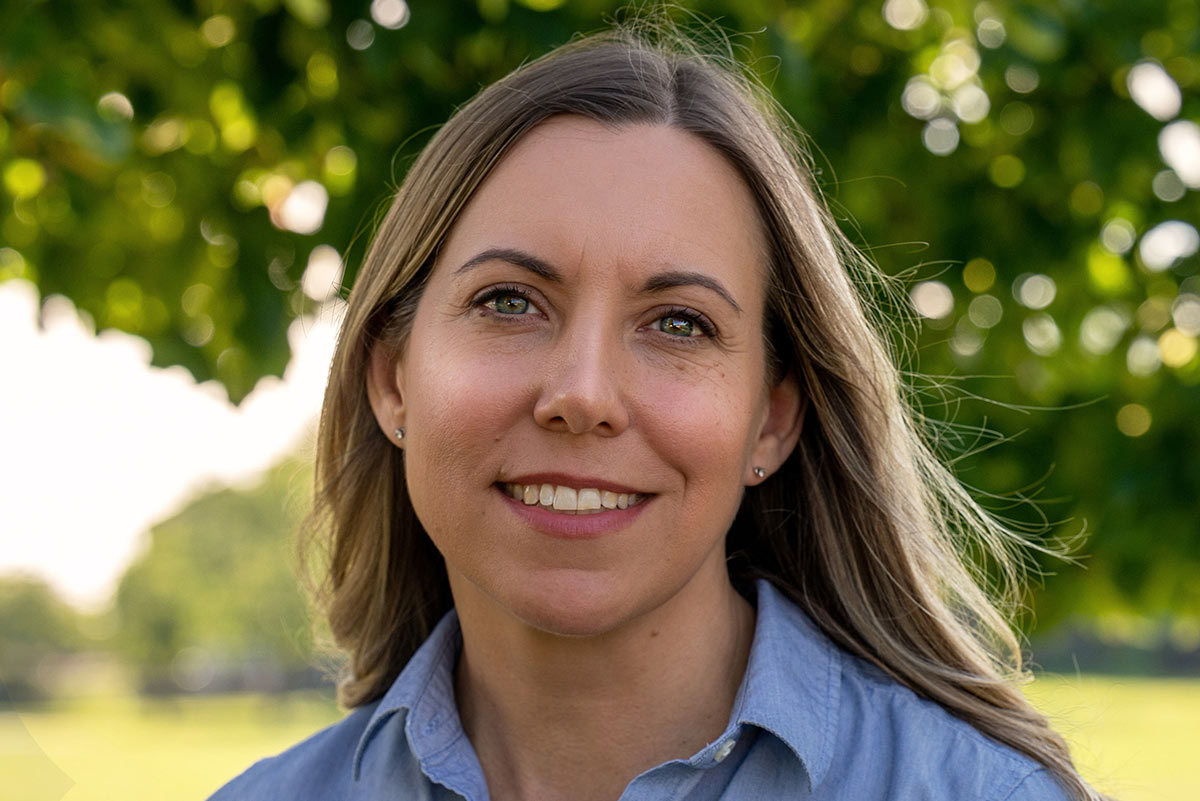 Sarah Trone Garriott (Lutheran
School of Theology/Chicago photo)Nunn re-election
Zach Nunn, a Republican member of the House Ag Committee, is seeking a third term in the 3rd District, which includes the Des Moines area and much of southwest and southern Iowa. Nunn, who grew up on his family’s farm, retained his seat in 2024 with a four-point victory, about the same margin as Trump.
Still, “Iowa Republicans are in a more complicated political environment this year,” the Cook Political Report noted. “Trump’s tariff policy has had a disproportionate impact on Iowa’s agriculture-dependent economy.”
The Democratic primary race includes state Sen. Sarah Trone Garriott of West Des Moines, an ordained Lutheran minister. The Democratic Congressional Campaign has designated Trone Garriott and Bohannan as part of the party’s “Red to Blue” initiative, priority challengers to GOP members targeted for defeat.
Republicans, meanwhile, are counting on Trump’s longtime support for farmers to garner votes. Ag issues in a major farm state like Iowa go a long way, even among non-farmer rural voters and those in the cities who are well aware the broader economy largely hinges on agriculture.
“Under President Trump, we saw real action to support agriculture, from expanding market access to stepping in with direct relief when farmers were hit by unfair trade practices and global disruptions. That’s leadership,” Jeff Kaufmann, chair of the Iowa Republican Party, told Agri-Pulse.
Democrats are hoping even if loyal backers of Trump – which historically have meant crucial rural voters – remain supportive of Republican candidates, the economic woes and related issues like health care will dampen their turnout at the polls.
 Rep. Zach Nunn (Office photo)
Another major ag issue Democrats are pointing to ahead of November is a rising number of farm bankruptcies. Row crop losses and softer dairy, hog and poultry markets have led to double-digit Chapter 12 filings in the U.S., including an increase of 220% in Iowa last year, according to the American Farm Bureau Federation.
“There are fewer and fewer farmers in the state of Iowa, and if things continue the way they are there’s going to be even fewer," Hart told Agri-Pulse. "More and more farms are being bought up by fewer and fewer entities."
Here is a look at some other competitive House races involving major farm districts:
California 22nd District: Rep. David Valadao, R-Calif., has always faced close races, but the state’s new redistricting plan, approved by voters in the wake of a Texas redistricting plan driven by Trump, is aimed at pushing several Republicans, including Valadao, out of office. This race in California's Central Valley is anything but a slam dunk for Democrats, however, according to rating services.
Rudy Salas, a former state legislator, lost 53.4% to 46.6% to Valadao in 2024 and is one of four Democrats running in a nonpartisan primary against Valado on June 2. The two top vote-getters advance to the general election, regardless of party. The race is rated a toss-up by Cook and Sabato’s Crystal Ball but "tilts Republican" by Inside Elections.
Valadao is a member of the House Agriculture Appropriations Subcommittee.
North Carolina 1st District: Democratic Rep. Don Davis narrowly won re-election in 2024 after breaking from his party to support a GOP farm bill in the House Ag Committee. However, a Republican-led mid-decade redistricting plan left the eastern North Carolina district more Republican. Laurie Buckhout, a retired Army colonel who lost to Davis in 2024, won the GOP primary to challenge him again in November.
The impact of redistricting is reflected in race ratings. The race is rated lean Republican by three rating services: Cook, Sabato’s Crystal Ball and Inside Elections.
In the 2022 ag census, prior to the redistricting, the 1st District ranked 49th in ag commodity sales.
Wisconsin 3rd District: House Ag Committee Republican Rep. Derrick Van Orden is running for a third term in the western Wisconsin district with significant dairy production. The district ranked 29th in sales of ag commodities in the 2022 ag census.
Rebecca Cooke, a small business owner who lost to Van Orden in 2024, is making another run for the seat but has to get past two challengers in the Aug. 2 Democratic primary.
The race is rated a toss-up by Cook and Sabato’s Crystal Ball but "tilts Republican" by Inside Elections.
.webp?t=1762183428)
