
Details of what President Donald Trump and Chinese President Xi Jinping agreed to around agricultural market access continue to trickle out.
Over the weekend, the White House said Beijing would buy at least $17 billion in U.S. ag products annually through 2028, in addition to the 25 million tons of soybeans it committed to in October.
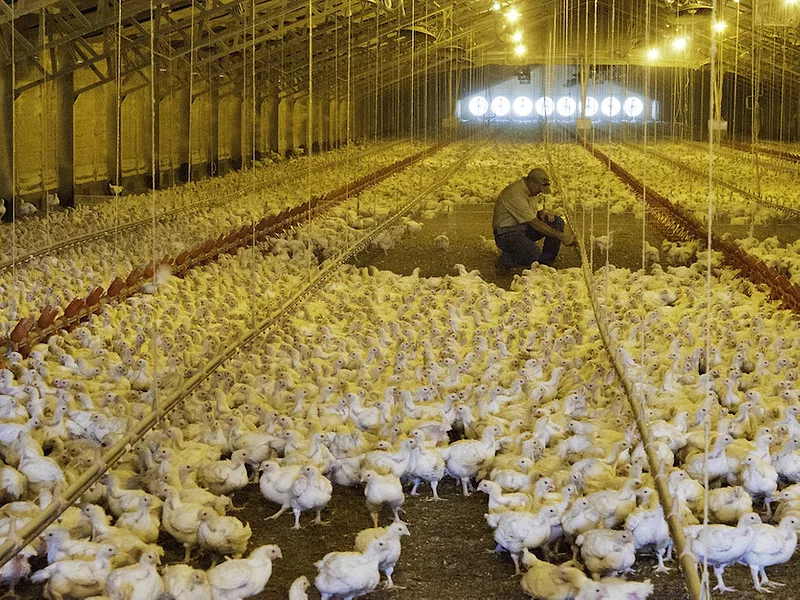
Chinese Ministry of Commerce and the White House said there would also be revived market access for U.S. poultry.
The Phase One deal signed in 2020 established strict criteria for when Beijing could limit poultry exports from U.S. states affected by bird flu. But since that agreement, several states that have long been virus-free have still faced bans exporting into the Chinese market.
The issue has been raised at multiple venues, including during Chief Agricultural Negotiator Julie Callahan’s trip to China earlier this year.
If all eligible states see their access to the Chinese market reinstated, 19 states would be able to resume exporting, including broiler-production hubs like Alabama, Texas, Tennessee and Virginia.
The USA Poultry and Egg Export Council’s Greg Tyler told Agri-Pulse Sunday he’s hopeful China will resume buying chicken paws from all 19 states. But he said the industry “will have to wait until the details are released.”
Take note: Working the news shows Sunday, Greer told both CBS and ABC that China would work with U.S. officials on its approval of U.S. biotech traits as well. This measure was not mentioned in the White House fact sheet or in the Chinese Commerce Ministry spokesperson’s remarks, however.
USDA lifts Iowa swine movement restrictions triggered by pseudorabies case
The Agriculture Department has lifted swine movement restrictions in a five-mile zone around a farm hit by the pseudorabies virus after depopulating the infected animals and finding no further cases in the area.
According to a USDA press release, all animals from both the infected Iowa herd and a herd in Texas it was sourced from have been depopulated and disposed of. The Iowa facility had been cleaned and disinfected as of May 12, it said.
Take note: The Iowa farm site remains under quarantine, and restrictions are still in place within a two-mile zone, according to the release.
House Ag leaders urge Trump to appoint full panel of CFTC commissioners
House Ag Committee Chair Glenn Thompson, R-Pa., and Ranking Member Angie Craig, D-Minn., are urging the Trump administration to appoint a full, bipartisan panel of commissioners to the Commodity Futures Trading Commission.
It’s easy to be “in the know” about what’s happening in Washington, D.C. Sign up for a FREE month of Agri-Pulse news! Simply click here
The CFTC, which regulates derivatives markets, normally has five members, no more than three of which can be from the same political party. However, right now the panel has only one member: Chairman Michael Selig, who was sworn into office in December.
In a letter on Friday to President Trump, Thompson and Craig argued that having a full five-member commission would result in “better regulations, more durable rules, and more sensitivity to the divergent views of key derivatives market stakeholders.” They said Selig has outlined a full agenda for the agency that “will entail significant, consequential work."
"Ensuring the commission is well-equipped as the leading derivatives markets regulator in the world is a bipartisan priority for the members of our committee,” they wrote. "A complete commission will allow the agency to best fulfill its mandate of promoting integrity, resilience, and vibrancy of U.S. derivatives markets and will advance U.S. leadership.”
House panel eyes $580B surface transportation bill, report says
The House Transportation and Infrastructure Committee intends to move ahead with a five-year surface transportation reauthorization measure that would direct $580 billion to key infrastructure.
Members of the committee are expected to discuss draft text at a markup on Thursday.
Expanding drought dims key wheat harvest outlook
Drought is weighing on the U.S.’s most widely grown wheat class.
Crop scouts last week estimated 218 million bushels of hard red winter wheat will be reaped this season in Kansas, the biggest U.S. producer of the grain. That’s just slightly higher than USDA’s projection of 214.6 million bushels and a 38% drop from a year ago, if realized. Along with parched plants, some fields showed freeze and disease damage.
While drought expanded in the state last week, the Kansas Wheat Commission notes the fields are still two to eight weeks from harvest and “a lot can happen during that time.”
It’s not just Kansas: USDA’s latest crop estimates predict the smallest national hard winter wheat crop since 1957, Brady Sidwell, founder of Sidwell Strategies, wrote this past weekend in Barchart.
All U.S. wheat classes combined are forecast to be down the most in 54 years.
Cattle woes: The likelihood that some wheat farmers will end up making hay out of their crops to extract some value from shriveled plants could help worried U.S. cattle ranchers.
“Wildfires and the lack of spring rains have severely limited the availability of grass,” according to Sidwell. Without rainfall in key areas soon, ranchers may need to start needing hay to feed their heifers.
About 62% of the nation’s cattle are in a region with drought.
Final word
“We’ve been hearing more talk of additional culling in Nebraska and parts of Texas in recent weeks due to persisting drought conditions given the lack of spring green. This situation will only postpone the rebuilding of the U.S. cow herd that is already at a 75-year low.” – Brady Sidwell, founder of Sidwell Strategies, on how lack of rain is impacting the cattle market.
Correction: Friday’s Daybreak item on a poll from Amato Advisors should have said that about six in 10 farmers say they either “always” (30%) or “usually” (29%) vote for Republican candidates.
For more news, go to www.Agri-Pulse.com.
.webp?t=1762183428)


