
President Trump loves farmers.
Just over a month ago, he hosted the largest gathering of farmers at the White House in history, calling himself their “true friend and champion.”
He’s backed that claim by acknowledging the damage done to our family farms by the rising cost of a key input: fertilizer.
Now, the Trump administration and his partners in Congress have the chance to do even more for our farmers by clearing the path for us to make enough high-quality American fertilizer again.
To understand why it’s crucial for more farms to gain local access to affordable fertilizer, it’s important to understand just how challenging that market is today.
Last month, anhydrous ammonia prices broke above $1,100 per ton — a staggering 43 percent increase year-over-year. In fact, the costs of all eight major fertilizers rose compared to the month before.
Unfortunately, that’s only half the picture. Because compounding the rising costs of purchasing fertilizer are the rising costs of transporting it.
Just look at Nebraska, which is the third largest agricultural market in the United States. Even though our farms use more nitrogen fertilizer than most of the country, local production is minimal compared to use.
Which means farmers in western Nebraska are forced to buy fertilizer from other states and then pay the additional cost to move it where it’s needed.
The result? Higher costs for farmers mean higher prices for families everywhere, from the grocery store to the gas station.
This status quo doesn’t just endanger people’s food security, though. It’s also a risk to our national security.
Russia and Trinidad are responsible for nearly 75 percent of imported urea ammonium nitrate, which is used to address regional supply gaps in places like the Western Corn Belt.
But local instability makes it unlikely Trinidad can keep up that supply. Russia has a long history of weaponizing its commodity exports to undermine American interests worldwide.
And Iran, which remains a major source for fertilizer inputs, will use that advantage however possible to antagonize the United States.
American families shouldn’t have to suffer higher prices — and American farmers shouldn’t be stuck paying the bill — because America’s adversaries control key agriculture inputs.
There’s an obvious solution: Make American fertilizer again.
It’s easy to be “in the know” about what’s happening in Washington, D.C. Sign up for a FREE month of Agri-Pulse news! Simply click here
That’s easier said than done.
Only three new major greenfield nitrogen fertilizer plants have launched in the United States in nearly half a century. I helped develop one of them: Nebraska Nitrogen in Geneva.
So, I understand how enormous the obstacles involved are. A new plant can require as much as $100 million for design alone. Federal permitting can take up to seven years. Many projects fail to secure private investment due to these planning and regulatory obstacles.
But those obstacles also provide an opportunity for President Trump and Congress to act.
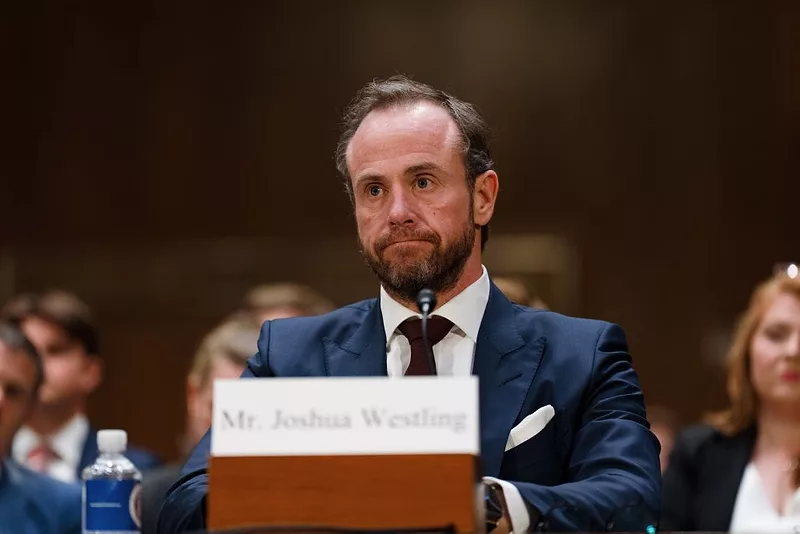
As I recently shared with the Senate Agriculture Committee, it starts with transparency. The Departments of Agriculture, Energy and Commerce, which are responsible for many of the financing programs directed towards these projects, should publish clear, standardized timelines for reviewing and deciding.
While not every project will get the green light, every builder deserves to know how long it will take to receive an answer.
Similarly, Congress should update federal programs so they strike the right balance between encouraging new entrants in the industry versus supporting existing producers to lower immediate costs.
Both can have an impact on expanding supply and reducing prices for farmers, but creating pathways for new producers will address regional shortages more directly.
Finally, the Trump administration should double down on the substantive steps they’ve already taken to solve these problems.
Last month, Secretary Rollins announced additional efforts to improve interagency coordination. That’s huge for any project seeking federal funding to encourage private investment. Reducing friction and harmonizing diligence requirements will make it easier for worthy projects to earn funding.
My team and our partners in Nebraska are committed to bringing Project Meadowlark online to deliver American-made fertilizer to farmers who need it — regardless of federal policy.
But our path to operation — and those of entrepreneurs across the country — can be a lot smoother if Washington embraces these targeted, common-sense reforms.
President Trump has promised a golden age in American agriculture. Unlocking more domestic fertilizer production can help usher it in.
That won’t just be good for farmers, but for American families who deserve reasonable prices at the grocery store and security on the world stage, too.
Josh Westling is the founder and CEO of J. Westling & Co.
| To submit an opinion piece, contact Agri‑Pulse Editor in Chief Sarah Gonzalez. Opinion submissions should be 750 words or fewer, address an agricultural policy issue and include a photo of the author. |