
Bryan Humphreys of the National Pork Producers Council urges lawmakers to approach the farm bill debate with their “eyes wide open.” But if anyone is refusing to see what’s right in front of them, it’s the trade association representing the interests of some large corporations.
For years, the NPPC has been repeating the same warnings about state-level public health and farm animal welfare laws like California’s Proposition 12 and Massachusetts’s Question 3. Yet the group continues to deny a simple reality: the economic catastrophe around pork availability they predicted never arrived.
For years, opponents of Prop 12 warned that California citizens’ vote requiring that pork sold there come from more humanely raised animals would cause bacon shortages, drive up food prices nationwide and wreak havoc on agricultural markets. More than two years after full implementation, we can see that those predictions were largely incorrect.
Pork products remain widely available, major producers and retailers have voluntarily adapted their supply chains and consumers continue buying bacon and other pork products. In fact, major producers and food service corporations made the transition years ago in response to consumer demand and retailer commitments to more humane products and are profiting from doing so. The lesson from Prop 12 and Question 3 is not that markets can’t adapt or be profitable, it’s that they already have.
As it happens, our food inflation crisis is affecting products with no comparable animal welfare laws at all, including beef. The primary drivers of higher food prices are supply chain disruptions, labor costs, disease outbreaks, price fixing and market concentration — not humane farming standards. Congress should be cautious about creating new uncertainty by rolling back animal welfare provisions that producers, retailers and millions of consumers have already embraced in the marketplace.
For congressional watchers like me, an overly cautious Senate can be a two-way street, but in this case it’s welcome. Agricultural leaders in the upper chamber know how these efforts to override state laws have landed before: with a big thud.
Similar federal preemption provisions were stripped from the final 2008 farm bill, defeated after appearing in the House-approved 2014 farm bill and left out of the final 2018 farm bill. The courts have delivered the same verdict. Industry groups spent years challenging California’s Prop 12, only to lose repeatedly in lower federal courts and then before the U.S. Supreme Court in 2023. Last year, the U.S. Court of Appeals for the First Circuit upheld Massachusetts’ Question 3, rejecting every challenge brought by pork industry interests and affirming the constitutionality of that law.
Cut through the clutter! We deliver the news you need to stay informed about farm, food and rural issues. Sign up for a FREE month of Agri-Pulse here.
This is something to read clearly with eyes wide open: Voters overwhelmingly approved these laws, Congress has repeatedly declined to overturn them, and the courts have consistently upheld them.
This is no time to resurrect a losing argument in the farm bill, and given the overall challenges facing agriculture, it’s irresponsible of the special interests that dominate our pork industry to do so. It’s time for Congress to encourage innovation and market adaptation. Provisions like the Save Our Bacon Act and the Food Security and Farm Protection Act would punish the many producers who spent years investing in new housing systems and compliance measures to meet evolving consumer demand. Those investments were not made only in California and Massachusetts. Farmers across the country, including Iowa, Minnesota and Pennsylvania, responded to marketplace signals and built businesses around standards that retailers and consumers increasingly expect.
Moreover, more than a dozen other states have enacted baseline provisions concerning gestation crates, veal crates or cages for egg-laying hens. Does demand from a few large pork producers for federal preemption to benefit themselves override jeopardizing hundreds of other state laws governing agricultural products, food safety, disease prevention and public health, including ones that help contain the transmission of deadly and fast-moving livestock diseases like New World screwworm?
No one except agribusiness trade associations want to take that risk. That’s why more than 6,600 individuals and groups — including farmers, veterinarians, elected officials, consumer advocates and national organizations — have opposed federal efforts to override state agricultural standards. Public polling also consistently shows that roughly 80% of Americans support minimum standards to prevent extreme confinement of animals raised for food.
As Senate Agriculture Committee Chairman John Boozman and Ranking Member Amy Klobuchar finalize their farm bill, they should build on the bipartisan tradition that has made this crucial legislation successful for decades. That means focusing on risk management, conservation, commodity programs like SNAP and rural development — not reopening a food fight that voters, markets and the courts have already settled.
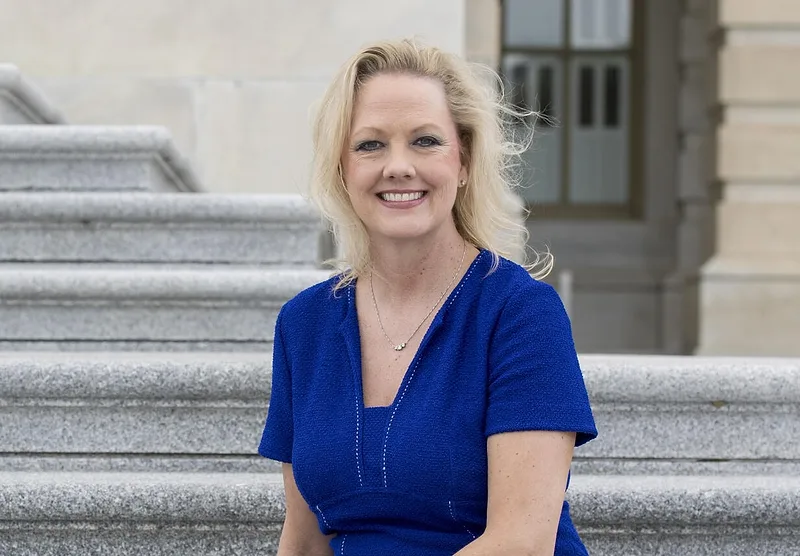
Sara Amundson is the president of Humane World Action Fund, formerly Humane Society Legislative Fund, the 501(c)4 legislative and political organization affiliated with Humane World for Animals, formerly the Humane Society of the United States.
| To submit an opinion piece, contact Agri‑Pulse Editor in Chief Sarah Gonzalez. Opinion submissions should be 750 words or fewer, address an agricultural policy issue and include a photo of the author. |