
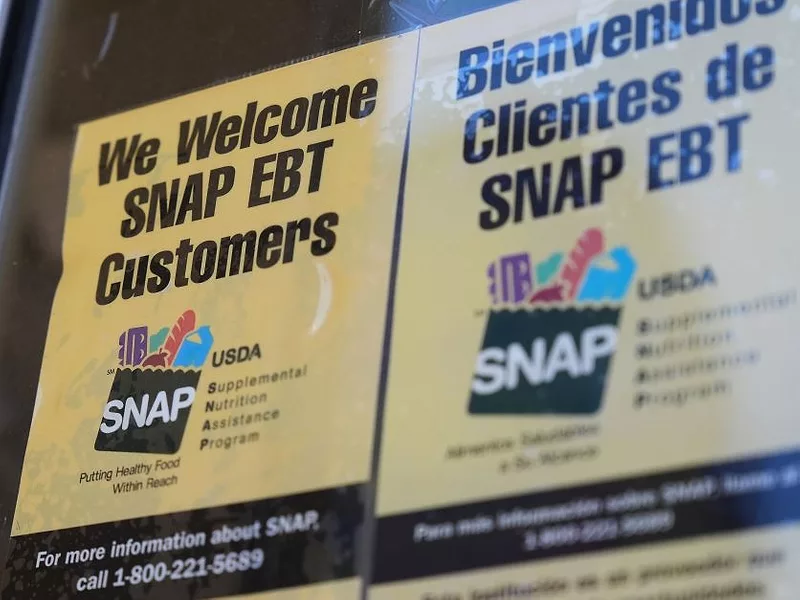
A federal judge has vacated USDA's approval of pilot programs in five states that barred Supplemental Nutrition Assistance Program recipients from using their benefits to buy soda, candy, and other items, ruling that the agency exceeded its legal authority and bypassed required public notice procedures.
In a 68-page opinion, U.S. District Judge Amy Berman Jackson in Washington, D.C., found that Agriculture Secretary Brooke Rollins and the USDA improperly invoked a section of federal law when approving state pilots that redefined what foods could be purchased under SNAP.
"The court’s analysis should not be taken as a comment on whether the pilot projects are a good idea or not," Jackson wrote. "That is a question of policy that is not before the court. The federal defendants and the states may have a genuine desire to improve the health of SNAP households by encouraging healthy choices at the store, and they can take lawful steps to meet those goals. But what they cannot do is violate the law and their own regulations along the way."
The ruling impacts SNAP food restriction waiver pilots in Colorado, Iowa, Nebraska, Tennessee and West Virginia.
Berman wrote that the statutory language the Agriculture Department used to approve the projects — section 2026(b) of the Food and Nutrition Act of 2008 — "does not cover projects aimed towards improving the health of SNAP recipients," but is instead intended to allow states to test administrative efficiency improvements.
A different section of the statute — 2026(k) — does allow the agency to approve projects geared toward improving health and reducing obesity, but also comes with "strict requirements USDA must meet." She said the agency "sidestepped" this section of the statute when making approvals.
Cut through the clutter! We deliver the news you need to stay informed about farm, food and rural issues. Sign up for a FREE month of Agri-Pulse here.
Berman also wrote that while the Food and Nutrition Act of 2008 gives some discretion to states to administer SNAP, federal law "contains definitions of key terms that apply universally" — including food. In soliciting and approving the state pilot projects in the case, Rollins "purports to waive not just a mere administrative or technical obstacle, but the very definition of 'food' as it was laid down by Congress."
"Neither the USDA nor the states can force this square peg into a round hole to avoid the plain language of the statute and the requirements of 2026(k)," Berman wrote.
She also found the USDA should have posted notices in the Federal Register with the "specific operational procedures" for programs in Iowa, Nebraska, and West Virginia by Dec. 1 of last year, and by April 1 of this year for Colorado's program, under agency regulations. The agency had not issued notices, justifying its decision by stating that the pilot projects were not likely to have "a significant impact on the public."
Instead, USDA's analysis focused "almost exclusively on the impact the projects would have on the SNAP program," Berman wrote. However, she found there was "no doubt" the waivers were likely to have a significant public impact.
"One simply cannot argue that a program designed to affect all of the 273,981 SNAP recipients in just one state does not have a significant impact on the public," she said. "And West Virginia is a small state."
In an X post Tuesday, Agriculture Secretary Brooke Rollins called Jackson an "activist judge."
"SNAP is for food — not sugar bombs fueling obesity, diabetes, and skyrocketing healthcare costs for low-income families," she posted. "Taxpayers shouldn’t subsidize junk food and drinks at the expense of American health. This administration will keep fighting to Make America Healthy Again."
For more news, go to Agri-Pulse.com.

