
|
The prospect of Congress updating key agriculture programs for producers and rural communities hinges on whether Republicans and Democrats can figure out a way around controversial nutrition aid policy that's led to a logjam in the once bipartisan farm bill.
Senate Agriculture Committee Chairman John Boozman, R-Ark., released a long-awaited discussion draft on Tuesday for "farm bill 2.0" that would modernize crucial tools for financially strapped farmers, like raising limits on loans from the USDA.
“An updated farm bill is long overdue," Boozman told reporters shortly after unveiling the bill text. "Economic conditions have changed dramatically since 2018 when we did the last farm bill, which was actually based on 2012 data.”
The GOP-led Congress passed crucial farm bill program updates in July 2025 through the One Big Beautiful Bill Act, which was approved using a procedure that allows budget-related legislation to advance with a simple majority as opposed to a 60-vote threshold. Boozman's bill is now tackling outdated policies not addressed last year. But it's got a much steeper climb.
The House passed its version of a farm bill by a vote of 224 to 200 in April. The legislation triggered bitter partisan battles over issues like biofuels, pesticide labeling and state animal welfare rules. Boozman, knowing he faces a bigger challenge in getting enough Democratic votes in the Senate, purposefully left out items that the House Agriculture Committee's top Democrat, Rep. Angie Craig, dubbed "poison pills."
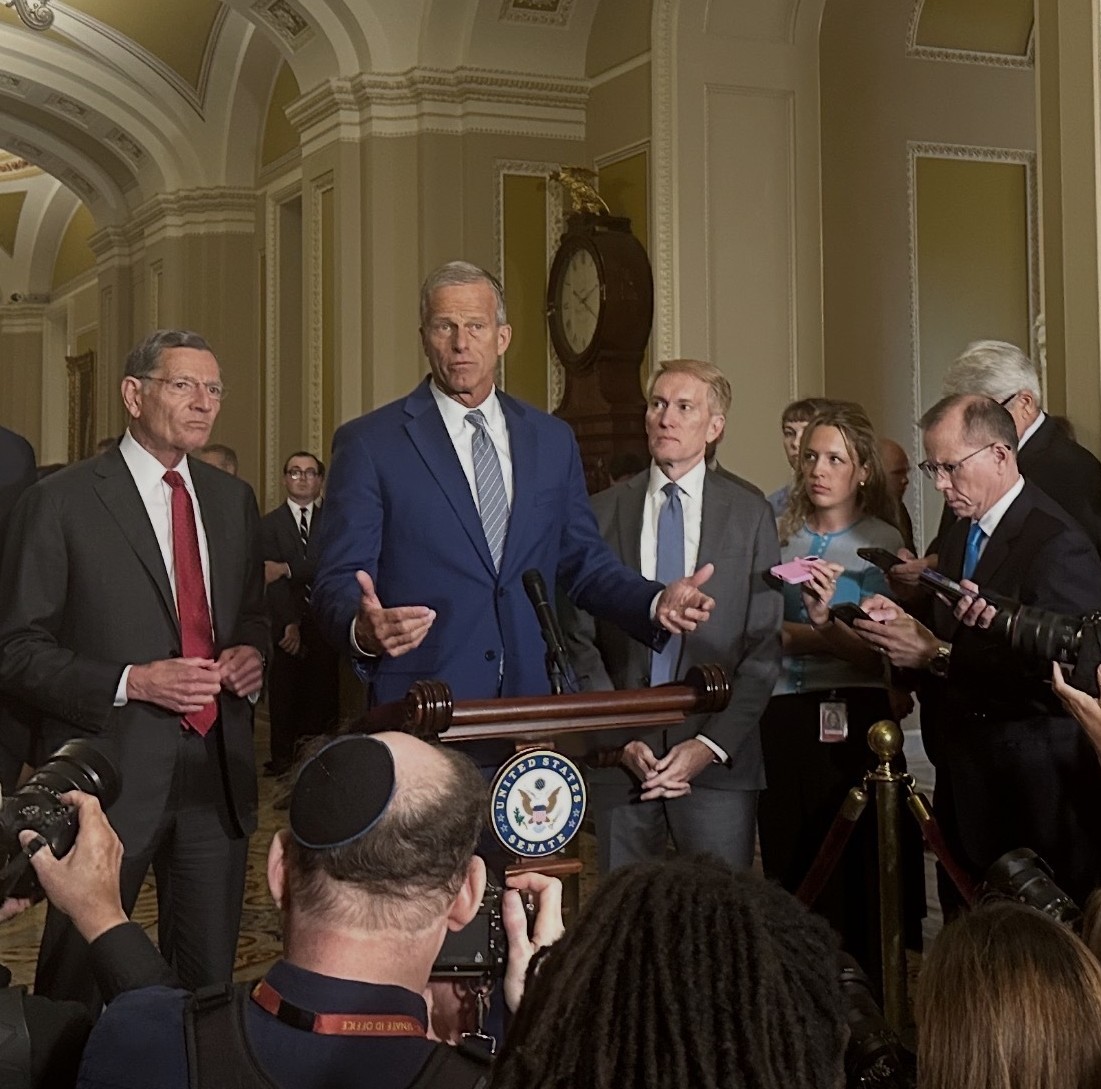 Senate Majority Leader John Thune, R-S.D., speaks to the media on Capitol Hill, June 23, 2026. (Agri-Pulse photo/Kim Chipman)
 The Republican-led Senate Ag Committee, like the House, also isn't including Democrats' biggest priorities, the restoration of almost $200 billion slashed last year from the Supplemental Nutrition Assistance Program, and a delay in a new law requiring some states to start sharing SNAP costs, based on payment error rates.
Boozman earlier this year was firm that the SNAP cost shifts are needed to fix a broken system. Democrats including Sen. Amy Klobuchar, the ag panel's ranking member, are calling for a two-year delay to study the fairness of the law and potential unintended consequences. To further muddy the political waters, states with the highest payment error rates, like Alaska, got as much as a two-year delay under OBBBA in exchange for Sen. Lisa Murkowski, R-Alaska, supporting the bill strongly pushed by President Donald Trump.
But with the release of the Senate farm bill draft, there are signs some kind of SNAP compromise could be possible.
Boozman said Tuesday that negotiations on the issue were happening, without elaborating on any details.
Cut through the clutter! We deliver the news you need to stay informed about farm, food and rural issues. Sign up for a FREE month of Agri-Pulse here.
Klobuchar and the other Senate Ag Committee Democrats said they "stand ready" to find a bipartisan path forward on the legislation they see as flawed.
“This bill does not address the devastating cuts to SNAP or the shift to state taxpayers," the Democrats said in a joint statement. "We appreciate that bipartisan provisions have been included in the discussion draft and stand ready to work with Republicans to negotiate a bipartisan farm bill that both meets the moment and can be successful on the Senate Floor.”
The Center on Budget and Policy Priorities, a nonpartisan research group, says more than 4 million people have lost SNAP benefits as of March and more will lose the food aid unless the cost shift to states is delayed.
"Policymakers failing to act in the face of this emergency is unconscionable," said Ty Jones Cox, CBPP vice president for food assistance. "This proposal — or any legislation with farm relief that ignores the urgent need to mitigate this harm — should be rejected."
Boozman said the new SNAP rules were the result of a consensus that the program was being run "sloppily" with "unreasonable overpayments and underpayments."
"This is not about raising revenue from the states. This is about just having some sort of leverage to make them administer these programs in an efficient way, and not waste money," he said, adding that efforts are underway to find a solution.
When asked if the SNAP issue will thwart attempts to pass a Senate farm bill, Majority Leader John Thune, R-S.D., said the reforms of the program need to proceed.
“There were reforms in the bill we passed last summer, some of which are work requirements — and by the way, those work requirements were less strenuous, less restrictive than the work requirements included in the Clinton administration 30 years ago — but I think that's something most Americans agree with, and I think that those types of reforms are reforms that ought to take effect," Thune told reporters on Tuesday.
Sen. Chuck Grassley, R-Iowa, said the question on if a bipartisan deal on SNAP is possible is the "800-pound gorilla" in the room.
"Until that’s worked out, I think it’s going to be difficult to get a [farm] bill out of committee unless it’s a party line bill, and then you take the fight to the floor."
.webp?t=1762183428)
