
Amidst current trade and geopolitical uncertainties, American farmers — who lead in feeding the world — are fighting every day to make ends meet amid rising input costs and labor shortages. The last thing they need is a far-reaching regulatory mandate from overseas to exacerbate the economic rollercoaster farmers have been on. One such mandate, the European Union's Corporate Sustainability Due Diligence Directive (CSDDD), has not received the attention it has deserved in Washington, but its consequences for American agriculture are neither theoretical nor distant.
European lawmakers finalized CSDDD earlier this year with the intent of ensuring responsible corporate behavior across their operations. However, CSDDD extends corporate liability deep into global supply chains, reaching American producers and their suppliers who sell into European markets by forcing invasive compliance reviews, documentation, and audits on environmental, labor and human rights factors.
Despite Europe’s “good intentions,” American farmers, who are already operating on margins that leave little room for error, could find themselves subject to the “hell” of unnecessary reporting obligations and third-party verification requirements designed by European regulators who are divorced from the pressures and realities of modern farming. Aside from the direct costs of needing to answer to government officials across the Atlantic from places like my home state of Montana, failing to answer to those bureaucrats could mean lead to lost export opportunities to current and future European consumers.
Cut through the clutter! We deliver the news you need to stay informed about farm, food and rural issues. Sign up for a FREE month of Agri-Pulse here.
This is not the first time threats to American agriculture have emerged from beyond our borders. When I championed legislation to defend American jobs against unfair subsidies from other countries, the principle was straightforward: foreign governments should not be allowed to tilt the playing field, undercut American producers, or dictate terms to American workers. CSDDD is the same wolf in another sheep’s clothing. Instead of countries like China manipulating its markets to flood ours with artificially cheap goods, European regulators are imposing compliance rules that reach across the Atlantic and land on American farms. The principle is virtually identical, and the result equally as troubling.
A recent report quantifies what this means in practice: over 300,000 U.S. agricultural entities responsible for over $600 billion in revenue are at risk from CSDDD. And the measurable initial compliance costs to all American companies: $1 trillion.
The threat of CSDDD is not theoretical or abstract; these regulatory impacts would be felt in every single part of the agricultural supply chain. They squeeze margins and accelerate the consolidation of supplier networks toward large operations, systematically excluding the small and mid-sized farms that have always been the backbone of American agriculture. And when food production becomes more expensive, consumers pay more at the grocery store while farmers earn less in the field.
What makes the CSDDD a trade barrier in all but name is that it doesn’t present itself as a tariff or a quota. It arrives instead as a complex web of compliance requirements that weakens the competitiveness of American agriculture without a single duty being levied. For a sector that depends on keeping its most important export markets open, these hidden costs can do significant damage.
The EU should recognize that imposing compliance architectures of this scale and complexity on foreign supply chains undermines the very cooperation it claims to value. If Europe wants American agricultural partners, it should work with them to find common ground rather than impose one-sided mandates. By pushing such arduous requirements, EU regulators are implying an absence of existing regulation; effectively ignoring that the U.S. already has a robust regulatory framework in place- one that is deeply rooted in statute and balances regulation with opportunities for growth.
It is now the responsibility of both Democrats and Republicans in Congress to shield America’s agricultural communities and our broader economy, making clear to their European counterparts that regulations with this kind of extraterritorial reach are incompatible with a fair and functional trading relationship. American farmers want to steward their land and feed their communities. They should not have to worry about navigating a complex compliance regime overseen by foreign regulators they cannot hold accountable.
America's agricultural producers are among the most resilient people in this country. But resilience has its limits. The time to protect American agriculture from CSDDD is now, before those limits are tested even further.
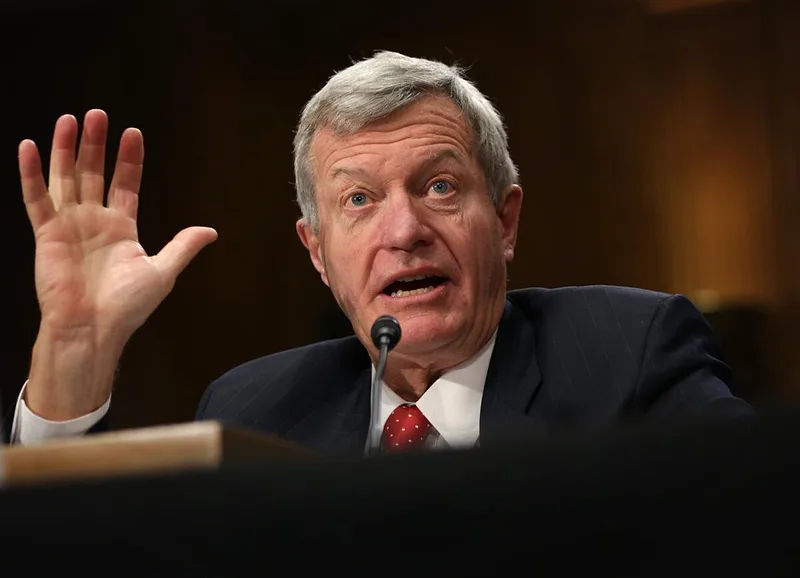
Max Baucus previously served as a U.S. senator from Montana (1978–2014) and as U.S. ambassador to China (2014–17).
| To submit an opinion piece, contact Agri‑Pulse Editor in Chief Sarah Gonzalez. Opinion submissions should be 750 words or fewer, address an agricultural policy issue and include a photo of the author. |