
WASHINGTON, Feb. 27, 2014 – The Obama administration today released
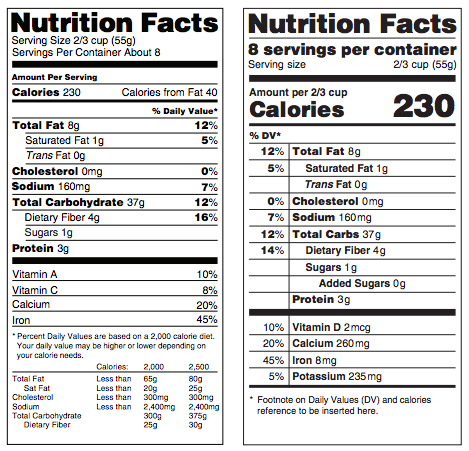
a revamped version of the iconic Nutrition Facts label, which includes more
prominent calorie information, more specific calorie-per-serving facts, and a
new line for “added sugars.”
The proposed changes are being praised for the most part by
consumer advocates, who complain that the current label is too cluttered and
doesn’t provide Americans with the information they need to eat healthily. The plan
would be the first major update of the label since 1994, when it was first
released.
“This is good news for consumers,” said Chris Waldrop,
director of the Food Policy Institute at the Consumer Federation of America. “Updating
the Nutrition Facts panel will provide consumers with more relevant and useful
information about the foods they consume.”
The industry and government watchdog Center for Science in the Public
Interest (CSPI) gave the proposal “mostly high marks,” especially the decision
to make calorie counts more prominent. However, it said the “added sugar” line
should be expanded to include the percentage of the daily recommended
consumption figure in a serving, not just the number of grams, allowing
consumers to put the added information into perspective.
CSPI will also be focusing on the sodium line of the label.
Though some health advocates had pushed FDA to dramatically decrease its daily recommended
sodium intake, the new label drops the figure by just 100 mg, from 2,400 mg to
2,300, pleasing the food industry.
The proposed label also eliminates “calories from fat”
information and some vitamin details (including vitamins A and C) in favor of
new label lines on potassium and vitamin D. Experts say potassium helps control
blood pressure; vitamin D is essential to bone development.
The food industry so far has had little to say about today’s
announcement. In a statement, a spokeswoman for the Food Marketing Institute, which
represents retailers and wholesalers, said the group “envisions consumers will
only continue to demand nutrition information that is both easy to understand
and accessible.” According to FMI research, two-thirds of shoppers say they
read nutrition labels in the store.
The Grocery Manufactures
Association, meanwhile, said in a statement that it looked “forward” to
working with the FDA and other stakeholders as the proposed updates make their
way through the rule-making process. The group said it wants to make sure “any
changes are based on the most current and reliable science.”
The public now has 90 days to comment on the proposed
revisions before FDA finalizes any changes. The industry would then have two
years to comply, according to the FDA plan.
First Lady Michelle Obama, who was on hand at the White
House today to officially unveil the changes, said she hopes the revised label
would cut down on confusion and help American families to make healthier
choices.
She said the label would help busy parents in the grocery
aisle, who are familiar with the “stream of questions and worries running
through your head when all you really wanted to know was, ‘Should I be eating
this or not?’”
“But unless you had a thesaurus, a calculator, a microscope,
or a degree in nutrition, you were out of luck,” she said of the current label.
#30
For more news, visit www.agri-pulse.com.