
WASHINGTON, March 16, 2016 - The net energy balance of
corn-based ethanol at U.S. dry mill biorefineries averages 2.6-2.8, an improvement
over previous estimates reflecting efficiency gains, according to an analysis conducted
by the Renewable Fuels Association (RFA).
The net energy balance is the ratio of how much energy is
required to produce the corn and ethanol, and then transport the fuel to end-users.
For example, a ratio of 2.8 means that for every British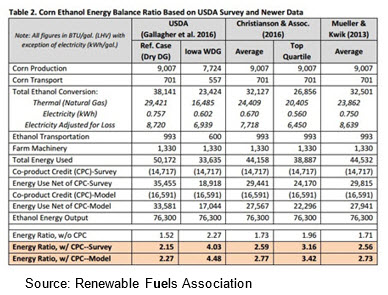 thermal unit (BTU) of energy invested in the
process to make and deliver ethanol, 2.8 BTUs of energy is made available to
the end-user.
thermal unit (BTU) of energy invested in the
process to make and deliver ethanol, 2.8 BTUs of energy is made available to
the end-user.
In February, USDA issued its updated net energy balance
report on corn-based ethanol, finding that there has been a large improvement
in energy balance since 1995, and a small but positive improvement since 2008,
says RFA. The previous USDA report, conducted in 2010, was based on 2008-era
data and found that the balance was 1.9-2.3. RFA’s analysis found that USDA
used the same 2008-era dry mill energy use estimates for both its 2010 and 2016
reports.
According to RFA’s analysis, the energy balance of the
top-performing quartile of biorefineries is in the range of 3.2-3.4, which
approaches the USDA estimate of 4.0 for an ideally situated dry mill producing
wet distillers grains.
“As this new analysis shows, the U.S. ethanol industry has
made tremendous efficiency gains in recent years,” said RFA President and CEO
Bob Dinneen. “EPA should take note and update its lifecycle greenhouse gas modeling
of corn-based ethanol under the Renewable Fuel Standard to reflect these
improvements. Today’s ethanol plants are achieving the levels of efficiency
that EPA assumed wouldn’t occur until 2022.”
#30
For more news, go to: www.Agri-Pulse.com
