
WASHINGTON, March 24, 2016 - Hydraulic fracturing, or
“fracking,” has been in use for more than six decades, but has only recently been
used to produce a significant portion of crude oil in the U.S., according to
the Energy Information Administration (EIA). Fracking, often used in
combination with horizontal drilling, has allowed the U.S. to increase its oil
production faster than at any time in its history, says EIA.
Based on the most recent available data from states, EIA
estimates that oil production from hydraulically fractured wells now makes up
about half of total U.S. crude oil production.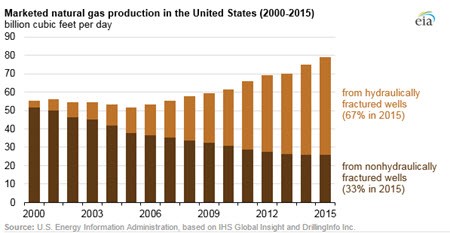
Fracking involves forcing a liquid (primarily water) under
high pressure from a wellbore against a rock formation until it fractures. The
fracture lengthens as the high-pressure liquid in the wellbore flows into the
formation. This injected liquid contains a proppant – small, solid particles, usually
sand or a man-made granular solid of similar size – that fills the expanding
fracture.
When the injection is stopped and the high pressure is
reduced, the formation attempts to settle back into its original configuration,
but the proppant keeps the fracture open. This allows hydrocarbons such as
crude oil and natural gas to flow from the rock formation back to the wellbore
and then to the surface.
EIA created a profile of oil production in the U.S. using well
completion and production data from DrillingInfo
and IHS Global Insight. According
to EIA, in 2000, approximately 23,000 hydraulically fractured wells produced
102,000 barrels per day (b/d) of oil in the U.S., making up less than 2 percent
of the national total. By 2015, says EIA, the number of hydraulically fractured
wells grew to an estimated 300,000, and production from those wells had grown
to more than 4.3 million b/d, making up about 50 percent of the U.S. total oil
output. EIA says that estimates may vary from other sources depending on well
types and update schedules.
#30
For more news, go to: www.Agri-Pulse.com
