WASHINGTON, May 5, 2016 - During the first three months of
2016, renewable sources such as wind, solar, biomass and hydropower outpaced
natural gas, coal and other traditional sources for new electrical generating
capacity placed into service, according to the recent Energy
Infrastructure Update from the Federal Energy
Regulatory Commission's Office of Energy Projects. The report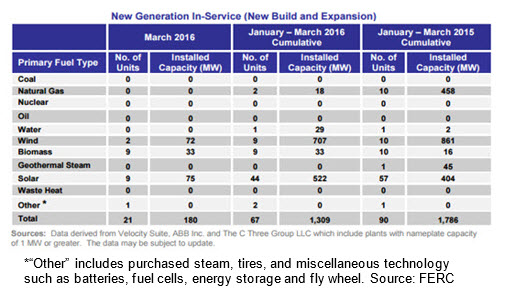 states that nine
new units of wind power provided 707 megawatts (MW), followed by 44 units of
solar (522 MW), 9 units of biomass (33 MW), and one unit of hydropower (29 MW).
states that nine
new units of wind power provided 707 megawatts (MW), followed by 44 units of
solar (522 MW), 9 units of biomass (33 MW), and one unit of hydropower (29 MW).
There was no new capacity reported for the quarter from
coal, oil, nuclear power or geothermal steam. Wind, biomass, and solar accounted
for 100 percent of new generating capacity reported by FERC for the month of
March.
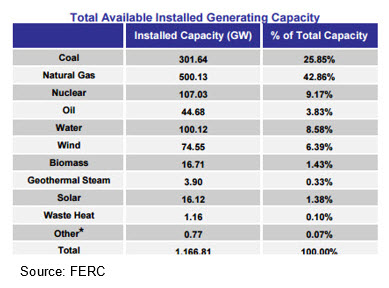
Compared to FERC’s December
2010 report, where renewables accounted for 13.71 percent of total
available installed generating capacity in the U.S., renewable energy sources
now account for 18.11 percent.
- Water: 8.58 percent
- Wind: 6.39 percent
- Biomass: 1.43 percent
- Solar: 1.38 percent
- Geothermal steam: 0.33 percent