
WASHINGTON, May 12, 2016 - When it comes to tackling air
quality concerns, a Mid-Atlantic coalition is making great progress. At least
that’s the assessment offered by Diesel Technology Forum Executive Director
Allen Schaeffer during a recent speech.
Speaking to members of the Mid-Atlantic Diesel Collaborative
in Pennsylvania last week, Schaeffer recognized the regional collaborative for
its “innovative and successful approaches to improving air quality from existing
vehicles and equipment.” The coalition is comprised of leaders from federal and
state agencies, regional EPA offices, environmental groups, trucking fleets and
engine and equipment makers.
One example Schaeffer noted was how the region has
established itself as a national leader in efforts to replace and upgrade
drayage trucks. These short-haul trucks move containerized cargo from the
respective ports generally less than 50 miles to the next mode of transport -
highway truck or rail. Drayage truck replacement programs have been successfully
implemented at the Port of
Baltimore and most recently in Virginia with the assistance of the
Environmental Finance Center at the University of Maryland.
Schaeffer said the Mid-Atlantic region is close to the
national average for adoption of the newest technology
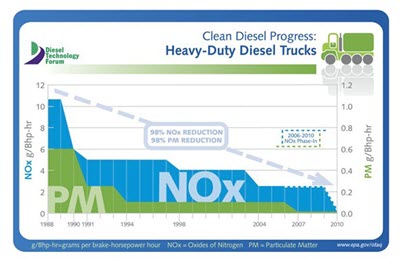
clean diesel commercial trucks with near zero emissions of particulates and
nitrogen oxide, a contributor to regional ozone levels. For example, since
2010 the fleet of clean diesel commercial vehicles on the road in Pennsylvania has
eliminated 1.3 million tons of CO2 and 300,000 tons of nitrogen oxide, while
saving 3.1 million barrels of crude oil, he said.
The additional air
quality benefits that could result from greater adoption of trucks powered
by a diesel engine that meets the 2010 model year emissions standard are significant,
according to the Diesel Technology Forum. An additional 30,000 tons of
nitrous oxide and almost 1 million tons of CO2 could be eliminated if just half
of the commercial vehicles in use in Pennsylvania met the model year 2010
diesel standard.
 Schaeffer said that in the next decade diesel will remain the
prime mover for the global economy and that new engines would be far more
efficient and have lower greenhouse gas emissions. He predicts substantial
gains in efficiency from construction and farming equipment in the future,
thanks to aggressive implementation of smart and connected job-sites and
machines using the latest generation of clean diesel engines.
Schaeffer said that in the next decade diesel will remain the
prime mover for the global economy and that new engines would be far more
efficient and have lower greenhouse gas emissions. He predicts substantial
gains in efficiency from construction and farming equipment in the future,
thanks to aggressive implementation of smart and connected job-sites and
machines using the latest generation of clean diesel engines.
In the next decade, there will be an increase in the use of
clean-burning biodiesel and
renewable diesel fuels, said Schaeffer. He noted that cities such as
San Francisco, Oakland and New York are currently using these renewable
biodiesel fuels to reduce greenhouse gas emissions.
The Mid-Atlantic Collaborative includes Delaware, Maryland, Virginia, Pennsylvania, West Virginia and the District of Columbia.
#30
For more news, go to: www.Agri-Pulse.com